
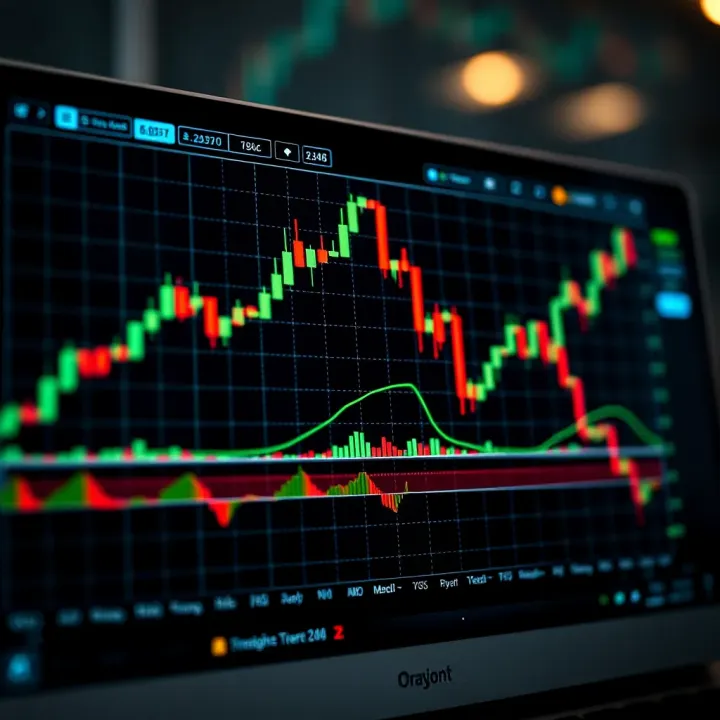
Top Chart Patterns for Trading Success
📊 Master key chart patterns to boost trading success! Learn how to spot trends, apply strategies, and access top PDF guides for smarter market moves.
Edited By
George Simmons
Intraday trading demands quick decisions based on immediate price signals. Candlestick patterns are favoured tools in this space, as they visualise buyer-seller dynamics within a single trading session. Knowing which candle patterns to watch can help you spot potential reversals, continuations, or breakouts in the market.
Indian stock markets like the NSE and BSE see high volatility on certain sessions, making candle patterns particularly useful for traders wanting intraday edge. Unlike longer-term charts, intraday charts (such as 5-minute or 15-minute intervals) require keen eye for rapid formation recognition.

Doji: Shows market indecision and often hints at possible reversals when found near support or resistance levels.
Hammer and Hanging Man: Both have small bodies with long lower shadows; a hammer after a downtrend can signal a bullish reversal, while a hanging man after an uptrend might warn of a decline.
Engulfing Pattern: When a large candle fully overlaps the previous one, it signals strong buying or selling pressure. Bullish engulfing suggests upward momentum, bearish engulfing hints at downturns.
But recognising patterns alone isn't enough. You also need to confirm them with volume spikes, moving averages, or RSI levels to filter false signals. For example, a bullish engulfing with rising volume and RSI below 30 can strengthen confidence in a buy.
Traders should avoid jumping on every pattern. Wait for context, such as trend direction and nearby support or resistance zones, before acting on candle signals.
In Indian markets, intraday swings can be sudden due to global cues or domestic news. Combining pattern study with real-time news alerts and key indicators helps in making smarter entries and exits.
This article will cover reliable candle formations and share practical tips to use them effectively in your intraday strategy.
Candle patterns play a significant role in intraday trading by showing quick snapshots of price action. Since intraday traders seek to benefit from small price movements within a day, being able to interpret these patterns helps in making timely and informed trading decisions. Candle charts visually summarise price behaviour, making it easier to spot trends and reversals even on shorter timeframes like 5-minute or 15-minute charts.
A single candlestick represents price movement within a specific time period. It consists of a body and two wicks (shadows). The body shows the difference between the opening and closing prices, while the wicks indicate the highest and lowest prices during that period. For instance, a 15-minute candle on the Nifty chart would summarise price movement for that 15-minute block.
This structure helps traders quickly assess market behaviour, such as whether buyers or sellers dominated in that period.
A bullish candle forms when the closing price is higher than the opening price, showing buyer strength. It is usually coloured green or white. Conversely, a bearish candle shows that sellers were in control, with the closing price below the opening price, often coloured red or black.
Recognising these candles helps intraday traders gauge momentum and decide whether to buy or sell. For example, a string of strong bullish candles might encourage a trader to enter a long position.
The body size indicates the strength of price movement: a large body reflects strong momentum, while a small body suggests indecision. Wicks reveal price rejection levels—long upper wicks point to selling pressure, while long lower wicks show buying support.
For example, a hammer candle with a small body near the top and a long lower wick can signal a potential reversal after a downtrend. Intraday traders watch these to time their entries and exits more precisely.
Candle patterns provide quick insights into intraday price dynamics, allowing traders to react to changing market conditions swiftly. Patterns like Doji or Engulfing can indicate shifts in buyer-seller balance, guiding traders to adjust their positions.
This helps avoid guessing and adds a level of objectivity, especially when speed matters in trading sessions.
Candlestick formations reflect the collective mood of market participants. For example, a series of bearish candles signals fear or selling pressure, while bullish patterns suggest optimism.
Understanding this sentiment helps intraday traders anticipate continuation or pullbacks, aligning their trades with the prevailing trend or preparing for reversals.
Timing is everything in intraday trading. Candle patterns assist traders in pinpointing when to enter or exit a trade with better accuracy. For instance, after spotting a bullish engulfing pattern near support, a trader might initiate a buy, setting stop losses just below the pattern.

Similarly, recognising a Shooting Star at resistance could signal an exit or short sell opportunity. This practical use reduces reliance on guesswork, promoting disciplined trading.
Candlestick patterns in intraday trading offer a compact, visual way to understand price moves quickly. They’re not foolproof but, when combined with other indicators, they improve decision-making.
By learning to read candle structures and patterns, intraday traders can make smarter, faster calls and better manage risk on short-term trades.
Intraday traders rely heavily on specific candle patterns to interpret short-term price fluctuations effectively. These patterns highlight shifts in momentum or sentiment, providing traders with practical signals to plan entries and exits within a single trading day. Recognising these key formations quickly can lead to better timing decisions and improved risk management.
Doji and its variations signal indecision in the market. A Doji forms when a candle’s opening and closing prices are nearly the same, creating a cross-shaped figure. This pattern warns traders that the current trend might be weakening or reversing. For example, if a Doji appears after a strong uptrend on a 15-minute chart, it may imply buyers are losing control, suggesting caution before entering fresh long positions.
Different varieties like the Long-Legged Doji or Dragonfly Doji offer subtle clues about market balance and potential shifts. The key is to watch for confirmation from the following candles or volumes before acting.
Hammer and Hanging Man look similar but serve different purposes depending on their position in the price cycle. A Hammer appearing after a downtrend is a bullish sign. It has a small body near the top of the candle with a long lower wick, reflecting a sudden buying surge that pushed prices up before the close. This can hint at a bounce, offering a possible buy opportunity.
Conversely, the Hanging Man shows up at the end of an uptrend and warns of potential weakness. Despite a strong rally, sellers pushed prices down during the session, though buyers regained some control by the end. Traders often treat this as a signal to tighten stops or exit long trades.
Shooting Star is another single-candle bearish reversal indicator. It forms after an uptrend with a small body at the bottom and a long upper wick. This means buyers tried to push prices higher but failed, as sellers dominated by closing near the open. For intraday trading, spotting a Shooting Star on a 5-minute chart near resistance levels may suggest a short-term price decline ahead.
Engulfing patterns offer clear signals of momentum shifts across two candles. A bullish engulfing pattern occurs when a small bearish candle is completely followed by a larger bullish candle, swallowing the previous candle's body. This shows growing buying strength, hinting at a potential upside move within the session.
In contrast, a bearish engulfing pattern signals selling pressure when a large bearish candle overtakes a prior smaller bullish candle. Using these patterns on intraday charts like 15-minute or 30-minute frames helps traders capture momentum reversals early.
Morning Star and Evening Star are three-candle formations that indicate strong reversal potential. A Morning Star appears after a downtrend with a long bearish candle, followed by a small-bodied candle signalling hesitation, and then a bullish candle pushing price higher. This pattern suggests the sellers’ grip is loosening and buyers are gaining control.
Evening Stars work the other way around, marking a reversal to the downside after an uptrend. Intraday traders often use these patterns to plan trades around significant support or resistance zones, increasing the chances of accurate timing.
Three White Soldiers and Three Black Crows consist of three consecutive candles moving strongly in one direction. Three White Soldiers are bullish, with each candle opening within the previous body but closing near highs, reflecting sustained buying pressure. Three Black Crows are bearish, showing consistent selling.
Spotting these sequences on intraday charts indicates momentum continuation rather than reversal, helping traders stay with the trend rather than guessing tops or bottoms.
Intraday trading demands swift, reliable cues—these candle patterns offer practical insights into price behaviour, helping you navigate market noise and make informed decisions.
Selecting the right candle patterns for intraday trading requires more than just spotting formations on a chart. Traders need to focus on criteria that ensure the patterns deliver reliable signals within short timeframes. Without a careful approach, patterns may mislead, causing losses rather than profits. This section explains key factors to consider, helping traders improve precision and confidence while making quick decisions on the 5-minute and 15-minute charts.
Candlestick patterns behave differently across timeframes, and their reliability on intraday charts like 5-minute or 15-minute is distinct from daily or weekly charts. Patterns on shorter timeframes tend to be more sensitive but prone to noise caused by random price fluctuations. For example, a hammer formed on a 5-minute chart during the morning volatility session may not carry the same weight as the same pattern observed on a 15-minute chart during more stable periods.
To improve reliability, traders often look for patterns confirmed by price action over a few candles rather than isolated ones. Consistent repetition of a pattern on 5-minute and 15-minute charts during different market phases suggests better trustworthiness. It's important to remember that shorter timeframes demand quicker confirmation and tighter risk management since the market can reverse swiftly without notice.
Volume confirmation adds another layer of validation. A bullish engulfing pattern appearing on a 15-minute chart gains credibility if accompanied by a notable increase in trading volume, indicating strong buyer interest. On the other hand, the same pattern with low or declining volume often signals caution, as the move might lack conviction and could fail.
Support and resistance levels offer crucial context to candle patterns, helping intraday traders filter false signals. For instance, spotting a shooting star candle near a well-established resistance level increases the chance of a genuine price reversal compared to the same pattern appearing in the middle of a range. Support and resistance act like invisible guides where market participants tend to place orders, so patterns aligning with these levels carry higher odds of success.
Combining candle patterns with trend analysis further reduces misleading signals. Intraday traders benefit from observing overall trend direction using tools like moving averages or trendlines before acting on a pattern. For example, a bearish engulfing pattern during a clear downtrend reinforces the bearish signal, while the same pattern against an uptrend calls for careful scrutiny or waiting for additional confirmation.
Remember, no candle pattern works perfectly in isolation. Integrating volume data, support-resistance zones, and trend direction makes pattern-based trades more robust and increases chances of consistent profits.
In short, focusing on reliability by using suitable intraday timeframes, volume confirmation, and combining candle signals with support-resistance and trend insights is the backbone for sophisticated intraday trading strategies. These steps help traders avoid traps laid by false breakouts or fake reversals common in fast moving Indian stock markets.
Candlestick patterns show potential price movements, but they work best when combined with other intraday indicators. This combination improves the accuracy of trade signals and helps traders avoid traps from false patterns. Using tools like moving averages, volume data, and momentum oscillators provides a fuller picture of market behaviour, which is essential during the rapid fluctuations of intraday trading.
Identifying trend direction: Moving averages smooth out price data to highlight the dominant trend on short timeframes like 5-minute or 15-minute charts. For example, a 20-period exponential moving average (EMA) rising steadily confirms a bullish bias. When a bullish candle pattern, such as a hammer or bullish engulfing, appears above this EMA, it signals a stronger chance of upward movement. Conversely, if the price is below the moving average and a bearish candle pattern forms, it points to a potential downtrend continuation. Using moving averages helps traders filter trades that align with the overall trend rather than trading against it.
Spotting confluences for entries: Confluences occur when candle patterns align with other technical areas, such as moving average support or resistance. For instance, if price approaches a rising 50-EMA and forms a morning star pattern near that level, it serves as a combined entry signal. Traders often look for such overlaps between candle pattern signals and moving average zones to increase confidence before entering trades. This approach reduces reliance on candle patterns alone, which can sometimes be misleading in volatile intraday markets.
Confirming pattern strength: Volume plays a critical role in validating candle patterns. A bullish engulfing candle accompanied by higher-than-average volume suggests genuine buying interest rather than just a technical formation. Similarly, a shooting star with low volume may signal a weaker reversal attempt. Volume spikes during pattern formation confirm commitment from market participants, increasing reliability. Traders should monitor volume data from Indian exchanges, such as NSE or BSE, to assess if price moves have backing.
Using RSI and MACD for better timing: Momentum indicators like the Relative Strength Index (RSI) and Moving Average Convergence Divergence (MACD) help improve entry timing after spotting candle patterns. For example, if a hammer pattern forms but RSI remains overbought, it may be wise to wait for further confirmation before entering. MACD crossovers near candle pattern signals also add weight to a possible trend change. Combining candle patterns with RSI or MACD prevents premature trades and enhances risk management, which is crucial for intraday success.
Candle patterns alone can be noisy, especially on short timeframes. Layering them with moving averages, volume, and momentum indicators helps traders pick higher-quality setups and manage risk effectively.
In summary, marrying candle patterns with other intraday indicators creates a more grounded strategy. Traders should always look for trend alignment via moving averages, validate signals with volume, and fine-tune timing using momentum tools to navigate the fast rhythm of Indian stock markets.
Using candle patterns effectively is not just about recognising formations but managing trades smartly around them. Practical tips help traders reduce errors and make informed decisions, which is especially important in fast-paced intraday trading. Below are some essential guidelines to improve your trade outcomes when relying on candle patterns.
Candle wicks often show the highest or lowest price that market tested during that time frame before reversing. Many traders use the extremes of these wicks to place stop loss orders. For example, if a bullish hammer forms with a long lower wick, placing the stop loss just below the wick’s low allows some breathing room from natural price fluctuations while protecting against larger moves against the trade.
This approach matches price action closely and helps avoid being stopped out prematurely. For instance, in a 15-minute chart intraday setup, if the hammer’s wick is at ₹1,050 and the body closes at ₹1,070, putting the stop loss at ₹1,045 offers a buffer without taking excessive risk.
Setting profit targets based on candle pattern analysis helps maintain discipline and avoid greed. A practical target might be a risk-to-reward ratio of 1:2 or 1:3, meaning you aim to make at least two or three times your stop loss distance. This kind of rule keeps your trades balanced over time.
You can also use support and resistance levels or moving averages as target points. For example, after spotting a Morning Star pattern, you might set a target near the previous day’s high or a significant resistance zone. This way, targets align with actual price levels rather than arbitrary multiples, making your exits more reliable.
How much you invest per trade should reflect your total capital and risk appetite. Position sizing prevents a single loss from wiping out large chunks of your trading fund. For instance, if you decide to risk 1% of your ₹5 lakh trading capital per trade, your position size will adjust depending on the stop loss distance informed by the candle pattern.
This calculation ensures consistency and guards against emotional decision-making. Many traders use simple calculators or brokerage tools to dynamically set position sizes based on stop loss levels.
While candle patterns can provide strong signals, relying solely on them may lead to excessive trading and losses. Some patterns might fail, especially in noisy intraday markets. It is wise to combine patterns with other indicators or market context before taking a trade.
Overtrading wears down your capital and patience quickly. For example, spotting a hammer pattern every 10 minutes but entering every single time will likely hurt rather than help. Wait for confirmation like volume spikes, trend alignment, or moving average crossover. This disciplined approach improves the quality of trades and prevents burnout.
Practical trading isn’t just about finding setups, but managing them with clear rules and discipline.
These practical tips on stop loss, targets, position sizing, and selective trading form the backbone of successful intraday strategies using candle patterns.
📊 Master key chart patterns to boost trading success! Learn how to spot trends, apply strategies, and access top PDF guides for smarter market moves.
📊 Discover new chart patterns traders use to spot market trends and improve decisions. Learn to identify these patterns in real-time for better trading outcomes.

📈 Discover practical tips and key criteria for choosing the best stocks for intraday trading in India. Learn about sectors, tools, and risk management to boost your strategy!

📈 Master intraday trading in India with practical tips, strategies, essential tools, and risk management to trade stocks confidently within a single day.
Based on 10 reviews