

Understanding Binary to Gray Code Conversion
Learn how to convert binary to Gray code with step-by-step methods and examples 📊. Understand its use in digital circuits and error reduction today!
Edited By
Oliver Bennett
Binary code is the fundamental language that powers every digital device around us. It uses just two symbols — ones and zeros — to represent all types of information. This simplicity makes it easy for computers to process data quickly and accurately.
At its core, binary code works on the principle of two states: on (1) and off (0). Think of it like a switch that can be either open or closed. Digital devices, whether your laptop or smartphone, use millions of such switches called transistors to perform complex operations.
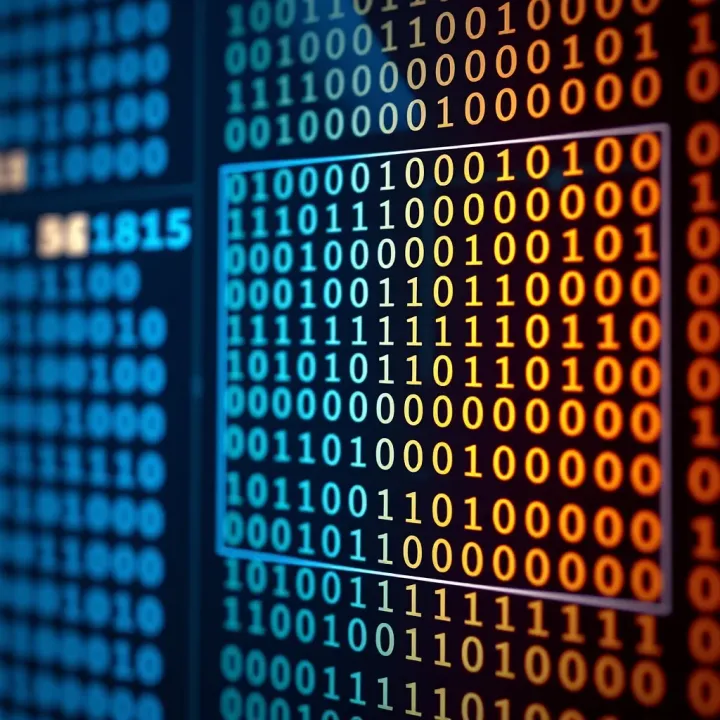
Why binary though? The main reason is reliability. Electronic circuits detect voltage levels, so representing data as high (1) or low (0) signals avoids confusion that might arise with multiple voltage levels. This ensures fewer errors during data transmission and storage.
The journey of binary code dates back hundreds of years, but it got formalised for computing with the work of mathematician George Boole in the 19th century. Later, pioneers like Claude Shannon and Alan Turing showed how binary logic could create the brain of machines we use today.
Binary code forms the silent foundation for all digital communication, quietly enabling the apps and services traders, investors, and financial analysts rely on daily.
Common types of binary representations include:
ASCII: Represents text by assigning a binary number to each character.
Machine code: Low-level instructions for computer processors.
Binary-coded decimal (BCD): Used in financial systems to represent numbers precisely.
For Indian finance professionals, understanding binary helps in appreciating how stock exchanges manage data, how algorithmic trading operates, and how secure online transactions happen.
In short, binary code is the simple language behind even the most complex digital tasks. Grasping its basics provides clearer insight into technology’s role in today’s financial markets and digital communication.
Binary code forms the very core of all digital communication and computing. Understanding its principles is essential for anyone involved in today's technology-driven world, including traders, investors, and financial analysts who rely on digital tools for data processing and decision-making. Binary language is the simplest way to represent complex data using just two symbols: 0 and 1. This foundational concept enables devices to interpret, store, and transmit information efficiently and accurately.
A bit, short for binary digit, is the smallest unit of data in computing and can be either 0 or 1. These bits combine to form bytes, typically eight bits long, which represent one character of text, a number, or a part of an image. For example, when you type a letter on your keyboard, it is translated into a byte that the computer recognises. This organisation of data into bits and bytes helps digital systems to process large amounts of information quickly and reliably.
The numbers one and zero in binary code represent two distinct states such as on/off or true/false. These states correspond seamlessly with electronic circuits, where on might mean a flow of electricity and off the absence of it. This clear distinction makes binary an efficient language for computers to interpret instructions and perform calculations. In practical use, your mobile banking app translates your inputs into binary signals that the phone’s processor understands, ensuring your transactions are processed securely.
Binary's reliance on just two states makes it less prone to errors compared to systems with multiple states. Imagine a busy stock trading system that must process thousands of transactions every second; simpler signals reduce the chances of misinterpretation and data corruption. For devices, handling two distinct values — 0 and 1 — means fewer complications in recognising signals, which directly contributes to faster and more reliable computing.
Electronic circuits in computers and other devices work naturally with binary because they detect the presence or absence of electrical voltage. Using only two voltage levels simplifies the design and manufacturing of hardware components, reducing costs and improving durability. For instance, Automated Teller Machines (ATMs) depend on this electrical reliability to communicate banking information without failure, which is critical for maintaining trustworthiness in financial services.
Binary code’s simplicity and direct connection to hardware electronics explain why it remains the bedrock of digital technology. Whether you’re analysing market data or managing portfolios, binary code ensures the digital systems you use function smoothly and accurately.
Bits and bytes organise data for efficient processing.
Ones and zeros represent fundamental states compatible with electronic circuitry.
The simplicity of binary reduces errors and hardware complexity.
This understanding lays the groundwork to appreciate how binary code underpins every operation in modern digital communication.
Understanding the historical background of binary code provides a solid foundation for comprehending its vital role in modern digital communication. It shows us how simple concepts evolved into the backbone of today’s computing infrastructure.

Gottfried Wilhelm Leibniz, a 17th-century mathematician, is often credited with formalising the binary number system. He demonstrated how the series of ones and zeros could represent all numbers using only two symbols. His work went beyond mere arithmetic; Leibniz recognised that binary fits perfectly with Chinese I Ching philosophy, which presents everything in terms of duality—yin and yang.
This concept has practical relevance even today. Leibniz’s idea that any number can be built from just two digits simplifies digital design and electronic circuit creation. For example, modern microprocessors operate using this same principle, converting complex calculations into combinations of ones and zeros.
Binary logic formed the basis of Boolean algebra, developed by George Boole in the 19th century, which brought precision to reasoning with true and false values. This laid the groundwork for the binary logic gates inside digital circuits, essential for computer operations.
In practical terms, classical binary logic allows computers to perform decision-making processes—like comparing values or controlling flow in a programme. This systematic use of binary logic enables automated trading platforms and financial algorithms to execute trades with precision based on coded instructions.
Computers didn’t start as the sleek machines we know today. Early models such as Charles Babbage’s Difference Engine were mechanical and used wheels and gears. What changed computing's game was transitioning from mechanical parts to electronic systems using binary switches—on and off states represented by voltage levels.
This shift made devices far faster and more reliable, proof that binary's simplicity is ideal for electronics. Even now, electronic trading systems rely on these principles, operating at speeds impossible with mechanical devices, ensuring real-time transaction processing.
Several milestones marked the rise of binary code in computing. Alan Turing’s theoretical work showed how a machine could read and write binary data to solve problems. Later, John von Neumann’s architecture introduced stored programmes in binary form, dramatically increasing flexibility.
Practical milestones include the development of the ENIAC and UNIVAC computers, which accepted instructions and data in binary. Today’s financial data processing systems and stock market analytics continue to build on these innovations, demonstrating how foundational binary code still is.
The historical development of binary code is not just theory—it’s the story of technology’s evolution, vital for understanding the mechanisms behind modern digital finance and trading platforms.
Leibniz’s binary system underpins all digital representations.
Boolean logic connects binary to practical computing decisions.
Electronic computers’ use of binary made digital technology viable.
Milestones like Turing’s and von Neumann’s work shaped current computational models.
This historical insight clarifies why binary code remains central to computing and digital communication now.
Computers rely on binary code—the language of ones and zeros—to perform all operations. Understanding how they process this binary data is key to grasping the foundation of digital communication. At the heart of it lies digital circuits built with logic gates, which manipulate binary inputs to produce meaningful outputs. These outputs are then stored or used to execute commands, enabling computers to operate efficiently and accurately.
Logic gates are the fundamental building blocks of digital circuits. Each gate performs a simple logical function based on binary inputs, such as AND, OR, NOT, NAND, NOR, XOR, and XNOR. For example, an AND gate outputs a 1 only if all inputs are 1; otherwise, it outputs 0. These gates combine in various arrangements to carry out complex decision-making processes within the computer's processor.
Consider a financial trading algorithm running on a computer. It depends on these logic gates to evaluate binary signals representing market data and execute trades automatically. The reliability of logic gates ensures the algorithm produces accurate results at high speeds.
Converting binary inputs to outputs happens in multiple stages within these circuits. When you press a key on your keyboard, binary signals activate corresponding gates to convert that physical action into a digital character the computer recognises. This process of input-output conversion extends to all digital communications, from simple commands to complex software executions.
Memory chips encode binary data to store information safely and retrieve it when needed. They organise data in tiny units called bits, combined to form bytes representing everything from numbers to multimedia files. This binary encoding allows computers to store vast amounts of information efficiently.
For instance, an investor analysing stock data on a laptop depends on RAM (random-access memory) to quickly access recent market trends encoded in binary. RAM stores data temporarily, supporting current operations for speedy processing. In contrast, ROM (read-only memory) holds essential binary-coded instructions permanently, such as the computer’s startup code, ensuring reliable booting every time.
Efficient processing of binary code through digital circuits and memory storage is what enables modern computing devices to perform financial analyses, execute transactions, and communicate data rapidly and without errors.
By understanding how computers process binary code, professionals in finance and technology can better appreciate the seamless digital experience underlying their daily operations.
Binary code is not just a single language but adapts into various systems designed for specific functions. These varieties help digital devices interpret data correctly, ensuring smooth communication and operation. Traders and investors often overlook how these distinct binary systems influence the technology underlying market platforms and financial data processing.
ASCII (American Standard Code for Information Interchange) was the early standard that assigned binary numbers to alphabets, digits, and control characters. While ASCII handles basic English characters with 7 bits per symbol, it falls short in representing languages like Hindi or Tamil, which use a large set of characters.
Unicode fills this gap by extending the binary length to accommodate over 140,000 unique characters from multiple languages and symbols worldwide. This universality allows software applications—from stock trading platforms to banking apps—to display text accurately in different Indian languages, improving user experience for a diverse audience.
Binary-coded decimal represents each decimal digit individually in binary form, unlike pure binary numbers. For example, the number 45 in BCD is encoded as 0100 0101, keeping each digit distinct. This makes BCD useful in financial calculations where exact decimal representation is crucial, such as interest computations or currency conversions.
In trading platforms or accounting software, BCD helps avoid rounding errors that pure binary calculations might introduce. Therefore, many calculators and digital systems dealing with currency amounts still rely on BCD or similar schemes.
At the heart of network communication lies binary signalling. Digital data is transmitted as electrical pulses or light signals representing ones and zeros. Systems like the internet and mobile networks convert complex data into these binary streams for reliable transmission.
In the Indian stock market, real-time data feeds use binary protocols to send share prices and trade information swiftly and accurately across exchanges and terminals. The simplicity of binary signals allows devices to maintain data integrity despite noise or interference in communication channels.
Errors during data transmission can lead to serious issues, causing wrong information or system failures. To tackle this, various binary-based error detection and correction techniques are employed.
Methods like parity bits, checksums, and more advanced codes such as Hamming codes add extra binary data to the transmitted message. This extra information helps receiving devices spot and even correct errors without needing a resend. For instance, financial transactions processed through UPI (Unified Payments Interface) use error correction to ensure transaction data is accurate and complete, reducing the chances of failure or fraud.
Efficient communication using binary code depends heavily on the correct encoding and transmission methods, ensuring data remains precise and trustworthy in financial and digital systems.
Overall, the different varieties of binary code and their tailored applications form the backbone of reliable digital communication, from text display to secure data transfers. Understanding these systems offers insight into how everyday digital tools function seamlessly, supporting India’s rapidly growing technology landscape.
Binary code underpins almost every digital tool we interact with daily, from the smartphone in your hand to streaming your favourite shows. Understanding these practical uses helps demystify how abstract ones and zeros translate into real-world activities, making technology more accessible and less intimidating.
Mobile phones operate entirely through binary data. When you tap a number or send a WhatsApp message, your phone converts that input into binary—a sequence of ones and zeros—that the device’s processor understands. This binary information travels through circuits to execute commands like making calls, accessing apps, or streaming videos. The binary system ensures precise, reliable communication inside your phone despite the complexity of its functions.
Beyond hardware, binary is essential in computer software and applications. Software programmes translate human instructions into binary code that machines can execute, from simple calculators to complex trading platforms used by finance professionals. Each function, whether calculating stock values or updating market data, runs on binary instructions processed in fractions of a second. This consistency is why software can manage complex operations while staying responsive and efficient.
Digital media formats, such as MP3s and MP4s, rely on binary to store and play audio and video files. These files compress vast amounts of data into binary form, enabling easy storage and quick access. For example, streaming platforms compress movies into binary streams that users receive and decode in real time, all thanks to binary encoding. This process keeps data sizes manageable without compromising quality.
In networking and internet communications, binary code is the foundation of data transfer. Every email, search query, or online transaction you perform gets broken into binary packets that travel through networks. Protocols like TCP/IP use binary to organise, send, and verify this data across devices and servers efficiently. Error-checking codes within these packets ensure the information arrives intact, which is vital for financial transactions and sensitive data exchanges.
Binary code is the silent driver behind digital convenience, enabling complex operations in devices and networks that power modern life and business.
Understanding these everyday examples reveals why binary code remains the backbone of digital communication, supporting everything from personal gadgets to global finance systems with simplicity and power.
Learn how to convert binary to Gray code with step-by-step methods and examples 📊. Understand its use in digital circuits and error reduction today!

Explore binary fission 🔬, the simple asexual reproduction in bacteria and protozoa, with examples, biological importance, and comparisons to other methods.

Learn how numbers work in binary code 💻 Explore binary basics, conversions to decimal, and their everyday uses in technology for better computing insights 🔢

📊 Learn how to decode binary into readable text with clear steps, common encoding standards, practical tools, and real-world computer applications in India’s digital space.
Based on 5 reviews