
Understanding Binary Fission: Key Steps Explained
🔬 Learn how binary fission quickly doubles single-celled organisms by splitting one parent into two identical daughter cells. Understand key steps plainly explained!
Edited By
Charlotte Gray
Binary fission stands as one of the simplest yet most effective methods of asexual reproduction, especially in microorganisms like bacteria and protozoa. In this process, a single parent cell divides to produce two genetically identical daughter cells. This method ensures rapid population growth and survival in favourable conditions.
At its core, binary fission involves duplication of the organism's DNA followed by division of the cytoplasm. Unlike sexual reproduction, there is no exchange or recombination of genetic material, making binary fission a straightforward mechanism for reproduction.
Binary fission plays a key role not just in biology but also in biotechnology, where bacteria grown through this process can be harnessed for producing antibiotics, enzymes, and other valuable products.
In practical terms, understanding binary fission can help appreciate how bacterial infections spread, why certain bacteria multiply so fast, and how biotechnologists manipulate microbes in labs. For instance, Escherichia coli (E. coli), a common gut bacterium, reproduces this way, doubling its population roughly every 20 minutes under ideal conditions.
Key points about binary fission:
DNA replication happens first, ensuring each daughter cell gets a complete set of genetic instructions.
Cell elongation follows, preparing the organism for division.
Septum formation occurs, dividing the cell's cytoplasm.
Finally, the cell splits into two independent cells.
This method is energy-efficient and requires minimal cellular machinery, which explains why many prokaryotes prefer it. However, binary fission limits genetic diversity since offspring are clones of the parent, unlike organisms that reproduce sexually.
For those interested in genetics or investment in biotech firms, grasping binary fission's implications offers insights into microbial behaviour and industrial microorganisms' use. It explains how microbes can adapt quickly through mutation during replication cycles, which influences drug resistance patterns and product yields.
Understanding binary fission forms the foundation to examine other reproduction modes, genetic dynamics, and biotechnological applications in the following sections.
Binary fission is a fundamental process in biology that explains how many single-celled organisms reproduce quickly and efficiently. This process is especially relevant for understanding bacterial growth and the rapid spread of microorganisms in various environments, including those that affect industries and health.
Definition and key features: Binary fission is an asexual reproduction method in which a single organism divides into two identical daughter cells. It involves the replication of the organism's DNA followed by the splitting of the cytoplasm, resulting in two genetically similar cells. This simplicity allows organisms to multiply rapidly without the need for a mate or complex mechanisms.
Types of organisms that use binary fission: This process is common in prokaryotes like bacteria and archaea, but some single-celled eukaryotes such as protozoa also reproduce this way. For example, Escherichia coli, a widely studied bacterium, uses binary fission to multiply in environments like the human gut and laboratory cultures. Understanding this helps in fields like microbiology and medical diagnostics.
Asexual vs sexual reproduction: Unlike sexual reproduction, which involves combining genetic material from two parents, binary fission is entirely asexual and requires just one parent cell. This means offspring are genetic clones of the parent, which is efficient but limits genetic diversity. In contrast, sexual reproduction introduces variety, important for adaptation and evolution but often slower.
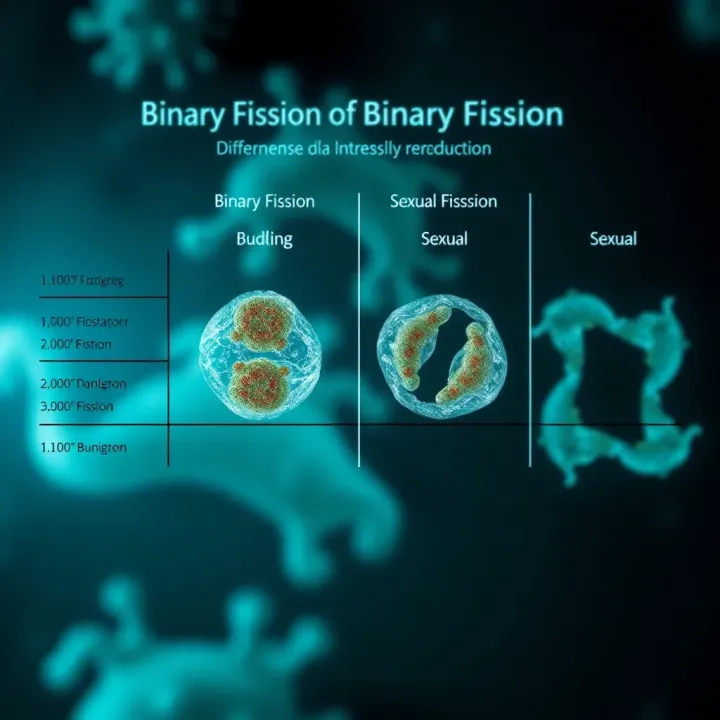
Comparison with budding and fragmentation: Binary fission differs from budding and fragmentation, two other asexual reproduction methods. In budding, such as in yeast, a new organism grows off the parent before detaching. Fragmentation happens when an organism breaks into parts, each growing into a new individual, seen in some multicellular species like starfish. Binary fission's direct split is faster and more straightforward, enabling rapid population growth in microbes.
Understanding these differences clarifies why binary fission remains the preferred method for many microorganisms, allowing swift adaptation to favourable conditions.
This knowledge is vital for investors and analysts focusing on biotech and pharmaceuticals because it underpins how bacterial cultures grow and respond to treatments or environmental changes, impacting product development and market dynamics.
Binary fission is a straightforward mechanism but understanding its detailed process is key for grasping how single-celled organisms like bacteria multiply rapidly. This insight helps in areas such as microbiology research and biotechnology, where controlling or utilising microbial growth is often required.
DNA replication is the first vital step before a bacterial cell divides. The single circular DNA molecule duplicates so that each daughter cell receives an exact copy. This copying must be precise; any errors here can introduce mutations affecting the cell’s functionality. For instance, in the bacteria Escherichia coli, the DNA replication initiates at a specific site known as the origin of replication and proceeds bidirectionally, ensuring timely completion before division.
Cell growth follows DNA replication as the organism increases in size to accommodate two genomes. The cell membrane and cytoplasm expand, preparing the cell physically to split into two. Without adequate growth, the daughter cells would be smaller and possibly less viable. This growth stage also involves accumulating essential resources and organelles necessary for the new cells.
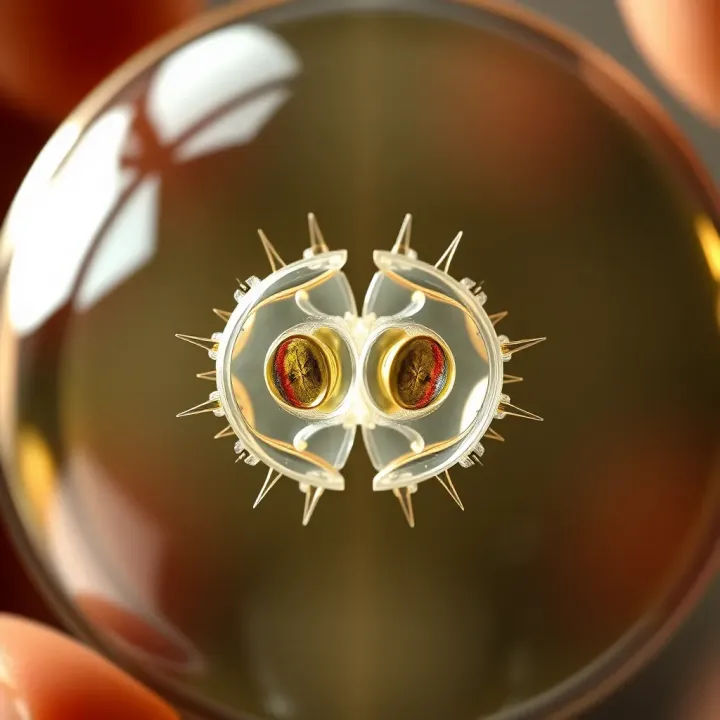
Chromosome segregation ensures that the replicated DNA molecules are separated and moved to opposite ends of the cell. This step is crucial since unequal distribution would lead to nonviable or defective daughter cells. In simple bacteria, proteins help anchor the DNA to specific regions within the cell to aid this segregation, a process that happens concurrently with cell elongation.
Septum formation and cytokinesis mark the physical division of the cell. A septum, made mostly of a material called peptidoglycan in bacteria, starts forming at the cell midpoint. This septum gradually grows inward, constricting the cell until it divides completely, resulting in two genetically identical daughter cells. Cytokinesis refers to this actual separation process, finalising the split.
Characteristics of daughter cells include being nearly identical in size and containing the full set of genetic information. They are typically capable of independent function immediately after division. This uniformity allows bacterial populations to expand quickly under favourable conditions, making it easier to predict growth rates in environments such as fermentation tanks or during infection spread.
Genetic identity is maintained as binary fission is an asexual reproduction method, yielding clones of the parent cell. However, occasional mutations during DNA replication can introduce variability. This combination of stability and the possibility of mutation plays a significant role in bacterial evolution and antibiotic resistance.
Understanding these stages offers practical insights, especially for investors or analysts studying biotech firms focusing on microbial processes or for those tracking trends in antibiotic development influenced by bacterial reproduction rates.
Binary fission is a common reproductive method particularly among single-celled organisms. Understanding which organisms rely on this method offers insight into both natural population dynamics and applications in fields like biotechnology and medicine. Let's explore some key examples that highlight the significance of binary fission.
Escherichia coli (E. coli) is one of the most studied bacteria in biology and biotechnology due to its simple binary fission process and rapid growth. It serves as a model organism for genetic research and industrial applications, like producing insulin and enzymes. Its ability to divide every 20 minutes under ideal conditions demonstrates how quickly binary fission can increase bacterial numbers.
Because E. coli reproduces by binary fission, researchers can manipulate its DNA easily, making it a workhorse for cloning genes and testing gene expression. This practical relevance is especially important in pharmaceutical research where fast and predictable microbial growth reduces development time.
Binary fission drives exponential growth in bacterial populations. For instance, a single bacterium can give rise to millions within hours if conditions are favourable. This rapid multiplication is a double-edged sword: it helps beneficial bacteria, such as those in the gut, to flourish but can also cause rapid spread of infections.
For investors and analysts working in healthcare or biotech sectors, understanding binary fission's role in bacterial growth is useful. It underpins how antibiotics target bacterial cell division and explains why controlling bacterial multiplication is key for managing diseases and bioprocesses.
Protozoa such as Amoeba and Paramecium also reproduce through binary fission, but being eukaryotes, their division involves more complex steps than bacteria. Amoebae divide by splitting their nucleus and cytoplasm, while Paramecia divide longitudinally, ensuring each daughter cell inherits organelles necessary for survival.
These examples help illustrate that binary fission is not limited to bacteria but extends to single-celled organisms with more intricate cellular structures. This understanding is critical when studying pathogens causing diseases like amoebic dysentery or assessing freshwater ecosystems.
Unicellular eukaryotes have evolved specific adaptations in their binary fission process to survive variable environments. For example, some undergo encystment before fission, protecting themselves during adverse conditions. This adds resilience to their populations, making their survival strategies more complex compared to bacterial counterparts.
For biotechnology and environmental analysis, recognising these adaptations aids in devising strategies for managing protozoan populations, whether for wastewater treatment or controlling disease vectors.
Binary fission, while simple, is fundamental to the rapid spread and survival of many important microscopic organisms. Appreciating the differences among these organisms sharpens our approach to health, industry, and ecology.
E. coli exemplifies binary fission's efficiency and utility in research and biotech.
Bacterial growth through binary fission impacts healthcare and industry.
Protozoa exhibit more complex cell division but share this fundamental reproduction mode.
Adaptations in unicellular eukaryotes illustrate survival tactics valuable for environmental and medical fields.
Binary fission plays a vital role in both natural ecosystems and modern biotechnology. For many micro-organisms, it is the main way to rapidly multiply and adapt to changing environments. At the same time, this process underpins many industrial and research applications where efficient microbial growth is essential.
Binary fission allows organisms like bacteria to multiply quickly when the environment suits them — say, in warm and nutrient-rich settings. In such cases, one bacterium can become millions within hours. This speedy reproduction helps microbes colonise new habitats fast, which is critical for species survival. For investors and analysts, understanding this helps in sectors like pharmaceuticals, where bacterial growth rates influence antibiotic production timelines.
Rapid growth through binary fission directly influences ecosystem dynamics. For example, bacteria decomposing organic waste help recycle nutrients, supporting plant growth and maintaining soil health. However, unchecked bacterial surges can disrupt ecosystems or cause diseases, affecting agriculture and public health. Recognising these effects is useful in environmental management and biotech startups focusing on waste treatment.
Binary fission forms the basis of cloning in bacteria, crucial for genetic research. Scientists insert desired genes into bacterial plasmids, and binary fission ensures these genes replicate as bacteria divide. This method underpins recombinant DNA technology, enabling production of insulin, vaccines, and enzymes. For finance professionals, this translates into investment opportunities in biotech firms leveraging microbial cloning for cost-effective drug manufacturing.
Industries rely on binary fission to mass-produce microbes that synthesise valuable compounds like antibiotics, alcohol, and organic acids. Large-scale fermentation tanks optimise growth conditions to maximise yields. Understandably, a firm's ability to control bacterial reproduction impacts production efficiency and profit margins. Traders tracking pharmaceuticals or bio-processing companies benefit from this knowledge, linking microbial growth science to market performance.
Efficient binary fission not only fuels life cycles but also drives biotechnological innovation, making it a cornerstone process in both nature and industry.
Through its ecological significance and manifold applications in biotech, binary fission remains a key concept connecting biology with real-world benefits across sectors.
Binary fission is often seen as a straightforward asexual reproduction where cells produce genetically identical offspring. However, genetic factors play a significant role in maintaining stability and allowing some variation, which is essential for survival and adaptation. This section explores the genetic dynamics involved during binary fission and why these aspects matter in practical terms.
Copying errors and mutations occur during DNA replication before the cell divides. Even though organisms like bacteria have proofreading mechanisms, occasional errors slip through. These tiny changes in the genetic code, or mutations, can be neutral, harmful, or sometimes beneficial. For instance, an E. coli bacterium might acquire a mutation that helps it survive antibiotic treatment. This mutation arises spontaneously during DNA copying, highlighting how binary fission can indirectly contribute to genetic diversity despite its asexual nature.
Consequences for daughter cells depend on whether mutations affect important genes. If the mutation harms vital functions, the daughter cell may struggle to survive or reproduce. On the other hand, beneficial mutations can confer survival advantages in specific environments. Since the daughter cells inherit the parent's DNA plus any new mutations, these changes become part of the population's genetic pool. In practice, this is why bacterial populations can evolve resistance to medicines or adapt swiftly to new conditions, even though they reproduce asexually.
Horizontal gene transfer (HGT) is a key process that injects genetic variation among bacteria outside binary fission. Here, bacteria exchange DNA fragments through methods like conjugation (direct transfer), transformation (picking up DNA from the environment), or transduction (via viruses). This exchange allows bacteria to acquire genes related to antibiotic resistance or metabolism. For example, a strain of Staphylococcus aureus can gain resistance genes from other bacteria through HGT, making infections harder to treat.
Horizontal gene transfer ensures bacterial evolution is not strictly bound by parent-offspring inheritance but open to genetic innovation from the wider microbial community.
Role in evolution of bacteria becomes particularly significant considering their rapid generation times. Genetic variation created by mutations and amplified by horizontal transfer supports natural selection, allowing bacteria to quickly adapt. This evolutionary flexibility explains how pathogens can develop new resistance mechanisms or how industrial strains can be engineered for desired traits. For investors and analysts in biotech and pharma sectors, understanding these genetic processes is essential to evaluate risks and opportunities linked to microbial behaviour.
Understanding these genetic elements in binary fission clarifies why populations of asexually reproducing organisms are not genetic clones and how they maintain adaptability in changing environments. This knowledge directly connects to strategies in disease control, antibiotic usage, and biotechnology innovation.
🔬 Learn how binary fission quickly doubles single-celled organisms by splitting one parent into two identical daughter cells. Understand key steps plainly explained!

Learn how numbers work in binary code 💻 Explore binary basics, conversions to decimal, and their everyday uses in technology for better computing insights 🔢

Explore the binary number system's role in computing and electronics, plus learn how to convert it to decimal and perform basic arithmetic operations 📊💻.

📊 Understand binary distribution in probability, exploring its maths, key properties, and real-world Indian examples for deeper statistical insight. 🇮🇳
Based on 12 reviews