

Understanding Numbers in Binary Code
Learn how numbers work in binary code 💻 Explore binary basics, conversions to decimal, and their everyday uses in technology for better computing insights 🔢
Edited By
Isabella Walker
Binary distribution is a basic yet powerful concept in probability and statistics. At its core, it describes situations where an event has exactly two possible outcomes — usually labelled as "success" and "failure." This distribution helps model repeated trials where each trial is independent, and the chance of success remains constant.

For traders and investors, understanding binary distribution can clarify the risks and probabilities involved in decisions like options trading or forecasting market movements. For example, if you consider daily stock price movements as either going up (success) or down (failure), the binary distribution can approximate the probability of certain numbers of upward trends over a given period.
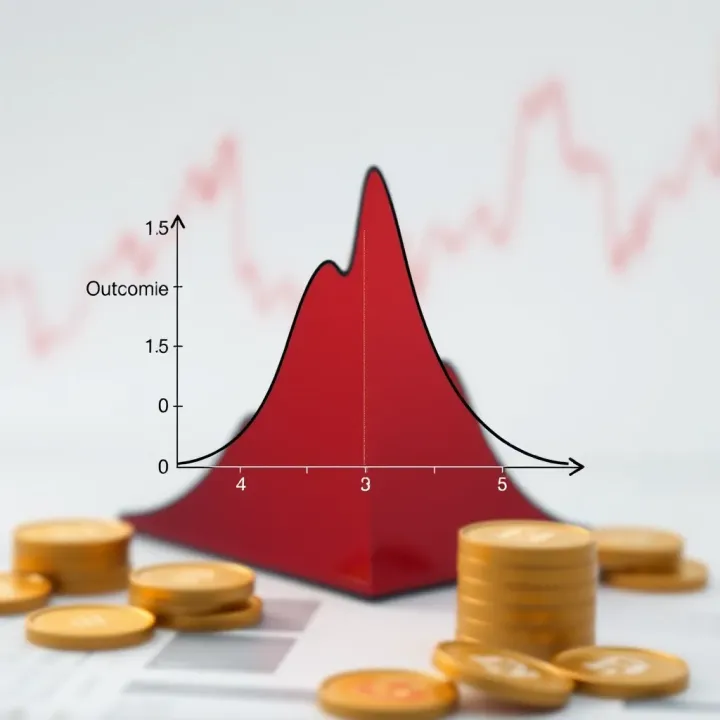
The binary distribution emerges from independent trials, each with probability p of success and 1-p of failure. When you perform 'n' such trials, the distribution gives the probabilities of observing exactly 'k' successes out of those 'n'. Mathematically, it’s expressed using the binomial formula:
P(X = k) = C(n, k) * p^k * (1-p)^(n-k)
Here, *C(n, k)* is the number of combinations, or ways to choose *k* successes from *n* trials.

## Practical Indian Examples

- **Insurance claim occurrences:** An insurer offering policies in regions like Maharashtra may want to estimate the probability that out of 100 policyholders, a specific number claims insurance in a year. With a known claim probability, binary distribution helps predict claim patterns and set premiums.

- **Election polling:** Analysts studying voter behaviour in a constituency might model whether individual voters will vote for a candidate (success) or not (failure). Aggregating these can help forecast winning probabilities.

- **Quality control:** A factory producing consumer electronics in Bengaluru may track how many units out of a batch pass quality tests. Binary distribution helps in estimating defect rates and maintaining standards.

## Key Properties

- The number of successes *X* follows a binomial pattern.
- Mean (expected value) is *n × p*, showing average successes over trials.
- Variance is *n × p × (1 - p)*, measuring how spread out the outcomes are.

> Understanding these properties is crucial for risk assessment in finance and industry, providing clarity on expected outcomes and their variability.

In summary, binary distribution is a simple yet versatile tool with plenty of [applications](/articles/understanding-binary-numbers-basics-applications/) relevant to the Indian financial landscape and beyond. Knowing how to apply it can improve analysis and decision-making across fields.

## Prolusion to [Binary](/articles/understanding-binary-numbers/) Distribution

Understanding binary distribution is crucial for professionals who handle uncertainties and probabilities, like traders, investors, and financial analysts. It offers a clear way to model situations where only two outcomes matter—for instance, whether a stock price will rise or fall, or if a particular trade will be profitable or not. This distribution helps break down complex decisions into simple, binary outcomes, making risk assessment and strategy formulation more straightforward.

In the fast-moving Indian stock market, recognising patterns of success and failure through binary distribution equips analysts to make calculated predictions. For example, an investor might use binary distribution to estimate the chance of a stock reaching a target price within a week, where the two outcomes are either the stock hits the target (success) or it does not (failure).

### What is Binary Distribution?

Binary distribution, also called the Bernoulli distribution, models a random experiment that has exactly two possible outcomes, often labelled as 0 and 1. Think of it as a simple yes/no or success/failure question where the probability of one outcome is *p* and the other is *1-p*. This becomes the basic building block for many statistical models and decision frameworks.

For instance, when you flip a coin, it lands on heads or tails—binary outcomes. In financial terms, it could be the success or failure of an IPO subscription or whether a trade closed in profit or loss.

### Key Characteristics of Binary Distribution

Binary distribution is defined by a single parameter *p*, which represents the probability of success (usually the outcome represented by 1). Its simplicity is its strength, but it places strong assumptions too—only two outcomes, and probabilities must sum to one.

Key features include:
- **Discrete outcomes:** Only two possible results exist.
- **Probability mass function (PMF):** For result 1, the PMF is *p*; for 0, it’s *1-p*.
- **Expected value (mean):** Directly equals *p*, giving the average success rate.
- **Variance:** Calculated as *p(1-p)*, showing variability in outcomes.

In Indian markets, binary distribution fits well for modelling binary events such as the likelihood of approval for loans, success of a new product launch, or whether a regulatory decision benefits a company. Traders and analysts can use this to frameпорт investment decisions or predict market reaction with a simple yet effective tool.

> *Binary distribution, with its focus on binary outcomes, enables clearer decision-making by reducing complex events to straightforward probabilities.*

## Mathematical Framework of Binary Distribution

Understanding the mathematical framework of binary distribution helps investors and analysts grasp how probabilities of two opposite outcomes behave over repeated trials. This foundation allows trading algorithms, risk assessments, and financial models to apply the theory confidently to real-market scenarios.

### Formulating the Probability Mass Function

The Probability Mass Function (PMF) assigns probabilities to each of the two possible outcomes in a binary experiment, typically labelled 0 and 1. For example, in stock trading, a 1 may represent a price rise, while 0 means a price drop. The PMF states that:

- P(X=1) = p, where p is the probability of success (e.g., price rise)
- P(X=0) = 1 - p

This simple formula, shining clear light on the likelihood of each outcome, helps analysts forecast expected returns and make data-driven choices.

### Parameters That Define Binary Distribution

Two main parameters define this distribution: the probability of success (p) and the complementary probability of failure (1 - p). These parameters directly influence outcome predictions. For instance, if a particular equity has a historic 60% chance of positive returns on given days, p=0.6 should be used in modelling its returns.

Adjusting p changes the distribution shape and allows nuanced modelling in finance, like adjusting for bullish or bearish trends. Grasping these parameters ensures traders calibrate expectations realistically, avoiding overly optimistic or pessimistic projections.

### Calculating Mean and Variance

The mean (expected value) of a binary variable reflects the average number of successes over trials. It's simply **μ = p**. In financial terms, if p reflects the chance of profit in a trade, μ is the expected profit rate.

Variance measures the spread or risk — mathematically **σ² = p(1 - p)**. High variance suggests more uncertainty in outcomes, critical for risk-sensitive asset allocation. Suppose a small firm’s stock has a 0.5 probability of moving up or down; variance peaks at 0.25, indicating greater unpredictability.

> Having a firm grasp on mean and variance enables investors to balance expected gains with risk appetite, improving portfolio decisions.

In summary, the mathematical framework of binary distribution simplifies complex probability scenarios into calculable forms. Traders and financial analysts can rely on this framework to quantify chances, understand risk, and make firm decisions enlivened by concrete numbers rather than guesswork.

## Practical Examples and Applications in India

Understanding how binary distribution works helps in solving real-world problems, especially in India’s diverse economic and social landscape. Its practical use extends to sectors like manufacturing, voting, and healthcare, where outcomes are often binary—yes/no, pass/fail, positive/negative. Such examples clarify the probabilities and improve decision-making.

### Quality Control in Manufacturing

In India’s manufacturing industry, binary distribution plays a key role in quality control. For example, in an automobile parts factory in Pune, the factory manager might track if a part is defective or not. Each part passing through inspection represents a trial with two possible outcomes: defective (failure) or non-defective (success). Using binary distribution, they can estimate the defect rate and set thresholds that alert when quality slips below standard. This helps reduce wastage and improves product reliability.

Moreover, with India's push towards "Make in India," factories across tier-2 and tier-3 cities are increasingly adopting statistical quality controls based on binary outcomes to maintain competitive standards.

### Evaluating Outcomes in Voting and Surveys

Election polling and market surveys in India often deal with binary variables such as "will vote for a particular candidate or not" or "customer satisfied vs dissatisfied." For instance, during the Lok Sabha elections, survey agencies may collect data on voter preference as a binary variable, helping them predict probable outcomes in different constituencies.

Binary distribution simplifies analysis of such yes/no decisions by quantifying the likelihood of each choice. This statistical backing helps political strategists and market researchers understand patterns without getting lost in complex data sets. In a country with diverse preferences, this clarity is critical.

### Healthcare and Medical Testing

In healthcare, binary distribution is widely used to evaluate medical test results, which are usually positive or negative. For example, in tuberculosis testing done in clinics across rural India, the probability that a patient tests positive helps estimate disease prevalence.

Hospitals and government schemes use this data to allocate resources efficiently. Also, during mass vaccination drives, binary outcomes (vaccinated/not vaccinated) assist in tracking coverage rates and identifying areas needing more attention.

> Practical applications of binary distribution provide straightforward insight into unpredictable or complex Indian environments. They turn simple two-outcome scenarios into powerful tools for planning and improvement.

By focusing on these examples, traders, investors, and analysts can better appreciate the scope and value of binary distributions in their own decision-making processes, especially when evaluating risks or probabilities in sectors influenced by such outcomes.

## Relation Between Binary and Other Probability Distributions

Understanding how the binary distribution relates to other probability distributions is essential for grasping its role in broader statistical analysis, especially in finance and investment fields. It helps frame binary outcomes—success/failure, yes/no, up/down—within more complex models, enabling traders and analysts to apply these concepts to real-world scenarios efficiently.

### Connection with Binomial Distribution

The binomial distribution generalises the binary distribution, capturing the probability of achieving a specific number of successes across multiple independent trials. While the binary distribution deals with just one trial outcome, the binomial sums these results over several tries.

For example, if a trader models daily stock price movements as either an increase or decrease, each day represents a binary event. Aggregating these days to evaluate the likelihood of, say, five days of price increase out of ten, involves the binomial distribution. This transition from single to multiple trials makes the binomial distribution highly useful for analysing trading patterns and investment risks.

### Comparing Binary and Bernoulli Distributions

In many texts, the binary and Bernoulli distributions might appear interchangeable since both model two possible outcomes. However, the discrete nature and usage context differ slightly. The Bernoulli distribution explicitly models a single trial with two outcomes, often coded as 0 or 1, representing failure or success.

Binary distribution, sometimes treated as a specific case of Bernoulli, emphasises the general concept of two exhaustive outcomes but may be expressed with different pairs of labels (like pass/fail, buy/sell, up/down). The Bernoulli distribution’s parameter is the probability of success (p), which also defines binary outcomes.

In practical financial analysis, Bernoulli can model a single trade’s win or loss probability. In contrast, binary distribution helps conceptualise any two-outcome scenario beyond just success and failure, broadening its applicability.

> Both Bernoulli and binary distributions form the backbone of decision-making models in finance, particularly in risk assessment and strategy testing.

Recognising these connections allows traders, investors, and analysts to pick the right distribution based on the problem scale—single trial or multiple—and the nature of outcomes. Correct application improves forecasts, backs more accurate risk models, and informs better trading strategies in markets like the NSE or BSE.

## Limitations and Common Misunderstandings

Understanding the limitations and common misunderstandings of binary distribution is as important as grasping its core concepts. For traders, financial analysts, and investors, appreciating these boundaries can prevent costly mistakes when applying binary models to real-world scenarios. While the binary distribution neatly captures two-outcome processes such as success/failure or yes/no results, blindly applying it without considering context can lead to misinterpretation and flawed conclusions.

### Misinterpretations in Practical Use

A frequent misunderstanding is assuming that binary distribution accounts for the nuances within the two outcomes themselves. Take credit risk assessment as an example: a binary model might classify borrowers simply as default or no default. However, not all defaults carry the same severity or probability, and the model ignores this variation. Similarly, in stock market sentiment analysis, categorising investor mood as just 'positive' or 'negative' misses the subtleties that can influence market movements.

Another issue arises when practitioners misinterpret the probability parameter as a fixed figure. In reality, the success probability in a binary distribution is often estimated from past data and subject to change. For example, a 60% chance of a stock moving up doesn’t guarantee the next movement will reflect that ratio, especially in volatile markets. Treating these probabilities as absolute can mislead traders in strategy formulation.


### Constraints of Binary Distribution Models

Binary distribution models inherently simplify complex phenomena into two possible outcomes, which can be a severe limitation. This reduction only works well when the process naturally falls into clear-cut categories. For instance, using binary models for financial events like 'profit' or 'loss' is useful, but it fails to capture how much profit or loss occurs, a critical factor for investors.

Moreover, binary models assume each trial is independent and identically distributed, which often isn't the case in financial markets. Stock prices, for example, exhibit temporal dependencies and external influences that violate independence assumptions. Relying solely on binary distribution in such cases restricts accurate risk assessment and forecasting.

On top of that, binary models are less effective when applied to multi-class problems, such as segmenting customers into various risk categories beyond just high and low risk. Here, multinomial or other distributions provide better depth.

In summary, while binary distribution serves as a foundational tool, it is crucial to recognise its limits and avoid over-simplifications. Analysts should complement it with deeper models or additional data where complexity demands it.Learn how numbers work in binary code 💻 Explore binary basics, conversions to decimal, and their everyday uses in technology for better computing insights 🔢

🧮 Discover how binary numbers represent data, their role in computing & electronics, plus easy methods to convert & use them in everyday tech.

🔢 Learn how online binary addition works with clear examples, practical uses, and key tools. Ideal for digital computing and programming enthusiasts!

🔍 Explore Linear vs Binary Search algorithms: learn their workings, pros, cons, and practical tips to pick the best search method for your data!
Based on 15 reviews