

Mastering Candlestick Patterns: A Simple Guide
Learn to master candlestick patterns 📈 with easy-to-follow examples and practical tips. Includes handy PDF resources 📄 for traders looking to boost their technical skills.
Edited By
Isabella Collins
Candlestick patterns form an essential tool for traders analysing price movements in stocks, commodities, or currencies. They offer a visual way to gauge market sentiment by showing the opening, closing, high, and low prices within a specific timeframe. This method started in Japan centuries ago and has since become popular worldwide, including among traders in India, thanks to its simplicity and reliability.
Understanding these patterns helps traders predict short-term price directions, enabling timely buy or sell decisions. For instance, the "Hammer" indicates a possible reversal after a downtrend, while the "Engulfing" pattern signals strong momentum shifts. These patterns don't guarantee outcomes but improve the odds when combined with volume and other indicators.
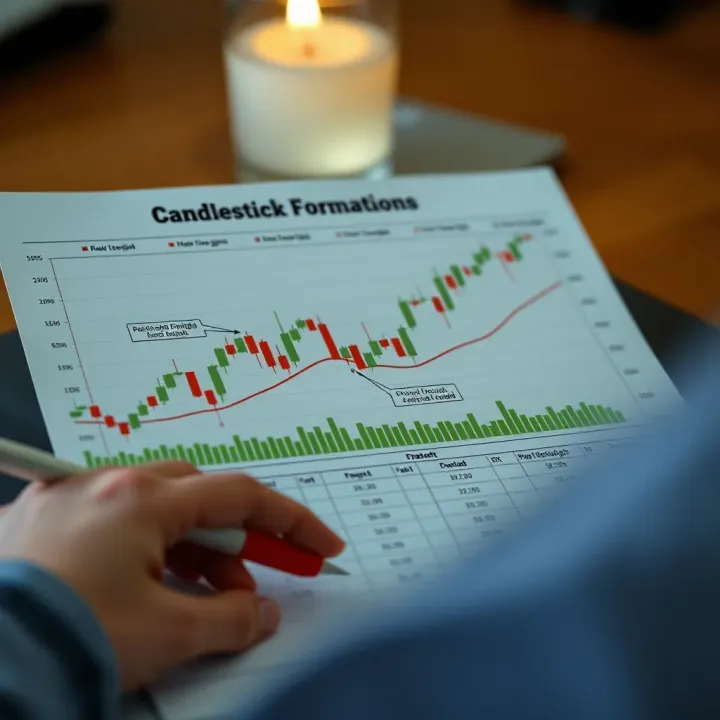
Clarity in Visualisation: Instead of raw numbers, candlesticks give an intuitive glimpse of market behaviour.
Versatility: Useful across various markets like NSE stocks, forex, and commodities.
Efficiency: They can quickly show shifts in buyer-seller dynamics, crucial during volatile sessions.
It's vital to master common patterns such as Doji, Shooting Star, Morning Star, and Three White Soldiers. Each carries distinct signals about market sentiment and trend direction. Equally important is avoiding false signals by considering broader market context and additional tools like moving averages.
For traders in India, combining candlestick analysis with knowledge of local market trends, sector performances, and economic indicators strengthens decision-making.
To aid quick referencing, downloadable PDFs summarising key candlestick patterns offer convenience for on-the-go trading, especially during busy market hours.
In the sections that follow, we'll explore the most reliable candlestick patterns and how to use accompanying PDF guides to sharpen your trading skills effectively.
Candlestick charts provide a visual summary of price movement within a specific timeframe, making them indispensable tools for traders. They offer more detailed insights than traditional line charts, enabling traders to gauge market direction and momentum quickly. For instance, a daily candlestick chart shows how the price moved during that day—this clarity helps traders decide whether to enter or exit a position.
Each candlestick captures four prices: open, close, high, and low. The open price is where trading began for the period, while the close represents where it ended. The high and low specify the highest and lowest prices traded. For example, if a stock opened at ₹150, reached a high of ₹160, dropped to ₹145, and closed at ₹155 in one day, the candlestick will encode this information clearly.
Understanding these prices is practical since they reveal the market's mood during the period. If the close is higher than the open, it usually indicates buying strength; if lower, it points to selling pressure. Traders use this to assess short-term trends.
The candle body is formed between the open and close prices, and its colour conveys bullish or bearish sentiment. A long green (or white) candle body suggests strong buying activity, whereas a long red (or black) body indicates selling dominance. The wicks (or shadows) extend from the body to the high and low points, showing price rejection beyond the open and close levels. For example, a long upper wick might mean sellers pushed back prices after a rally attempt.
Compared to bar or line charts, candlestick patterns offer better visual clarity. Their shapes and colours make it easier to spot turning points and market shifts at a glance. Imagine scanning through several stocks in a volatile market day: candlesticks instantly highlight strong momentum or hesitation without the need for complex calculation.
Candlestick patterns also convey market sentiment and momentum in real time. For example, a series of bullish candlesticks with small wicks suggests consistent buying interest, while a doji pattern—a candle with nearly equal open and close—reflects market indecision. Traders interpret these signals to time their trades effectively, reducing guesswork in an uncertain market.
Candlestick charts do not just plot prices—they tell a story of market psychology. Recognising this allows traders to make decisions based on sentiment shifts, not just numbers.
In Indian market contexts like the NSE (National Stock Exchange) or BSE (Bombay Stock Exchange), candlestick analysis is widely used due to the large number of active day traders and investors who rely on quick, actionable insights. Using candlestick charts alongside other technical tools can give a fuller understanding and improve trading outcomes.
Understanding key candlestick patterns helps traders gauge market direction and sentiment quickly. These patterns indicate potential reversals or continuations, allowing you to plan entries and exits with more confidence. Indian traders, especially those dealing with volatile markets like the Sensex or Nifty, rely on these signals to make timely decisions.
A Doji appears when a candle’s open and close prices are almost equal, forming a cross or plus sign shape. This pattern reflects market indecision—buyers and sellers are roughly balanced. For instance, if you spot a Doji after a strong uptrend on a Nifty chart, it may suggest momentum is fading and a reversal could follow. However, alone it’s not enough; looking at surrounding candles and volume helps verify if sentiment is truly shifting.

Both these patterns look similar—a small body with a long lower wick—but their meaning depends on the trend. A Hammer forms after a downtrend and signals a possible bullish reversal. Imagine Reliance Industries falling sharply, then forming a Hammer candle; that might indicate the bears are losing control. The Hanging Man, by contrast, appears after an uptrend and warns of possible bearish reversal. These signals work best when confirmed by following price action or volume spikes.
The Shooting Star has a small body near the day’s low and a long upper wick. This shows that although buyers pushed prices up during the session, sellers regained control by close. After a sustained rally, spotting a Shooting Star—say in Tata Motors’s chart—might hint at exhaustion in buying and an upcoming price drop. Like all single-candle signals, confirmation from the next sessions validates the pattern’s strength.
Engulfing patterns involve two candles. A Bullish Engulfing happens when a small red candle is followed by a larger green candle that completely covers the prior body. This suggests a shift from selling to buying pressure. Conversely, a Bearish Engulfing shows a small green candle engulfed by a bigger red candle, indicating sellers taking over. For example, such a pattern on Infosys in a downtrend could warn traders about a fresh decline or reversal.
These are three-candle patterns signalling strong reversals. The Morning Star shows a large red candle followed by a small-bodied candle (star), then a big green candle closing above the midpoint of the first. It indicates bearish sentiment giving way to bulls, useful in spotting bottoms. The Evening Star is its mirror, signalling tops with a green candle, star, then red candle. Stocks like HDFC Bank often form these during corrections.
Harami means "pregnant" in Japanese, describing a small candle nestled inside the previous bigger candle body. A Bullish Harami can form in a downtrend where a small green candle appears inside a large red one, hinting at weakening selling pressure. A Bearish Harami reverses this. Useful for intraday or swing traders, these patterns highlight moments where trend fatigue might lead to pauses or reversals.
Recognising these key patterns equips you better to navigate market moves with more precision, reducing guesswork and improving timing.
Understanding and applying these patterns within your trading strategy can boost your chances of profitable trades when combined with volume and trend analysis.
Candlestick patterns provide quick clues about market sentiment, but using them effectively requires confirmation and a broader view. A single pattern alone doesn’t guarantee success; it’s how you combine them with other data points that sharpens your trading edge. For example, spotting a bullish engulfing pattern might look promising, but confirming it with volume spikes or trend direction helps avoid false signals.
Volume indicates the strength behind price movements. When a candlestick pattern forms with high volume, it usually means more trader interest and conviction. Say a hammer appears during a downtrend – if the volume is weak, the reversal may not hold. But a surge in volume suggests buyers are stepping in, increasing reliability.
Similarly, understanding the underlying trend adds context. Patterns like shooting stars or dojis are more meaningful if they appear near support or resistance in a defined trend. If the trend is unclear or sideways, these patterns may produce whipsaws or false moves. Always check moving averages or trendlines for a clearer market direction.
Moving averages smooth out price data and help identify the trend direction. Traders often use simple moving averages (SMA) over 20 or 50 days to confirm candlestick signals. For instance, if a bullish engulfing pattern forms above the 50-day SMA with an upward slope, it strengthens the buy signal. Conversely, the same pattern below a declining moving average may hint the rally is weak.
Support and resistance show where prices repeatedly stall or reverse. Candlestick patterns at these levels offer practical trading opportunities because they suggest price reactions. A morning star forming near a strong support level often signals a bounce, making it an ideal entry point. On the flip side, a shooting star near resistance may warn of a pullback.
RSI measures momentum, tracking overbought and oversold conditions. A pattern like a hammer appears most reliable when RSI indicates oversold levels (below 30). It hints buyers might return soon. Similarly, a bearish engulfing near an RSI above 70 suggests the asset could be due for a correction. Combining RSI with candlesticks helps avoid chasing trades in exhausted markets.
Successful trading with candlestick patterns depends on disciplined risk controls. Always define your stop-loss just beyond the pattern's wick to limit losses. For example, after a bullish engulfing pattern, place a stop slightly below the candle’s low. Plan your target based on risk-reward ratios, such as aiming for gains two or three times the stop distance.
Besides stops, manage your position size to avoid heavy exposure. Combining candlestick patterns with market context and technical indicators helps identify high-probability trades rather than gambling. Over time, practising these strategies will build confidence, transforming chart reading into a reliable decision-making tool.
Using candlestick patterns effectively means not relying on them alone but confirming signals with volume, trends, and other tools. Clear entry, exit, and risk rules complete the trading process.
With these approaches, traders can use candlestick charts not just as a guessing game but as a practical guide in real market situations.
Access to a well-organised candlestick patterns PDF can make a trader's life much easier, especially during hectic market hours. Having a concise PDF guide lets you check key patterns quickly without flipping through multiple screens or tabs. For example, spotting a bullish engulfing or a doji pattern at a glance can help you decide whether to enter or exit a trade immediately. Traders in India, working across time zones or juggling other commitments, find a quick-reference PDF invaluable for staying alert to market signals while saving precious time.
Beyond the market bustle, PDFs serve as great tools for offline study. You might be commuting or away from your computer and still want to revisit pattern details. Downloaded PDFs let you build your understanding gradually, allowing you to highlight, add notes, or compare various candlestick formations at your own pace. This approach suits traders preparing for exams like the NSE’s NCFM or SEBI Grade A, who often prefer offline materials alongside live charts.
Brokerage educational portals are among the most trustworthy sources for candlestick patterns PDFs. Brokers like Zerodha, ICICI Direct, and Angel Broking regularly offer clear, updated resources tailored for Indian markets. Their materials often include practical examples from Sensex or Nifty indices, making them directly relevant for your trading strategy. Plus, broker PDFs frequently come bundled with tutorials on integrating candlestick analysis with other tools.
Trading websites and blogs also provide a range of downloadable guides. Websites such as Investopedia India, Moneycontrol, and MarketPulse feature user-friendly PDFs that explain patterns in detail and share case studies. While these are helpful, be cautious and verify that these documents come from reputed contributors to avoid outdated or oversimplified content.
Official books and publications offer in-depth and authoritative knowledge on candlestick patterns. Titles by recognised authors like Steve Nison or Thomas Bulkowski are often available as eBooks or PDFs. These sources delve into pattern psychology, historical performance, and statistical reliability. Such comprehensive guides help serious traders deepen their understanding beyond basic patterns.
Keep your PDF organised by grouping patterns based on their trading implications, such as bullish, bearish, or neutral signals.
Combine PDF study with live chart practice; apply pattern recognition to real-time data for better retention.
Update your PDF collection regularly to include recent insights and adapt to changing market behaviours.
Highlight quick tips and warnings within the PDFs to focus on potential pitfalls or confirmation signals.
Using PDFs smartly bridges the gap between theory and real trading, turning complicated charts into accessible insights for confident decisions.
Candlestick patterns offer valuable clues about price action, yet traders must avoid common errors to use them effectively. These mistakes can mislead decisions and lead to unnecessary losses. Understanding pitfalls helps you apply patterns with better accuracy and confidence.
Candlestick patterns should not be your only trading signal. In many cases, patterns might form but fail to lead to expected price moves without supporting confirmation. For example, a bullish engulfing pattern can look promising, but if the overall trend is strongly bearish or volume is low, the reversal may not hold. Combining candlestick signals with volume spikes, moving averages, or momentum indicators like the Relative Strength Index (RSI) gives more reliable trade setups.
Ignoring confirmation is like setting off on a journey with only a vague map — you could easily end up lost.
A candlestick pattern’s meaning changes with the market backdrop and the timeframe used. A hammer candlestick on a daily chart shows a stronger potential reversal than the same pattern appearing on a 5-minute chart within intraday noise. Similarly, a pattern that appears during a sideways or range-bound market might not signal a trend change, unlike one appearing at a key support or resistance zone. Thus, always evaluate patterns with respect to the larger market trend, volume behaviour, and your trading timeframe to avoid false signals.
Candlestick reading improves with hands-on experience rather than merely memorising patterns from PDFs or guides. Practising chart analysis daily helps you understand subtle variations and exceptions, which no static guide can teach fully. For instance, recognising that a shooting star is only valid at a price peak, or spotting a doji among erratic candles, comes from observing past charts and testing strategies with paper trading or small real trades. Hence, foster patience and continuous learning alongside study materials.
Avoiding these common mistakes will improve the effectiveness of your candlestick-based trading. Use confirming tools, consider context carefully, and build real-world experience to sharpen your judgement. This balanced approach helps prevent costly errors and boosts your trading confidence.
Learn to master candlestick patterns 📈 with easy-to-follow examples and practical tips. Includes handy PDF resources 📄 for traders looking to boost their technical skills.

📈 Master key candlestick patterns in trading with our comprehensive guide! Learn to spot bullish & bearish signals, decode market moves, and apply smart strategies.
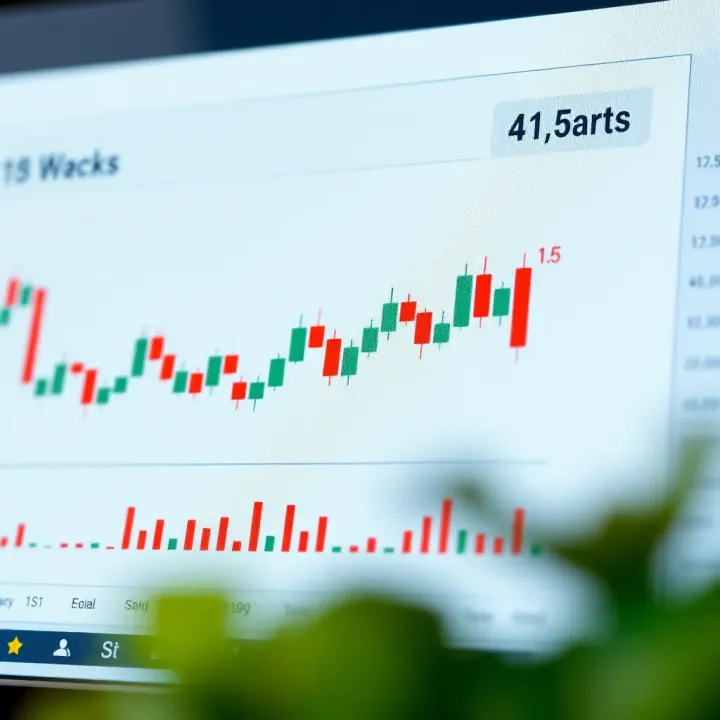
📊 Master candlestick patterns with this practical guide! Learn to decode price moves, avoid common mistakes, and boost your trading skills in India.

📈 Discover how momentum candlestick patterns help spot strong market moves! Learn to read key signals and improve your trading strategy with our PDF guide.
Based on 6 reviews