
Key Candlestick Patterns Every Trader Should Know
🔍 Master key candlestick patterns for trading! Learn bullish & bearish signals, spot market trends, and improve your strategy with practical tips 📊
Edited By
Jessica Davies
Trading isn’t just about numbers and charts; it’s about reading the subtle signs the market gives you. One of the most powerful tools traders use worldwide—and particularly in the bustling markets of India—is candlestick patterns. These little visual cues pack a punch, revealing what buyers and sellers are really thinking.
Candlestick patterns are more than just fancy shapes on a screen. They tell stories of market sentiment, show potential reversals, and help traders make informed decisions. Whether you’re a newbie still trying to get your footing or a seasoned investor looking to refine your strategy, understanding these patterns can make a noticeable difference.
In this guide, we’ll walk through the essentials of candlesticks, break down key patterns with examples relevant to Indian markets, and share tips on how to use these signals practically. By the end, you’ll have a toolkit to better spot trends, anticipate shifts, and trade with more confidence.
The market speaks in whispers, and candlestick patterns help you hear them clearly.
Let's get started on breaking down these patterns so you can read and react like a pro.
Understanding candlestick charts is a key stepping stone for traders aiming to read market behavior effectively. These charts offer a visual snapshot of price movements, shadowing market sentiment in a way that’s often easier to interpret than plain numbers or traditional bar charts. If you're trading stocks, commodities, forex, or any other asset, getting comfortable with candlesticks can save you from costly mistakes and help you spot opportunities that might otherwise go unnoticed.
For example, a trader watching Reliance Industries on the NSE might see a series of candlesticks with long lower shadows indicating buying pressure, which can hint at a potential price bounce. Such clues are vital – especially in fast-moving markets where timing is everything.
Grasping the basics of candlestick charts allows you to blend them with other tools like moving averages or RSI, enhancing your overall trading strategy. Without a solid foundation, it’s easy to misread signals or chase false breakouts. This section lays the groundwork by explaining why candlesticks are essential, how they evolved, and what their basic parts represent.
Candlestick charting originated in Japan during the 18th century, credited mainly to a rice trader named Munehisa Homma. Long before Western traders had their bar charts or line graphs, Japanese merchants used candlesticks to track price trends and market psychology. Homma’s innovation was not just about plotting prices but wrapping that data in a visual format that reflected fear, greed, and indecision – the emotional drivers behind market moves.
Unlike Western volume-driven charts, early candlestick charts focused predominantly on price behavior within specific time frames, such as daily or hourly sessions. This method caught on globally only much later, especially after Steve Nison introduced it to the Western audience in the 1990s through his book "Japanese Candlestick Charting Techniques."
Today, candlestick charts form the backbone of technical analysis, widely adopted across global markets, including India’s vibrant stock exchanges.
Each candlestick represents price action within a specific period—be it minutes, hours, or days—and is defined by four key prices: Open, High, Low, and Close. The 'Open' is where the price started at the beginning of that period, and 'Close' shows where it ended. The 'High' marks the peak price reached, and the 'Low' marks the lowest point.
Understanding these four prices helps a trader determine the strength and sentiment of the move. For instance, if a stock like Tata Motors opens at ₹400, hits a high of ₹410, lows at ₹395, and closes at ₹408 during one trading day, the candlestick will tell you that buyers mostly controlled that session, pushing prices higher by the close.
This data is crucial because it reveals where momentum is concentrated. A close near the high suggests buying interest, while a close near the low indicates selling pressure.
The body of the candlestick is the thick part between the open and close prices. If the close is higher than the open, the body is usually white or green, indicating a bullish period. If the close is lower, the body is filled black or red, signaling bearishness.
The wicks (also known as shadows) are the thin lines extending above and below the body. They show the extremes prices reached within the period but didn’t maintain. Long upper wicks suggest sellers pushed the price down from a high level, hinting at resistance or rejection at higher prices. Conversely, long lower wicks indicate buyers stepped in near the lows, suggesting support.
For example, a hammer pattern features a small body with a long lower wick, often signaling a potential reversal after a downtrend. Recognizing the balance and length of bodies and wicks provides insights into the battle between buyers and sellers happening in the background.
Remember, candlestick parts are pieces of a puzzle. The shape alone doesn’t tell the whole story, but combined with volume, trend direction, and other tools, they guide your trading decisions thoughtfully.
Understanding basic candlestick patterns is essential for any trader, especially those who want to read market sentiment quickly and make informed decisions. These patterns act as a trader’s first line of defense, helping to spot potential trend changes or confirmations without relying solely on other tools. For instance, spotting a "hammer" after a downtrend might indicate a possible reversal, prompting traders to reconsider their positions before jumping in.
Familiarity with these patterns can simplify complex charts, making it easier to interpret what buyers and sellers are up to in real time. This section breaks down both single and multiple candlestick formations, giving you a solid foundation to build your trading strategies upon.
A Doji occurs when the opening and closing prices are almost equal, resulting in a very small or non-existent body. This pattern signals indecision in the market — neither bulls nor bears are fully in control. It’s essential to watch for Doji near support or resistance levels because it can hint at a possible pause or reversal.
Imagine watching stock like Reliance Industries; if a Doji appears after a strong upward move, it might mean the bullish momentum is fading, signaling caution for buyers.
Both Hammer and Hanging Man have a small body with a long lower wick, but their significance lies in the trend context. A Hammer, found at the bottom of a downtrend, suggests buyers are stepping in, potentially reversing the trend. On the flip side, a Hanging Man appears after an uptrend and warns that selling pressure might build up.
For example, Tata Motors showing a Hammer after several days of falling prices could mean a bounce is near, prompting traders to prepare for a possible buy.
The Shooting Star features a small body near the day’s low, with a long upper wick, appearing after an uptrend. Its presence often points to a potential top, signaling that sellers are pushing back after a strong rise. This pattern can be a heads-up to lock in profits or tighten stop losses.
A classic case might be seen in Infosys stocks climbing steadily, then forming a Shooting Star, suggesting the rally is losing steam.
A Spinning Top has small bodies with wicks on both sides, reflecting indecision with both buyers and sellers testing control but neither winning decisively. This pattern signals a market that is unsure, often preceding a significant move but requiring confirmation from the subsequent candle.
Trading such when you spot a Spinning Top in HDFC Bank’s charts might mean holding off on big trades until the market shows a clear direction.
The Engulfing pattern involves two candles where the second completely covers or "engulfs" the first's body. A Bullish Engulfing happens during a downtrend when a large green candle swallows a small red one, indicating strong buying interest. The reverse, a Bearish Engulfing, suggests sellers overpower buyers after an uptrend.
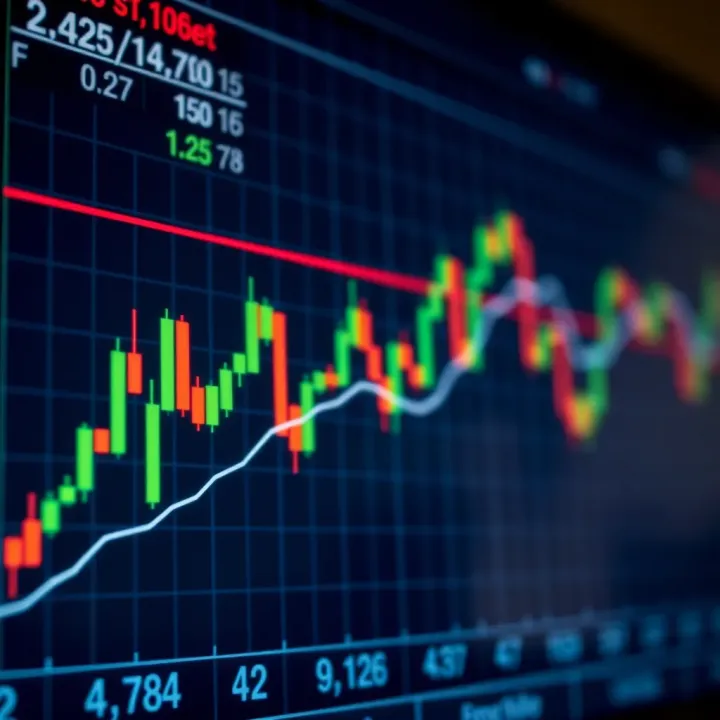
Traders spotting a Bullish Engulfing in stocks like ICICI Bank should see it as a sign of a possible upward move.
These are three-candle patterns that signal strong reversal points. A Morning Star appears after a downtrend and includes a small-bodied candle between a bearish and bullish candle — usually signaling a trend flip to the upside. The Evening Star suggests the opposite, marking a top and potential drop. Both patterns provide clearer signals than single candles alone.
For instance, in the case of Bharat Petroleum, a Morning Star at support could hint at a fresh uptrend.
The Harami pattern is the opposite of Engulfing and involves a small candle inside the body of the previous larger candle. A Bullish Harami during a downtrend hints momentum is slowing down, while a Bearish Harami during an uptrend warns that buyers might be losing control.
Watching this pattern in Asian Paints’ chart could help catch subtle shifts before they become big moves.
The Three White Soldiers is a bullish pattern made up of three long green candles with consistent upward closes, each opening within the previous candle’s body. It’s a clear sign strong buying is underway. Conversely, the Three Black Crows are three consecutive bearish candles, signaling strong selling pressure.
Spotting Three White Soldiers in a stock like Maruti Suzuki often means the bulls are running the show for now.
By mastering these basic patterns, traders can gain an edge, interpreting market moves more effectively and taking actions grounded in observable price behavior rather than guesswork.
Understanding candlestick patterns is like knowing the language of the market, but interpreting them without considering the market context can be misleading. Patterns don't exist in a vacuum. Their significance can shift depending on the prevailing market conditions, volume, and recent price trends. For traders in India, where markets can be particularly volatile due to economic announcements or geopolitical events, context adds the extra layer of insight needed to make smarter decisions.
Interpreting candlestick patterns effectively means confirming whether a pattern signals a genuine trend change or continuation, rather than a momentary blip. It helps you avoid jumping the gun and protects against false signals. For instance, spotting a hammer pattern alone isn't enough — if it shows up after a prolonged downtrend and is supported by rising volume, it's more likely to mark a reversal.
Without context, even the most textbook-perfect candlestick patterns can lead you astray. Always pair your pattern reading with a broader market view to improve accuracy.
A key to successful trading is distinguishing when a trend is genuine and worth following. Candlesticks can help confirm these trends by showing consistent price action that aligns with trend direction. For example, in an uptrend, you might see a series of bullish candles, like "Three White Soldiers" — this pattern reliably indicates strong buying momentum.
Alongside the pattern, watching volume supports confirmation. If each bullish candle comes with increased volume, it signals traders are genuinely backing the move. Conversely, if there's a lack of volume, the trend might be running on fumes.
Practical example: In Nifty 50 during mid-2023, a series of engulfing bullish candles appeared with rising volumes. Traders confirming this trend would combine candlestick signals with moving averages to reinforce that the uptrend was solid. It's not just seeing the pattern but validating it with what else is happening that boosts confidence.
Reversals are the market's way of changing its mind, and candlestick patterns offer clear signals for spotting when this happens. Patterns like the "Evening Star" or "Hammer" can hint at a trend flip. But it pays to be cautious because reversal patterns aren’t flawless predictors.
When spotting a reversal, check if the candle appears at key levels — support or resistance zones where prices tend to react. For instance, a Hammer near a historical support level carries more weight than the same pattern mid-way through a range.
Another tip: combine reversal patterns with momentum indicators like RSI. If RSI is coming off an oversold condition while a doji or hammer forms, chances are higher for a valid bounce or trend reversal.
Sometimes the market takes a breather rather than flipping the script. Continuation patterns, like "Bullish Flags" or "Harami", signal that the existing trend is likely to keep going. Recognizing these can help you stay in trades longer and capture more profits.
Look for smaller candles or pauses in price that happen after a strong directional move. For instance, a harami pattern during a rally suggests indecision but not necessarily a reversal — the eventual breakout often resumes the prior trend.
As an example, during a strong rally in Tata Motors shares, several spinning top candles appeared, indicating short pauses before the uptrend marched on. Traders wise to continuity patterns would avoid jumping out too soon.
Interpreting candlestick patterns in market context is a skill that sharpens with practice and observation. The blend of pattern recognition with trend analysis, volume, and key price levels separates effective traders from guessers. Always keep the bigger picture in mind — it’s what turns a good pattern reader into a confident market player.
Candlestick patterns offer essential visual cues about market sentiment, but relying on them alone can lead to false signals or missed opportunities. Technical indicators provide an extra layer of insight, helping traders confirm or question what candlesticks suggest. In the Indian stock market, where volatility and sudden shifts aren't uncommon, combining these tools can improve decision-making markedly. For instance, spotting a bullish engulfing pattern followed by a confirming moving average crossover gives a stronger signal than either alone.
Moving averages smooth out price data over specific periods, revealing trends that might not be obvious at first glance. When you spot a promising candlestick pattern, such as a hammer or engulfing pattern, looking at moving averages helps confirm if the trend aligns with that pattern’s suggested direction.
For example, in the NSE, a trader might watch the 50-day and 200-day moving averages. If a bullish hammer appears and the 50-day moving average crosses above the 200-day — the so-called golden cross — that backs up the bullish signal from the candlestick. This combination reduces the chances of falling for a fakeout.
On the other hand, a shooting star candlestick paired with the short-term moving average crossing below a longer-term one (death cross) strengthens bearish expectations. Such combined signals enhance confidence when entering or exiting trades.
Volume often tells a deeper story behind price movements. A candlestick pattern accompanied by high trading volume generally has more credibility. For example, a morning star pattern signaling a reversal at the end of a downtrend is much stronger if volume spikes compared to previous days.
In India, many traders use volume indicators, like On-Balance Volume (OBV) or simply watch raw volume bars for confirmation. If an engulfing pattern occurs on low volume, it might be a false alarm. Conversely, high volume confirms buyers or sellers are truly interested, reinforcing the pattern’s signal, and validating potential trend changes or continuations.
The Relative Strength Index (RSI) measures momentum and can help identify overbought or oversold conditions. Pairing RSI with candlestick patterns adds valuable confirmation for entry or exit points.
Imagine spotting a hammer pattern at the bottom of a chart suggesting a possible reversal. If the RSI is below 30, indicating the asset is oversold, this coincidence supports a buying opportunity. Conversely, a shooting star at the top of a trend, combined with RSI above 70, suggests a potential reversal or pullback ahead.
This synergy between RSI and candlestick patterns helps traders avoid jumping into trades too early or missing the chance to act on genuine reversals. Rather than guessing, using RSI as a filter keeps trades grounded in momentum readings alongside price action.
Combining candlestick patterns with moving averages, volume, and RSI doesn't guarantee success but sharpens your ability to read the market's real pulse. It’s about stacking the odds in your favor with multiple layers of confirmation.
In summary, integrating technical indicators with candlestick patterns is a smart move for traders navigating volatile markets like those in India. Each indicator adds context and a measure of reliability, helping you make more informed calls rather than chasing false signals.
Mastering candlestick patterns takes time and patience, but many beginners slip up by falling into some common traps. Understanding these mistakes helps traders avoid costly errors and build a more reliable trading approach. Let’s unpack these typical pitfalls you should watch out for.
One of the most frequent blunders is treating candlestick patterns as standalone signals. For instance, spotting a Hammer pattern doesn’t immediately guarantee a market reversal if it appears during a strong downtrend without any supporting factors. The market’s broader context – including trend direction, nearby support or resistance levels, and recent price action – plays a crucial role in interpreting these patterns. For example, a Doji candlestick at the peak of a strong uptrend might simply signal indecision, rather than a full reversal. Relying solely on the pattern, without considering surrounding market conditions, often leads to false signals and losses.
Ignoring the bigger market trend or the volume accompanying candlestick patterns can render your analysis incomplete. Volume acts as a confirmation gauge; a bullish engulfing pattern during a spike in volume generally has more credibility than one occurring on low trading activity. Imagine you spot a Shooting Star at a resistance level, but the volume is negligible – the signal may be weak, and price might continue to advance anyway. Similarly, trading against a dominant trend without strong confirmation is risky. A trader jumping into short positions on small bearish patterns during a solid uptrend often finds themselves caught in a market squeeze.
Seeing patterns everywhere and jumping into trades without proper planning is a pitfall many new traders face. Candlestick patterns are common, and not every one means “buy” or “sell” immediately. For example, repeatedly entering trades after every small spinning top or doji can rack up fees and losses due to false alarms. It’s like trying to catch every wave in the ocean—it’s exhausting and unlikely to be profitable. Discipline is key: waiting for clear confirmation and aligning trades with robust setups helps avoid overtrading and burnout.
Key takeaway: Candlestick patterns are a powerful tool but do need to be interpreted within the larger market picture, volume context, and with sound trading discipline. Avoid the temptation to treat them as magic signals on their own.
By steering clear of these missteps, traders can approach candlestick analysis with a clearer mind and more realistic expectations, improving their chances of consistent success.
Getting the hang of candlestick patterns outside of textbooks is where many traders hit a wall. These tips steer you away from theory alone and into practical use — the kind that can make a difference in your trading game.
Before you place real money on the line, it's smart to backtest candlestick patterns using historical prices. Imagine spotting a Morning Star pattern on Reliance Industries’ stock from the past year and seeing if it really preceded a price jump similar to what traders expect. Many platforms like TradingView or Zerodha’s Kite allow you to scroll through historical charts to identify these setups without risking a single rupee.
This process helps weed out patterns that might look promising but don't perform well in actual market conditions. Don't just tick them off; note the success rate in different market phases — bull, bear, or sideways — since a pattern that works in a roaring bull might flop in a cold market.
Patterns alone don’t pay the bills—you need a plan. For example, if you spot a Bullish Engulfing pattern on the Nifty 50 charts, decide beforehand how much you're willing to risk and where you will set your stop-loss. Your trading plan should answer questions like:
When will I enter a trade?
What signals confirm my entry?
Where will I place stop-loss to protect capital?
How will I scale out profits?
A solid plan keeps emotions in check. Say you notice a Hammer candlestick after a dip but the overall trend is weak; your plan might dictate you wait for volume confirmation before jumping in. This kind of discipline will spare you from chasing every signal and getting caught in traps.
Even the best pattern can fail. That’s why controlling risk is a must. Remember, candlestick patterns suggest probability, not certainty. A simple rule of thumb is never to risk more than 1-2% of your trading capital on a single trade.
Use stop-loss orders placed just below or above the relevant candlestick’s wick depending on position direction. For instance, after an Evening Star pattern signals a potential reversal in Tata Motors, position your stop-loss just above the stars’ high to limit loss.
Also, diversify trades instead of putting all eggs in one basket. Combining candlestick patterns with technical indicators like moving averages or RSI can help filter risky signals and improve your win rate over time.
Good traders treat risk management with the same seriousness as spotting patterns—it’s the cornerstone of steady profit, no matter the market’s mood.
By integrating these practical steps, traders can transform candlestick patterns from mere charts on screen into a reliable tool for spotting opportunities and decision-making. Practice, plan, and protect — that’s the trader’s mantra for success with candlestick patterns.
When you're serious about mastering candlestick patterns, relying just on theory or scattered practice isn't enough. Having the right resources and tools can make a noticeable difference in your learning curve. Whether you're a newbie trader or someone with a bit more experience, the materials you study and the platforms you use will shape your understanding and help you make better decisions in real market conditions. This section sheds light on where to find solid information, how to enhance your charting skills, and ways to join communities that sharpen your approach.
Books remain a strong foundation for learning candlesticks because they offer both detailed explanations and practical examples. For Indian traders, classics like Steve Nison's Japanese Candlestick Charting Techniques are a treasure trove; Nison is often credited with bringing candlestick charts into Western investing. Another good read is Encyclopedia of Candlestick Charts by Thomas Bulkowski, which dives into a wide range of patterns with stats on their effectiveness.
If you prefer something more concise and straightforward for day-to-day use, Candlestick Trading for Dummies by Russell Rhoads is quite approachable. It breaks down patterns clearly, sometimes with regional examples, which can help relate these concepts to markets like NSE or BSE.
Make sure to supplement book learning with up-to-date market data because financial markets change, and historical examples need to be applied carefully.
Using reliable software is essential to test patterns in real-time and historical modes. For Indian traders, platforms like Zerodha’s Kite and Upstox are hugely popular due to their user-friendly interfaces and solid charting tools. Both offer comprehensive candlestick chart options paired with volume and technical indicators without hefty fees.
For those looking to do deeper analysis or backtesting, TradingView stands out with its rich library of indicators and community scripts. It supports Indian market data and is increasingly becoming a go-to for serious retail traders because you can customize the charts, save layouts, and share them easily within forums.
Remember, a tool’s usefulness depends on your ability to navigate it confidently; spend time tweaking settings to observe how different candlestick patterns emerge on various timeframes.
Brushing up your skills through online courses offers structured learning and practical insights straight from experienced traders. On platforms like Udemy and Coursera, you’ll find specifically tailored courses covering technical analysis and candlestick patterns, some even focusing on the Indian trading scene.
Community forums like Traderji and the India section on StockTwits allow traders to exchange ideas, post charts, and discuss live market action using candlesticks. These conversations often reveal nuanced interpretations and help you avoid rookie mistakes by learning from collective experience.
Engaging regularly with these communities can provide perspective beyond books or software—real traders sharing real-time signals and setups.
In summary, having a mix of solid books, practical charting software tailored to your market, and active online communities will serve as a strong backbone for mastering candlestick patterns. Don’t just stop at one source; combine these to suit your trading style and goals for the best results.
🔍 Master key candlestick patterns for trading! Learn bullish & bearish signals, spot market trends, and improve your strategy with practical tips 📊

Learn to master candlestick patterns 📈 with easy-to-follow examples and practical tips. Includes handy PDF resources 📄 for traders looking to boost their technical skills.
📈 Discover how momentum candlestick patterns help spot strong market moves! Learn to read key signals and improve your trading strategy with our PDF guide.
📈 Explore key candlestick patterns in the Indian stock market, their role in spotting trends, and tips to avoid common trading errors for smarter decisions.
Based on 12 reviews