

Understanding Level Order Traversal in Binary Trees
🌳 Learn how level order traversal visits all nodes in a binary tree level by level, with clear examples and tips for coding it in practice.
Edited By
Sophie Mitchell
When we deal with trees in computer science, navigating through them effectively becomes critical. Level order traversal is one of the simplest yet most useful ways to explore a binary tree. Instead of going deep down one branch before checking others, it processes nodes level by level, starting from the root and moving outward. This approach is particularly handy for analyzing hierarchical structures, making decisions layer by layer.
This article digs into how level order traversal works, why it's important, and how you can implement it efficiently. We'll also touch on common issues you might hit and how this method fits into real-world coding cases—whether you’re building search algorithms, optimizing resource allocation, or just trying to get a better grip on tree structures.

By the end, you should have a solid understanding of why this traversal method matters and how you can put it to work in your own projects or analyses.
Level order traversal is an essential technique when working with binary trees, especially in fields like finance and data analysis where hierarchical data structures often pop up. It’s basically a method to visit every node in a tree, level by level, starting from the root and moving down one level at a time. This approach is handy for visualizing the shape of the tree and understanding how data spreads across each tier.
For investors or analysts dealing with decision trees or organizational hierarchies, level order traversal can help break down complex data layers systematically. Think of it like paging through a financial report, one section at a time, rather than trying to soak in the whole thing at once. This makes the data easier to digest and analyze.
At its core, level order traversal is about visiting nodes in a breadth-first fashion. Instead of diving deep into one branch, it looks at all the nodes at the current depth before moving on to the next level. Imagine a corporate structure: starting with the CEO, then managers, then their teams, each level examined fully before moving on.
This traversal typically uses a queue to keep track of nodes waiting to be processed. You start by adding the root node to the queue. Then, you repeatedly remove the node at the front of the queue, process it, and add its children to the back. This cycle continues until all nodes are visited.
Preorder, inorder, and postorder traversals are all depth-first search methods—meaning they explore as far as possible down one branch before backtracking. Preorder visits the root before its children, inorder visits the left child, then the root, and finally the right child, while postorder waits until both children are visited before processing the root.
These methods are great when you want to process nodes in a particular sequence, such as when you’re evaluating expressions or sorting data. For example, inorder traversal of a binary search tree retrieves values in sorted order, which is useful for financial datasets.
Level order traversal stands out because it processes nodes layer by layer rather than diving down branches. This difference is significant if you're interested in understanding the structure or breadth of the tree at each level rather than the depth.
In practical terms, level order traversal is the only one among these methods that naturally fits scenarios like shortest path computations in unweighted graphs or serialization of tree data, which is common in real-time data exchange between financial systems.
Understanding level order traversal gives you a wider view of how data is organized across levels, helping with scenarios where such breadth-first analysis is required.
In summary, while depth-first traversals focus on the depth and sequence of nodes, level order traversal prioritizes breadth, offering a different lens to analyze data structures like binary trees.
Level order traversal is an important technique because it gives a unique window into the structure of a binary tree. Unlike other traversals that go deep into particular branches, this method reads the tree layer by layer. This approach provides a straightforward way to understand data organized hierarchically, which comes in handy in many situations.
Imagine trying to understand a company's org chart packed with names and roles. Level order traversal is like viewing that chart one level at a time, starting from the CEO and moving down to managers, then down to employees. This visual, level-by-level scan makes it easier to grasp how different parts of the system connect and how data flows across levels. For instance, when checking the distribution of resources or the flow of decisions, a level order traversal lays out the components clearly and simply.
Viewing a binary tree through level order traversal unravels its structure much like peeling an onion, showing each layer clearly without jumping ahead.
Level order traversal is the backbone of breadth-first search (BFS) in trees and graphs—a method widely used to explore or search through nodes systematically. This technique checks nodes at the current depth before moving deeper, which is critical in many algorithms. For example, BFS helps find the shortest path in a maze or network, where examining the situation level-by-level avoids unnecessary backtracking. It’s also used in AI, such as pathfinding in games, or balancing loads in network systems.
In real life, level order traversal can assist in areas ranging from decision-making trees in finance to networking systems and beyond. Consider a stock trading platform that organizes assets based on risk levels; a level order traversal enables efficient querying of all assets at each risk category before moving to the next. Similarly, serialization of a binary tree (like in data backup or transfer) often uses level order traversal because it preserves the structure accurately and can be reconstructed easily.
Another example lies in scheduling systems: tasks are lined up in priority levels. Traversal by level means dealing first with high-priority tasks before proceeding to lower tiers, matching practical workflows naturally.
Overall, level order traversal offers a pragmatic, methodical way to handle and interpret structured datasets, which is why it’s a preferred choice in many computational and real-world scenarios.
When you talk about level order traversal in binary trees, the backbone is entirely about choosing the right data structure. This traversal processes nodes level by level, so the data structure has to hold the order in which nodes are visited and help manage this sequence effectively.
Queues are the go-to data structure for level order traversal. They work on a first-in, first-out (FIFO) basis — just what you need to visit nodes in order of their depth. You start by enqueuing the root node. Then, for each node you dequeue, you visit it and enqueue its left and right children if they exist. This cycle keeps going until the queue is empty, ensuring the tree’s levels are processed from top to bottom.
For example, say you have a tree root with value 10, with left child 20 and right child 30. You enqueue 10 first. Then dequeue 10, visit it, and enqueue 20 and 30. Next, dequeue 20, visit it, then dequeue 30, and visit it. Using a queue makes this flow neat and straightforward.
Queues also help avoid the complexity of tracking levels manually, since the order in which nodes are enqueued intrinsically handles the traversal's breadth-first nature. In many programming languages like Python or Java, built-in queue libraries or collections simplify this process.
While queues are standard, other structures can be used depending on specific requirements or constraints. For instance, Deques (double-ended queues) can handle variations like zigzag traversal, where you alternate the direction of level processing. This lets you add and remove nodes from both ends, making traversal flexible.
Some might attempt to use recursive approaches combined with depth tracking arrays to simulate level order traversal, but these tend to be less efficient and more cumbersome compared to a queue-based iteration.
You could also use two stacks for zigzag traversal—one to hold the current level, another for the next. But that’s veering into traversal variations rather than simple level order.
In sum, picking the right data structure depends on what you want out of the traversal. For plain level order, queues remain unbeaten. For specialized cases, exploring deques or stacks might bring some advantages.
Pro Tip: Always consider memory efficiency when dealing with large trees. Queues hold nodes ready to be processed, so their size grows with the tree width, which might become substantial in dense trees.
Understanding these data structures not only paves the way to implement level order traversal effectively but also prepares you for adapting to real-world scenarios where traversal nuances matter.
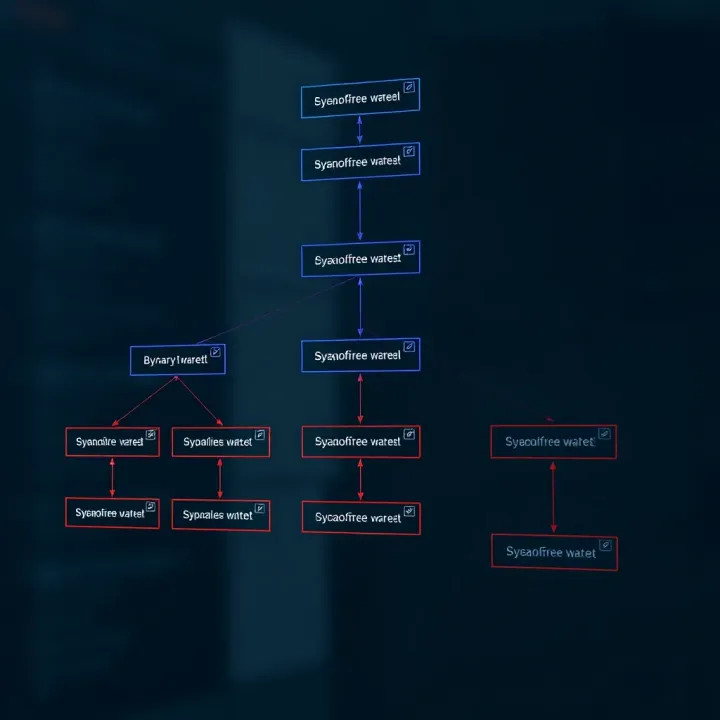
Implementing level order traversal might sound like an uphill task, but breaking it down step-by-step makes the process much clearer. This approach ensures you handle each part properly, maintaining the structure of the binary tree while clearly visiting each node the right way. For traders and finance professionals who dabble in algorithm design or preparing technical analyses, mastering this method provides a solid foundation to handle complex data structures efficiently.
Understanding how to set up the environment for traversal and then move through each level systematically helps avoid common pitfalls like missing nodes or infinite loops. The queue data structure plays a central role here, allowing you to keep track of the nodes yet to be visited in order. Next, we'll go over exactly how you prepare your queue and what you need to keep in mind when moving level by level.
Before anything else, you need to set up a queue that will store nodes waiting for processing. A queue here acts like a line at a bank counter — the first one to get in will be the first one to be served, which perfectly suits our need to process nodes level-wise.
Kick things off by checking if the tree's root is null; if it is, there's no tree to traverse, so you can return immediately. Otherwise, enqueue the root node to start out. This initial setup ensures you're ready to begin the traversal properly.
Imagine a small binary tree representing investment decisions, where each node holds a decision option. Starting with the root (your initial decision), you add it to the queue. This act sets you up to explore related decisions step-by-step.
When you visit nodes during the traversal, you're essentially processing each investment option one by one, left to right, level by level. Take the node at the front of the queue, process it (this could be printing its value, analyzing it, or applying some calculation), and then remove it from the queue. This visit is critical because it’s when you actually “touch” the data in the tree rather than just passing by.
Using this method ensures no node escapes your attention, making your analysis thorough and dependable — essential traits in finance and trading where missing a data point can lead to poor decisions.
After visiting a node, the next step is to add its children to the queue, if any. This action keeps the traversal moving down level by level because you add all nodes connected to the current level before moving deeper.
For example, if a node represents a branching financial choice, its children would be the possible next steps. Adding them to the queue means you’ll evaluate these options systematically soon after finishing the current level.
This action also prevents you from skipping nodes, maintaining the integrity of the traversal.
Tip: Make sure to always check if a child node exists before adding it to the queue. Attempting to enqueue a null node will lead to errors or unnecessary processing.
By methodically visiting nodes and queuing their children, level order traversal keeps your sequence orderly and clear. This clarity is what makes it valuable in problem-solving designs and real-world applications alike.
When dealing with level order traversal, it’s easy to overlook the quirks that come with edge cases or unusual tree structures. Yet, these can trip up your code or cause performance hiccups if not handled properly. Accounting for these situations not only makes your traversal robust but also prepares you to tackle real-world problems where binary trees aren't always neat and balanced.
An empty tree, meaning no nodes at all, is the simplest edge case but one that cannot be ignored. If you try to run level order traversal on an empty tree without checking, you’ll end up queuing nothing or, worse, causing errors due to dereferencing null pointers.
In practical terms, your traversal function should start with a sanity check. For example, before enqueueing the root, confirm the root node exists. If it’s null, your function can return immediately — nothing to process here. This check may seem trivial, yet skipping it can lead to unnecessary crashes, especially in large systems processing dynamic data where empty trees can pop up unexpectedly.
Always start your level order traversal by checking if the tree is empty to avoid running into null value errors.
Most binary trees you'll encounter outside textbooks aren’t perfectly balanced. Some branches may run deep, while others are just a couple of nodes thick. This unbalanced nature affects how your queue grows during traversal as some levels have a flood of nodes while others barely have a handful.
When processing unbalanced trees, it’s important to realize that the queue size can spike abruptly at wide levels and shrink quickly at narrow ones. This variance impacts your space complexity and can cause memory hiccups in tight environments. One practical example is in financial data trees where some stock branches might have more logged transactions (deeper branches) compared to others.
To handle this naturally, your algorithm doesn't require special adjustments, but your implementation must allow flexible queue sizing. Also, when logging or analyzing the traversal, consider capturing details level-wise, which helps debugging and performance tuning. For instance:
Use a dynamic data structure like a linked queue rather than a fixed-size array queue
Monitor peak memory consumption during traversal to identify unusually large levels
In short, treating unbalanced trees means trusting the queue to handle node loads dynamically while keeping your checks in place for memory management and possible overflow scenarios.
Handling these edge cases ensures your level order traversal works smoothly even when your data isn’t textbook-perfect. In finance or any data-heavy domain, these corner cases often become the norm rather than exceptions, so being prepared pays off in long run stability and accuracy.
When working with level order traversal, getting a grip on how much time and memory it takes is more than just academic. Especially if you’re handling large binary trees, knowing the complexity helps you anticipate performance bumps and optimize your algorithms.
Time and space complexity tell us how the traversal scales as the tree grows. It’s like knowing how long your road trip will take depending on the distance and how much gas your car will need. For financial analysts working with decision trees or stockbroker algorithms, understanding this means avoiding slowdowns or crashes when the data grows.
Keeping an eye on resources ensures smoother, faster processing without unnecessary overhead.
The time complexity of level order traversal generally sits at O(n), where n is the number of nodes in the tree. This is because the traversal visits every node once and only once. Think of it like going through every room in a big office building to check attendance — no room gets skipped or visited twice.
For example, whether you’ve got 10 nodes or 10,000 nodes, you’ll only spend time proportional to the total number of nodes present. There’s no extra nested loop to slow things down beyond this linear pass.
However, it’s important to note that performance can dip if the tree is highly unbalanced since traversing long chains (like a linked list disguised as a tree) still takes linear time but can limit parallel processing or balancing strategies.
Space complexity mostly depends on how many nodes the queue holds at any given moment during traversal. At worst, this equals the maximum number of nodes at any level in the tree. For a perfectly balanced binary tree, this hits roughly O(w), where w is the maximum width of the tree.
In practical terms, if your tree is balanced, the widest level could have close to half the nodes. Imagine a financial decision tree where the base level has thousands of options — that’s when your queue balloons the most.
On the flip side, if the tree is skewed, say heavily left- or right-skewed, the queue size won't grow as much since each level only holds a few nodes. So, the memory overhead will be lower but the traversal is more like a long line.
Time complexity: Linear, always scanning each node once.
Space complexity: Dependent on the biggest level, sometimes nearly half of the total nodes in balanced trees.
Knowing this helps you design your algorithms and data handling for scale, whether you’re building trading bots, decision models, or portfolio analytics based on hierarchical data.
Level order traversal, in its simplest form, is pretty straightforward: you visit nodes level by level from top to bottom. But in practice, variations on this approach can offer more nuanced insights about the tree's structure or optimize it for particular uses. For traders, analysts, or anyone dealing with hierarchical decision models, knowing these variants can help represent and analyze data more effectively.
These variations are not just gimmicks; they serve specific needs like presenting data in a user-friendly way, improving search efficiency, or simplifying certain computations. The two main variants we'll look at here are Zigzag (or Spiral) Level Order Traversal and Level Order Traversal with Level Separation. Each brings something different to the table.
Zigzag traversal modifies the usual approach by switching the direction you visit nodes at each level. Instead of going straight left to right on every level, it alternates: level one goes left to right, level two goes right to left, then back again. This pattern helps highlight the tree's structure in a way that’s more symmetrical visually and can be handy when the order of nodes per level matters.
Imagine you're looking at a decision tree for an investment portfolio. Zigzag traversal could help emphasize which options come into focus from different “angles” or perspectives as you move through the layers. This approach is especially useful in applications such as UI rendering where you want to alternate layouts by level or for visualizing data flows that have a natural back-and-forth pattern.
Here’s how it works briefly:
Use a deque (double-ended queue) or two stacks to manage nodes.
For odd levels, process nodes left to right.
For even levels, process nodes right to left.
This variation is a subtle tweak on the classic queue-based method but offers richer insight, especially when combined with graphical representations.
Regular level order traversal returns nodes continuously, without a clear marker between levels. For many practical applications — like serialized tree storage, printing hierarchical data, or processing nodes batch-wise — it’s vital to know where one level ends and another begins.
In this variation, each level’s nodes are grouped separately. You might return a list of lists, where each inner list contains all nodes at one level. This makes analyzing or manipulating data per level much easier.
Use cases include:
Serialization & Deserialization: When converting tree data to strings (for example, saving a portfolio decision tree), knowing each level helps reconstruct the exact tree structure.
Batch Processing: Performing operations on nodes on the same level before moving deeper.
The technique typically:
Enqueues the root.
Uses a loop that processes all nodes currently in the queue — which correspond to one level — before moving to the next.
Collects nodes level-wise into a separate container.
This method shines where clarity of structure matters, like in financial models where each level might represent a time frame or decision stage.
In summary, understanding these variations expands your toolkit for handling trees. While classic level order traversal works well for many cases, these tweaks offer more flexibility, tailored display options, and better control over how data is accessed and manipulated.
Level order traversal isn’t just a theoretical concept; it packs a punch when applied in real-world scenarios. For financial analysts and traders juggling complex data structures, understanding these practical uses can give an edge in optimizing algorithms or handling hierarchical data. This traversal method makes it easier to process nodes layer by layer, which is a natural fit for many tree-based problems encountered in tech and finance.
Serialization is about converting a binary tree into a format that can be easily stored or transmitted, while deserialization does the reverse—reconstructing the tree from the stored format. Level order traversal is ideal here because it preserves the relative positions of nodes across each level.
Think of it like flattening a decision tree into a list to send over a network, then rebuilding it exactly as it was. Using level order traversal ensures that null or missing children are recorded correctly, so no node relationship is lost. This is especially useful when persisting complex tree structures in databases or transferring them between systems.
For instance, in financial modeling, decision trees that assess risk or evaluate options can be serialized for storage and later deserialized to reproduce the same structure for analysis. This maintains integrity and speeds up workflows without manually reconstructing the tree.
Level order traversal shines when it comes to searching for the shortest path from one node to another in an unweighted tree. Since it processes nodes level-by-level, it naturally finds the closest target node first without exploring unnecessary paths.
Imagine you’re scanning a network of stock portfolios organized as a tree, trying to find the shortest route to a portfolio with a specific attribute (like a high return). With a level order traversal, you start at the root and move down each level, guaranteeing the earliest match is found.
This is much like a breadth-first search and can be crucial for algorithms that evaluate nearest neighbors or shortest connections in hierarchical financial data or market structures. It prevents deeper, less relevant nodes from slowing down the process and ensures efficient resource use.
In short, level order traversal helps keep things tidy and logical when navigating trees, which is why it forms the backbone of many practical algorithms especially in programming environments financial pros might work with.
Coding a level order traversal might sound straightforward, but there are traps that can trip up even experienced developers. Missteps here can lead to bugs that are hard to track, such as infinite loops or wrong output sequences. Getting these common mistakes right not only improves your code’s reliability but also helps maintain clear logic and efficient processing.
One of the most frequent slip-ups occurs in managing the queue that drives the traversal. When dequeuing nodes to explore their children, it’s easy to mess up indexing or the loop’s boundary conditions. For example, if you process one fewer or one extra node than the current level actually contains, the traversal's order breaks down.
Imagine you are using a loop to process components level-by-level, and you set the loop to run until it reaches queue.size() - 1 instead of queue.size(). That off-by-one mistake means you’ll leave a node hanging until the next iteration, which disrupts the perfectly layered output.
Always capture the queue's size at the start of the level processing and iterate exactly that many times. This guarantees you only process nodes from that level and add their children for the next round, no more, no less.
Another pitfall is failing to check for null or missing children before enqueueing them. Since binary trees aren’t always complete or full, attempting to simply add left or right child nodes without checking if they exist can lead to runtime errors or stray placeholders in your data.
Let’s say you’re traversing a financial dataset modeled as a binary tree representing investment options. If a node lacks a right child but your code blindly adds it, you’ll insert a null into the queue. Later, when processing this null, your program might crash or output nonsense.
Always verify that child nodes exist before adding them to your queue. A simple conditional check can save headaches later on:
python if current_node.left: queue.append(current_node.left) if current_node.right: queue.append(current_node.right)
> Remember, vigilant null-handling isn’t just about avoidance of errors — it ensures your traversal’s integrity and robustness.

Taking care to avoid these common mistakes makes your level order traversal code cleaner and more dependable. This is especially important in sensitive areas like financial data processing, where accuracy and robustness can’t be compromised.

## Practical Tips and Best Practices

In the world of coding level order traversal, knowing the theory is just half the battle. What really makes your code fly is applying practical tips and best practices that make your solution not just work but work well. It’s about writing code that’s reliable, efficient, and easy to maintain. For traders or finance students dealing with complex tree data structures, these practices ensure smooth operations without unnecessary headaches.

### Choosing Appropriate Data Structures

Choosing the right data structure for level order traversal is like picking the right tool for a job—it can save you time and avoid messy bugs. The queue is your go-to here, because level order traversal is inherently a breadth-first approach. Using a queue makes it straightforward to track and process nodes level by level.

A simple example: consider a queue implemented with a linked list versus one based on an array. While the array-based queue might face resizing issues if the tree is very large or unbalanced, a linked list queue smoothly grows without performance hitches. For such cases, you might choose a `LinkedList` in Java or `collections.deque` in Python because they offer efficient insertions and deletions.

> Tip: Avoid using a stack here. Although stacks are great for depth-first traversals like preorder or inorder, they don’t fit well with the breadth-first nature of level order traversal.

Sometimes, extra data structures are helpful, like using a hashmap to track the depth of nodes or a list of lists to separate nodes by levels. But always weigh the added complexity against the need. For example, when dealing with large financial data trees, minimizing overhead keeps your application snappy.

### Testing Your Implementation Thoroughly

Thorough testing is what separates a one-off script from production-ready code. With level order traversal, a common pitfall is not accounting for edge cases, such as trees with a single node, completely unbalanced trees, or even empty trees. If your code doesn’t handle these gracefully, it can throw exceptions or give incorrect outputs.

Start testing with simple cases:

- An empty tree (should return an empty list or equivalent output)
- A tree with only the root node (just one element)
- A complete binary tree (all nodes filled)
- An unbalanced tree with longer branches on one side

For a practical example, imagine a finance app that parses hierarchical transaction nodes for audits. If your traversal breaks with an unbalanced tree, it might miss transactions, leading to costly errors.

Beyond correctness, test the performance with large datasets. Simulate a tree with thousands of nodes and ensure your queue handling doesn’t cause memory bloat. Catching inefficiencies early means fewer problems when deployed.

> Best practice: Automate your tests. Use unit testing frameworks like JUnit for Java or pytest for Python. Include assertions that confirm the order matches expected outputs for given tree inputs.

By carefully selecting your data structures and rigorously testing your code, you're not just getting the job done—you’re making your code trustworthy and ready for real-world use cases. This approach is especially important when dealing with sensitive financial data or complex analytics, where mistakes can be expensive and time-consuming to fix.🌳 Learn how level order traversal visits all nodes in a binary tree level by level, with clear examples and tips for coding it in practice.

Explore level order traversal in binary trees 🌳: understand how to visit nodes level by level, learn key techniques, variations, and real-world uses.

Explore level order traversal of Binary Search Trees 🌲 with clear steps, applications, and tips to handle challenges efficiently for better search & data use.

Explore how to find the maximum depth in binary trees 🌳 with clear examples, recursive & iterative methods, plus tips for optimizing depth calculation effectively.
Based on 6 reviews