
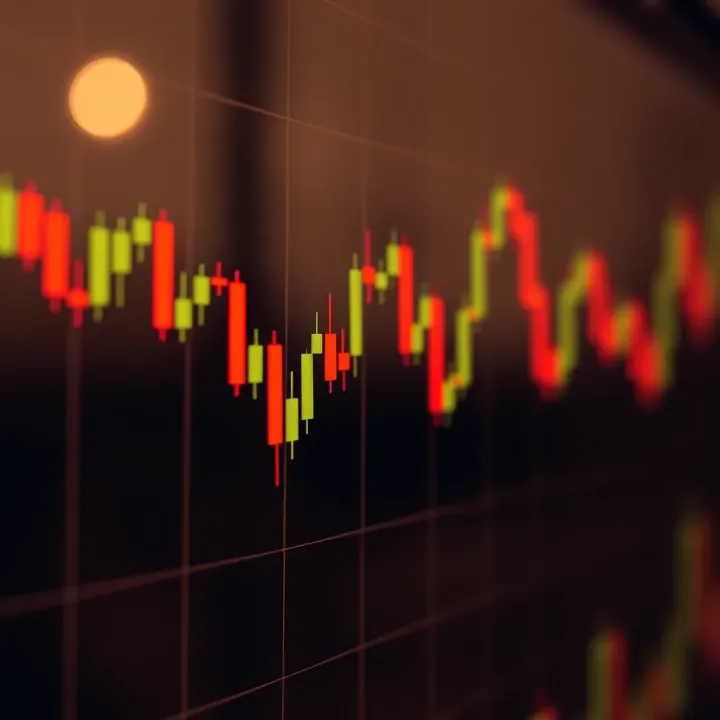
Effective Candlestick Patterns for Trading Success
📈 Master key bullish & bearish candlestick patterns traders use in stocks & forex. Learn to spot reversals & continuations confidently for smarter trades.
Edited By
Oliver Hughes
Candlestick patterns are among the most trusted tools for traders in the stock market, especially when trying to make sense of price movements quickly. In India’s fast-moving markets like NSE and BSE, knowing how to read these patterns can give traders a sharp edge, whether they’re flipping stocks for short-term gains or holding for longer trends.
At its core, a candlestick chart isn’t just about lines or bars; it’s a story of battle between buyers and sellers woven into every candle’s shape and color. Each pattern tells traders something — it might signal a pause, a reversal, or a continuation of a trend. But not all patterns hold the same weight, and unraveling what’s likely to happen next depends on understanding the most reliable ones.

This article starts with the basics, helping you get comfortable with what candle charts represent — their anatomy, and what different shadows and bodies mean. After that, we dive into the most commonly spotted candlestick formations, especially those that have stood the test of time and trader usage in India’s dynamic markets.
By the end, you’ll have a solid grasp on which candlestick patterns to watch out for and how to interpret them alongside other tools. This clarity can help you take more confident trading actions rather than leaving it all up to guesswork.
Candlestick patterns are not just pretty shapes; they are market psychology captured visually. Knowing them is like having a map in a bustling bazaar – it guides your steps through chaos.
The focus stays practical — no fluff or get-rich-quick ideas here — so you can apply these patterns directly when analyzing stocks, commodities, or indices trading in India. If you’re ready to read the market’s subtle hints more like an insider, this guide is for you.
Candlestick charts are a popular way to represent price movements in trading, offering a compact and visually intuitive snapshot of market behavior. Understanding these charts is essential because they reveal not just price levels, but also the sentiment behind the moves. For instance, a trader tracking Tata Motors on the NSE might notice how a strong bullish candle differs from a cautious one just by looking at the body and shadows.
These charts make it simpler to spot trends, reversals, and continuations without getting lost in raw numbers. Beyond just seeing where the price went, they help traders grasp the "why"—what buyers and sellers were thinking during that trading period.
Each candlestick is made up of three primary parts: the body, the wick (or shadow), and the tail. The body represents the difference between the opening and closing price for the period. If the close is higher than the open, the body is typically hollow or green, signaling buying pressure. If the close is lower, it’s filled or red, indicating selling pressure.
The wick or shadow shows the extremes of the price during that timeframe—the highest and lowest points. For example, if Reliance Industries’ intraday chart shows a long upper wick with a small body at the bottom, it could mean prices tried to rally but sellers pushed it back down.
Recognizing these components is vital because the size and shape of the body and shadows tell stories about market sentiment, momentum, and potential reversals.
Price action within a given period is captured inside a single candlestick. If you look at the candlestick of Infosys during a volatile trading session, the long wicks and short body suggest indecision—buyers and sellers are battling without a clear winner.
For a practical tip, when a candle with a long lower wick forms after a downtrend, it often suggests buyers are stepping in, possibly marking a reversal point. This real-time storytelling helps traders decide entry and exit points without waiting for complex indicators.
Candlestick patterns are essentially a visual map of trader psychology. They reveal emotions like fear, greed, hesitation, and confidence. Take the famous "hammer" pattern; a small body with a long lower shadow occurring after a price drop means sellers pushed prices down, but buyers fought back by the close. It shows resilience and could signal a bullish turnaround.
Understanding these patterns lets you read the market almost like a conversation between buyers and sellers, helping anticipate where the price might head next.
Compared to line or bar charts, candlestick charts pack more info into a single unit. While a line chart might just connect closing prices, candlesticks show opening, closing, high, and low prices all at once. This richer dataset means traders get a fuller picture.
Also, candlestick patterns are easier for many to interpret quickly, making them excellent for fast-paced environments like Indian markets where NSE or BSE session timings and volatility demand quick decisions.
Knowing how to read candlestick charts isn’t just about spotting patterns, it’s about getting a front-row seat to market psychology and price action in one glance — a skill every serious trader should master.
Spotting reversal patterns in candlestick charts is like catching a market whisper before the loud noise of the next trend breaks out. For traders, especially in the fast-moving Indian markets, recognizing when a trend is about to flip can save you from chasing losses or missing big opportunities. These patterns signal that the current trend — whether bullish or bearish — is getting tired and might soon take a U-turn.
Understanding reversals isn’t just about spotting pretty pictures on the chart; it’s about reading market sentiment. When prices start to hesitate and form specific candlesticks, it’s a sign that buyers or sellers are struggling to maintain control. For example, if a prolonged uptrend ends with a particular candlestick pattern, it might hint that the bulls are losing steam, and bears could be ready to step in.
The Hammer and Hanging Man share the same shape but appear at different points in a trend, making them vital for spotting reversals. Both have a small body, a long lower shadow at least twice the size of the body, and little to no upper shadow. The key difference is where they show up in the trend:
Hammer: Forms after a downtrend, indicating potential bullish reversal.
Hanging Man: Appears at the top of an uptrend, suggesting a possible bearish reversal.
Think of these candles as the market’s way of saying, “Hold on, something’s changing.” The long lower shadow shows that sellers pushed the price down but buyers fought back to close near the open or high. This battle hints at a shift in power.
When you see a Hammer at the bottom of a downtrend—say, in stocks like Reliance Industries during a recent correction—it often means buyers are stepping in, and prices may bounce back. Traders usually wait for confirmation like the next candle closing higher before jumping in.
On the other hand, a Hanging Man after a strong bull run could be a warning sign. If Tata Consultancy Services (TCS) stocks show this near resistance levels, it’s a cue that sellers might gain strength, potentially pushing the price down.
Tip: Always use volume or other indicators alongside these patterns to avoid false signals. A hammer formation with heavy volume looks way more convincing than one on thin trading.

Engulfing patterns are a powerful way of spotting when momentum is tilting to the other side. The pattern consists of two candles:
Bullish Engulfing: A small bearish candle followed by a larger bullish candle that "engulfs" the previous one, signaling a shift from selling to buying.
Bearish Engulfing: A small bullish candle followed by a larger bearish candle engulfing it, suggesting sellers are about to take charge.
Imagine the stock price for HDFC Bank: if during a downtrend you notice a bullish engulfing pattern, it might mean buyers are regaining control, setting the stage for an upward move.
Catching an engulfing pattern is not enough to place trades blindly. Confirmation is key. You can do this by:
Checking if the next candle closes further in the direction of the reversal.
Observing volume spikes for buying or selling pressure.
Using complementary indicators like Relative Strength Index (RSI) for overbought or oversold signals.
For instance, if a bearish engulfing appears but the volume is low and RSI is still neutral, it might be a fake signal. Confirming with multiple tools reduces risk significantly.
Dojis stand out because they show a tug-of-war between bulls and bears, with the open and close prices nearly identical. There are several types, each telling a slightly different story:
Standard Doji: Open and close are almost equal, indicating indecision.
Long-legged Doji: Shows extreme volatility within the session but still closes near open.
Dragonfly Doji: Has a long lower shadow, suggesting selling pressure was fought off.
Gravestone Doji: Long upper shadow points to buyers losing control.
These subtle differences help traders guess what might come next based on market psychology.
A Doji means the market is on the fence. Neither buyers nor sellers can clinch a deal, often showing up at key support or resistance levels. For example, during the volatile session in Infosys shares, a Doji candle pointed to hesitation before the price took a sharp dive or rally.
Keep in mind: Dojis require context. Standalone, they might not mean much, but combined with other signals or trend patterns, they can mark important turning points.
Reversal patterns aren’t foolproof signs but are invaluable tools for traders looking to spot those moments when the market’s mood shifts. By learning to recognize and confirm patterns like the Hammer, Engulfing candles, and Dojis, you can improve your timing and decision-making. This skill becomes particularly useful in the fast and often unpredictable Indian markets where timing is half the battle won.
Continuation patterns are an essential part of technical analysis because they help traders understand whether an ongoing trend is likely to keep moving in the same direction. Unlike reversal patterns, which signal a change in trend, continuation patterns suggest that the current market momentum is intact. This knowledge can be especially handy when you're deciding whether to stay in a trade or add to your position.
What makes these patterns particularly useful is their ability to provide early warnings about trend durability. For example, when you spot a continuation pattern during an uptrend, it often means bulls are still in charge and the price could climb higher. By contrast, in a downtrend, spotting such a pattern hints sellers remain active.
Let's break down three popular continuation patterns you’re likely to see on charts: Three White Soldiers, Three Black Crows, and Rising/Falling Threes. Each has its own structure and signals to watch for.
The Three White Soldiers is a neat pattern made up of three consecutive long-bodied candlesticks. Each candle opens within or near the previous candle's body and closes higher than the last. You’ll typically see small or no wicks on these candles, reflecting strong buying pressure.
This pattern indicates steady momentum as buyers confidently push the price up over multiple periods. It's seen as a strong signal that a bullish trend is firing on all cylinders.
When you spot Three White Soldiers during an existing uptrend, it can confirm the trend’s strength rather than a simple bounce. Traders see this as a green light to hold or initiate long positions, expecting further gains.
For example, in the Indian stock market, if Tata Consultancy Services (TCS) shows this pattern after a pullback, it could signal renewed buying interest. However, always combine this pattern with volume indicators to avoid fake-outs, as sometimes these candles can form during short-lived spikes.
Three Black Crows is the bearish counterpart to Three White Soldiers. It consists of three straight red (or black) candles where each opens within the previous candle’s real body and closes near its low. You'll generally see long bodies and small wicks indicating selling pressure.
This pattern points to steady downside movement and growing bearish sentiment.
In a downtrend, Three Black Crows affirm sellers are dominating. For instance, if Infosys Ltd. shows this pattern on its daily chart during a correction phase, it suggests the decline could continue.
Traders often use this signal to reduce long exposure or consider short positions, but caution is needed. Sometimes, the third candle may produce a lower close simply due to volatility rather than a true sentiment shift. Confirming with other tools like the RSI helps reduce false signals.
Rising and Falling Threes are a bit more complex but very informative. They start with a strong long candle in the direction of the trend, followed by several smaller opposing candles that stay within the range of the first candle, and then end with another long candle confirming the trend continuation.
In the Rising Threes, this signals a pause in the uptrend as the market consolidates before pushing higher. Conversely, Falling Threes indicate a pause in a downtrend before more selling.
These patterns suggest the market is just taking a breather without reversing. For example, in NSE stocks like HDFC Bank, Rising Threes appearing during an uptrend indicate buyers are gathering strength.
Traders can see this as a chance to enter or add to positions with a stop loss below the consolidation zone. However, it’s crucial to watch for any breakout candles outside the small opposing candles' range for confirmation.
Continuation patterns help traders avoid premature exits and capitalize on sustained moves, but no pattern works 100% of the time. Always pair candlestick reads with volume, momentum indicators, and broader market context to improve your edge.
By mastering these continuation patterns, traders in India and beyond can better gauge when trends have legs and make smarter decisions accordingly.
Understanding candlestick patterns is just part of the puzzle. The real skill lies in reading these patterns in the right context to make informed trading decisions. Candlestick patterns on their own can highlight potential market moves, but without confirmation from other tools, relying solely on them can lead to whipsaws or false signals. For example, spotting a bullish engulfing pattern may suggest a price reversal, but only when combined with other indicators can a trader feel confident about entering the market.
Volume is like the social proof of price action. When a candlestick pattern is accompanied by a significant spike in volume, it suggests the move has strength behind it. For instance, a hammer candle showing a potential bottom with unusually high volume indicates strong buying interest at that level. Conversely, if volume is low during a pattern formation, it could mean the move lacks conviction, and the signal might fail.
An example from NSE stocks: when Infosys exhibited a bullish engulfing pattern paired with doubling volume compared to the previous day, traders took that as a solid cue to buy, which resulted in a healthy upward move.
The Relative Strength Index (RSI) and moving averages add layers of confirmation or caution alongside candlestick patterns. RSI helps gauge whether a stock is overbought or oversold. Spotting a bullish reversal pattern when RSI is under 30 signals a higher chance of a rebound. For example, Reliance Industries displaying a morning star pattern near the 30 RSI level often pointed to a rally.
Moving averages serve as dynamic support or resistance zones. If a candlestick reversal pattern appears right at or near the 50-day moving average, it increases the validity of the signal. Traders commonly wait for a close above (for bullish patterns) or below (for bearish patterns) these averages to confirm their entry and reduce chances of false alarms.
Candlestick patterns don’t exist in a vacuum. The broader market environment, recent news, and trend direction all impact their effectiveness. For example, a shooting star pattern typically means a bearish reversal, but if it appears during a strong uptrend with solid fundamentals like TCS’s quarterly results, the market may simply need to pause rather than reverse.
Context also involves looking at support and resistance levels. A hammer candle off a long-term support line signals more weight than if it forms randomly mid-trend without any known technical ground.
Never trust a candlestick pattern blindly—always pair it with surrounding market context to decide your moves wisely.
Checking the same pattern on several timeframes is a smart way to avoid being misled. A bullish engulfing candle on a 5-minute chart might show immediate buying interest, but if the daily chart is still bearish, that signal holds less weight for longer-term traders.
For example, a day trader focusing on a 15-minute chart in NSE’s HDFC Bank stock should also glance at the 1-hour or daily charts to confirm the trend aligns. Such validation helps filter out noise and identify whether a pattern is a minor retracement or the start of a new trend.
In summary, effective candlestick pattern reading needs support from volume data, indicators like RSI and moving averages, market context, and confirmation across multiple timeframes. These layers work together to give traders a balanced and dependable approach, especially in the fast-moving and sometimes volatile Indian markets.
Candlestick patterns are universal tools, yet every market has its own rhythm. When traders apply these patterns in the Indian market, they're dealing with unique challenges and opportunities. Understanding how factors like volatility and trading hours shape pattern behavior is key to making smarter decisions.
Indian stocks often exhibit volatility patterns shaped by domestic news, policy changes, and global market influence. Unlike some Western markets that may show steadier movements, Indian stocks can swing fast and wide within a day. This means candlestick patterns that signal reversals or continuations need close attention to these sharp price moves.
For example, a hammer pattern on a stock like Reliance Industries during volatile sessions might represent a stronger buying interest because of sudden price dips followed by quick recoveries. Traders should watch volume alongside these patterns—low volume on a reversal pattern might mean a false signal, while high volume adds confidence.
The National Stock Exchange (NSE) and Bombay Stock Exchange (BSE) run trading sessions typically from 9:15 AM to 3:30 PM IST. Indian traders benefit from aligning their candlestick analysis within these hours. Early session spikes or late afternoon pullbacks can create specific candlestick shapes reflective of trader sentiment at key market times.
It's also practical to know that some events, like RBI announcements or budget releases, happen during or right after market hours, which can trigger wild swings not fully captured by one-day candlestick patterns alone. Hence, combining intraday candlestick charts with end-of-day analysis improves decision-making.
Consider Infosys during a bullish run: the Three White Soldiers pattern appeared after a consolidation phase in mid-2023, confirming sustained buying interest that pushed prices higher. This pattern aligned well with strong quarterly results and supported a trader's confidence in riding the uptrend.
On the flip side, the Bearish Engulfing pattern showed up for Tata Steel in late 2023 amidst weak global steel prices and domestic demand concerns. This pattern highlighted possible trend reversal, and those who combined this signal with volume spikes managed to exit positions before a steep decline.
These real-world cases underscore why adapting candlestick analysis to Indian market specifics—accounting for volatility patterns, session timing, and sectoral news—is not just helpful but necessary for effective trading.
Remember, candlestick patterns tell a story, but every market writes it with its own dialect. Knowing the nuances of Indian markets adds layers to your reading, reducing noise and boosting clarity.
📈 Master key bullish & bearish candlestick patterns traders use in stocks & forex. Learn to spot reversals & continuations confidently for smarter trades.

📈 Discover the top trading apps in India with detailed insights on features, security, and usability. Find the best fit for your trading style today! 📊

Master the most accurate candlestick patterns 📈 to predict market moves confidently. Learn key patterns, traits, and trading tips tailored for India traders.

Learn to master candlestick patterns 📈 with easy-to-follow examples and practical tips. Includes handy PDF resources 📄 for traders looking to boost their technical skills.
Based on 6 reviews