

Understanding Optimal Binary Search Trees
Explore optimal binary search trees 🧠 that cut expected search time, learn methods, algorithms & key uses vs standard trees for faster data retrieval 📊.
Edited By
Isabelle Morgan
Binary trees are foundational in computer science, underpinning many algorithms and data structures crucial to financial modelling and data analysis. Their versatility lies in the different ways nodes—basic units storing data—can be arranged, which directly affects how efficiently tasks like searching or inserting data can be performed.
At a basic level, a binary tree is a hierarchical structure where each node has up to two children, usually referred to as the left and right child. The number of nodes, the height (longest path from root to leaf), and the shape (how nodes branch out) vary widely, leading to different structural possibilities.

Understanding these structures benefits those working with complex datasets in trading platforms or financial databases. For example, a balanced binary tree ensures that search and insertion operations take roughly the same amount of time, which is essential for real-time market data processing where delays can cost dearly.
The efficiency of key operations in a binary tree depends largely on its shape and height, making it vital to choose or construct the right type for your application.
Below are common structural variations:
Full Binary Tree: Every node has zero or two children. This guarantees a rigid structure, often simplifying algorithm design.
Complete Binary Tree: All levels are completely filled except possibly the last, which is filled from left to right. Useful in priority queue implementations.
Perfect Binary Tree: All internal nodes have two children and all leaves are at the same level. This idealised case offers predictable performance.
Skewed Binary Tree: Nodes have only one child, leading to linear-like structures that degrade search efficiency.
Algorithmic performance varies with these shapes. For instance, a skewed tree behaves like a linked list, making search operations O(n) rather than O(log n) seen in balanced trees. Thus, managing the arrangement of nodes impacts the speed of traversals and updates essential in high-frequency trading algorithms.
Understanding these structural possibilities helps in designing or selecting data structures that make processing faster and more reliable, crucial for financial analysts working with large volumes of data under tight time constraints.
Understanding the fundamentals of binary tree structure is key to grasping how these data structures function and behave in various scenarios. A binary tree's core appeal lies in its simple yet flexible design, enabling efficient data organisation and quick operations like search, insertion, and deletion. This section highlights the basic concepts and practical elements that form the foundation of any binary tree, giving readers a clear groundwork to understand more complex variations later.
A binary tree is a hierarchical structure where each node has a maximum of two children, commonly called the left and right child. This simple restriction sets it apart from other tree types and shapes its unique character. Unlike general trees that can have many child nodes, binary trees ensure every node branches into at most two paths, which directly impacts traversal methods and algorithm performance.
One straightforward example is a family tree where each person has two parents, although classic family trees often have more complexity. In computing, binary trees organise sorted data efficiently—like storing stock prices on daily intervals—helping lookups become faster than scanning a list. The tree’s height, number of nodes, and the balance between branches strongly affect its efficiency.
Each node in a binary tree consists mainly of three parts: the data it holds, a reference to its left child, and a reference to its right child. These references link nodes together creating the hierarchical structure essential for tree functionality.
The parent-child relationship is crucial because it determines the tree’s shape and navigation paths. For example, if you consider analysing financial data streams, each node could represent a data point with pointers leading to previous or next related data. Leaf nodes, which have no children, often signify end points like the last recorded price on a specific day.
The balance between left and right subtrees influences search speeds and memory use—left-heavy or right-heavy trees might slow down operations, whereas balanced trees spread workload evenly.
When structuring data for quick queries or maintaining sorted sequences, recognising the node relationships helps design trees that avoid bottlenecks. For instance, a skewed binary tree acts almost like a linked list, degrading search times. Keeping track of these components ensures the data structure remains optimal for its intended application.
This foundation prepares you to understand different binary tree shapes, their classifications, and how structure dictates performance in real-world scenarios.
Binary trees can take on different shapes, each affecting the way data is stored and accessed. Understanding these variations helps in designing efficient algorithms—a must for anyone working with complex data in software development or finance technology applications.
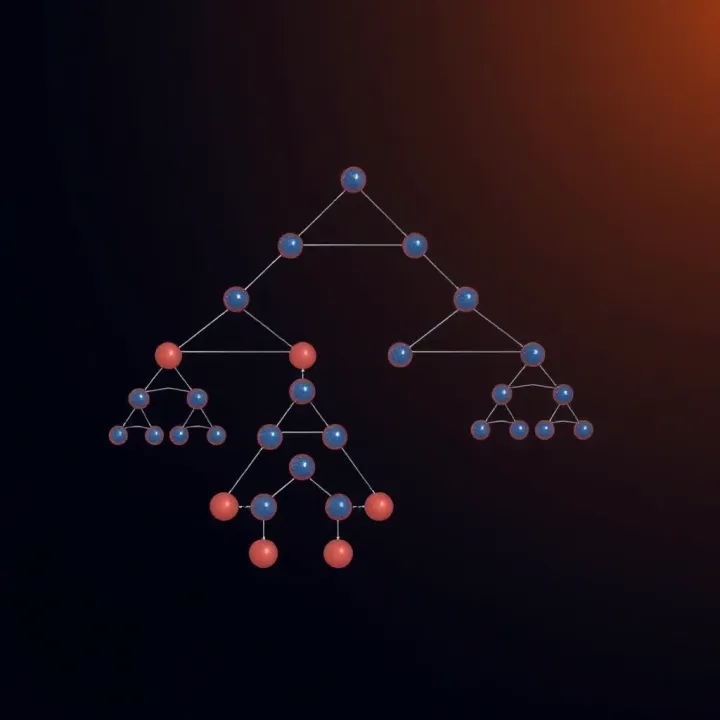
A complete binary tree is filled at all levels except possibly the last, with nodes as far left as possible. This structure ensures balanced storage, useful in implementing priority queues or heaps where evenly distributed nodes speed up insertions and deletions. For instance, a complete tree allows a heap sort to consistently perform well.
A full binary tree strictly has either zero or two children at every node. Applications such as parsing expressions use this shape, where each node either represents an operator or an operand. The predictability in child count simplifies tree traversal and evaluation.
A perfect binary tree combines both properties: all interior nodes have two children, and all leaves are at the same level. This uniformity maximises balance and minimises height, enabling efficient searches and operations, much like balanced binary search trees excel in database indexing.
Skewed trees resemble linked lists, where every node has only one child. A left-skewed tree has every child on the left, while a right-skewed tree has children on the right. Though simple, this shape is inefficient for search operations due to increased height, leading to linear-time traversal.
Such shapes might appear in worst-case scenarios when inserting sorted data into a binary search tree without balancing, causing performance drops in trading algorithms or real-time data analysis tools. Techniques like tree rotation are employed to avoid this skew in practical systems.
Balanced binary trees maintain height balance, ensuring that the difference in height between left and right subtrees never exceeds a certain limit. This balance guarantees logarthmic time complexity for search, insertion, and deletion—critical for financial databases processing frequent queries.
Unbalanced trees lack such constraints, potentially degrading performance to linear in worst cases. While simpler to implement, unbalanced trees risk high latency, making them unsuitable where quick access and updates matter, such as in stockbroking software or trading platforms.
A well-balanced binary tree dramatically improves data operation speeds, which directly impacts financial decision-making and software responsiveness.
In summary, knowing how these shapes influence tree operations equips developers and analysts to choose or maintain tree structures that suit their specific needs, whether that's quick searches, balanced storage, or straightforward data insertion patterns.
Understanding the relationship between node count and tree height helps clarify how large or tall a binary tree can grow. This knowledge is essential for designing efficient data structures, especially when performance depends on tree balance and size.
At any given tree height, there is a minimum and a maximum number of nodes a binary tree can contain. The minimum number of nodes corresponds to the case of a completely skewed tree, where each node has only one child—in practical terms, this would look like a linked list. For example, a tree of height 3 (where height is number of edges on the longest path from root to leaf) can have as few as 4 nodes, arranged in a single path.
On the other hand, the maximum node count at height h corresponds to a perfect binary tree, where all levels are fully filled. This maximum is given by the formula:
plaintext Maximum nodes = 2^(h+1) - 1
So, for height 3, the maximum is 15 nodes. This disparity shows why skewed trees perform poorly compared to balanced ones.

### Relations Between Number of Nodes and Tree Height

There is a clear inverse relationship between the number of nodes and the minimum possible height of a binary tree. The more nodes there are, the taller the tree generally grows, but if the tree is balanced, the height increases only logarithmically with node count.

For instance, a balanced tree with 31 nodes will have a height of 4, since:

```plaintext
Height h = log2(nodes + 1) - 1
Practical applications benefit from this understanding because it helps predict performance. Searching, inserting, or deleting nodes in balanced trees generally takes time proportional to the height. In contrast, skewed trees with few nodes but large height cause operations to slow down dramatically.
Knowing the minimum and maximum node counts at each height guides developers in choosing suitable tree structures. It can prevent building inefficient trees that behave like linked lists, especially in trading and financial applications where time-efficient data access is critical.
To sum up, grasping these node and height dynamics aids in optimising binary trees for fast, reliable operations, crucial for tasks like portfolio analysis or real-time stock updates.
Understanding common classifications of binary trees helps clarify how these structures manage data, especially for tasks like searching, sorting, and managing priorities. Each classification follows specific structural constraints, offering unique advantages and practical applications.
A Binary Search Tree (BST) organises data so that each node’s left child contains a smaller value, and the right child contains a larger one. This ordered shape enables efficient searching, similar to a dictionary’s alphabetical order. However, the BST’s efficiency depends heavily on its shape. If it becomes too skewed—like a linked list—the search time degrades from O(log n) to O(n). Balanced shapes ensure operations like search, insert, and delete remain quick. Real-world examples include database indices where fast lookups are essential.
Heap Trees are binary trees used to maintain priority based on value. In a Max-Heap, each parent node has a value equal to or greater than its children, while a Min-Heap uses the opposite rule. This ordering property suits tasks requiring fast access to the highest or lowest priority element. For instance, priority queues in stock trading platforms use heaps to manage urgent orders efficiently. Unlike BSTs, heaps are complete binary trees, meaning they’re always filled except possibly the last level.
These trees add balancing rules to standard BSTs to prevent skewing:
AVL Trees strictly maintain balance by limiting the height difference between left and right subtrees to one. This guarantees search times close to O(log n), but rotations during insertions and deletions make them slightly costlier to maintain. Ideal when read operations outnumber writes.
Red-Black Trees relax balancing rules, colouring nodes red or black to ensure no path is more than twice as long as another. This offers good average-case performance and simpler insertion/deletion compared to AVL trees. Java’s TreeMap uses red-black trees, making it familiar to many developers.
B-Trees extend these ideas to multiple children per node. Widely used in databases and file systems, they keep data balanced and sorted over disk storage, optimising read/write access to large datasets.
Recognising these classifications allows designers and analysts to pick tree structures that balance operational speed with maintenance cost, suiting specific applications like financial analysis tools or real-time trading systems.
In summary, each classification highlights how shape and ordering rules govern performance and use cases. Binary Search Trees excel in sorted lookups, heaps prioritise top elements, and balanced trees like AVL and Red-Black maintain efficient operation even with heavy data change. Choosing the right structure often depends on the needs of your application and the nature of the data involved.
The way a binary tree is structured greatly affects how quickly you can work with it, especially when traversing, searching, inserting, or deleting nodes. For traders and financial analysts dealing with real-time data or vast datasets, understanding this can improve both software efficiency and decision-making speed.
Traversal means visiting each node in a binary tree, typically in preorder, inorder, or postorder sequence. How quickly this can happen depends on the tree's shape. For instance, a perfectly balanced tree has minimum height, so traversals cover fewer levels. This reduces operation time as compared to a skewed tree where nodes lean only to one side, increasing height unnecessarily.
Consider a trading algorithm that scans a binary tree of stock prices. If the tree is skewed, scanning deeper nodes takes longer, potentially delaying trade triggers. A balanced binary tree, such as an AVL tree, self-adjusts to maintain shallow height. This consistent height ensures traversal stays swift, which is vital when analysing dynamic financial data.
The structure also directly affects the speed of searching, inserting, and deleting nodes. In a binary search tree (BST), operations perform optimally when the tree remains balanced. Height influences time complexity; the shorter the height, the faster the operations.
For example, searching an element in a balanced BST roughly takes O(log n) time, but in a skewed BST, it may degrade to O(n). For investors using software to query stock price data rapidly, this distinction matters. Similarly, insertions and deletions can lead to imbalance, causing performance issues if rebalancing mechanisms aren't in place.
Red-Black trees and AVL trees introduce extra rules to keep balance after insertions and deletions. While this adds overhead, it prevents the tree from becoming unbalanced, preserving search and update efficiency. Heap structures, often used in priority queues for trade execution, maintain heap order to prioritise operations regardless of node count.
Tip: Balancing the tree after updates keeps the operations fast, impacting how financial applications like order matching systems or risk evaluators perform under heavy loads.
In short, the better organised the binary tree structure, the more efficient common operations become. This efficiency translates to quicker responses in market analysis tools and ensures smoother user experiences in finance software.
Explore optimal binary search trees 🧠 that cut expected search time, learn methods, algorithms & key uses vs standard trees for faster data retrieval 📊.

🔍 Explore how optimal binary search trees enhance search efficiency with dynamic programming and practical examples. Understand key concepts and complexities!

Explore how to find the maximum depth in binary trees 🌳 with clear examples, recursive & iterative methods, plus tips for optimizing depth calculation effectively.
Explore how dynamic programming builds optimal binary search trees 🌳 to minimize search costs efficiently with clear steps, plus practical applications & tips.
Based on 9 reviews