

Multi-Candlestick Patterns Explained for Traders
📈 Explore multi-candlestick patterns to spot trends and potential moves in trading. Get insights and tips for the Indian stock market and beyond.
Edited By
Oliver Bennett
Candlestick charts are a popular tool among traders and investors for analysing price movements in stock and commodity markets. They provide a visual summary of price action within specific time frames, such as one day or one hour, and help identify potential market trends.
Each candlestick consists of a rectangular 'body' showing the opening and closing prices, along with thin 'wicks' or shadows indicating the high and low during that period. If the closing price is higher than the opening, the candle is often green or white, signalling buying pressure. Conversely, a red or black candle indicates selling pressure with a closing price lower than the opening.
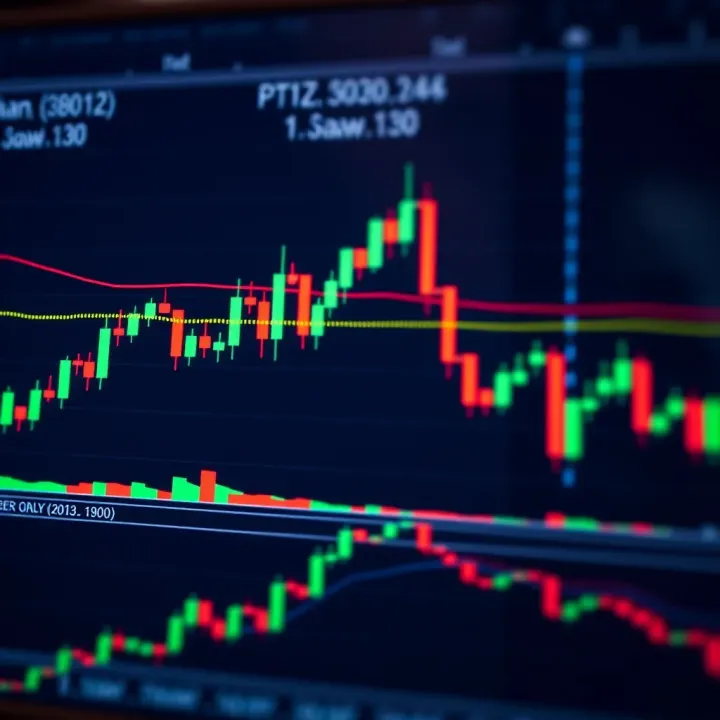
Understanding key candlestick patterns gives traders clues about market sentiment and possible future price direction. For instance, a 'Doji' pattern, where the opening and closing prices are nearly the same, often suggests indecision and a potential reversal. Another example is the 'Hammer' pattern, which might hint at a bullish reversal after a downtrend, visible as a candle with a small body and a long lower wick.
Recognising these patterns can enhance your timing to enter or exit trades, reducing risk and improving profit potential.
Some common candlestick patterns you should start with include:
Engulfing Pattern: Where a strong candle completely covers the previous candle, indicating a possible trend change.
Morning Star and Evening Star: Three-candle patterns signalling bullish and bearish reversals respectively.
Shooting Star and Hanging Man: Indicate potential price reversals after an uptrend or downtrend.
Indian traders will find these patterns especially useful when applied to NSE (National Stock Exchange) and MCX (Multi Commodity Exchange) charts, where market volatility demands precise timing. For example, a Hammer pattern spotted on a nifty index chart during a correction phase can hint at a buying opportunity.
Through this article, we'll explore these patterns in detail with practical examples from Indian markets, helping you interpret price charts better and make more informed trading decisions.
Candlestick charts form the backbone of technical analysis for traders and investors in India and worldwide. Unlike simple line charts, candlestick charts provide a richer snapshot of price action within a particular time frame. This helps in understanding market sentiment more clearly, which is essential for making informed decisions, especially in volatile Indian markets like equities or commodities.
Candlestick charting dates back to the 18th century in Japan when a rice trader named Munehisa Homma developed these charts to track rice prices. His method captured not just closing prices but the full range of market activity during a day, giving traders insights into bullish or bearish sentiments. This historical approach remains relevant today and is widely used for its clarity and depth of information.
Each candlestick consists of a body and shadows (also called wicks). The body represents the difference between the opening and closing price within the selected period. A long body shows strong buying or selling pressure. The shadows indicate the highest and lowest prices during that time. For example, a long upper shadow suggests that buyers pushed prices up but sellers regained control by the close, signalling possible resistance.
Each candlestick consolidates four crucial prices: open, close, high, and low. The open price is where the market started trading for the time interval, and the close price is where it ended. High and low represent price extremes. Observing these prices aids traders in spotting momentum shifts. For instance, if the close is significantly higher than the open, it reflects bullish sentiment during that period.
Colour coding in candlesticks simplifies visual interpretation. Typically, a green or white body indicates a price increase (close above open), whereas a red or black body signals a decline (close below open). In Indian trading platforms like NSE or BSE, green and red are standard, helping traders quickly assess market direction. Detecting clusters of green candles can hint at an uptrend; similarly, a series of red candles may warn of a downtrend.
Understanding the structure and reading of candlesticks is fundamental before applying pattern analysis. It equips traders and analysts with real-time market insights, which are crucial during India’s fast-moving trading sessions.
By grasping these basics, you prepare your mind to decode more complex patterns, enhancing your trading strategy in Indian stock or commodity markets.
Single candlestick patterns offer quick but powerful insights into market sentiment in a given trading session. Their importance lies in simplicity—they provide traders with immediate clues about potential price movements without the need for complex indicators. Understanding these patterns helps investors identify possible entry or exit points, especially in volatile markets like the Indian stock and commodity exchanges.
A Doji forms when a stock's opening and closing prices are almost equal, resulting in a very small or non-existent body. The wicks, or shadows, can be of varying length, but the key feature is the near-neutral position of the open and close prices. This reflects market indecision as buyers and sellers reach a balance within the trading session.
In practical terms, a Doji signals that neither bulls nor bears have control. In the Indian stock market, for instance, spotting a Doji after a strong uptrend in a stock like Reliance Industries could warn that the rallies may be losing steam and a reversal or pause might be imminent. However, traders should wait for confirmation from following candles before deciding.
Both patterns have small bodies near the top of the candlestick and long lower shadows at least twice the size of the body. The difference mainly lies in the trend context: a Hammer appears after a downtrend, while a Hanging Man shows up after an uptrend.
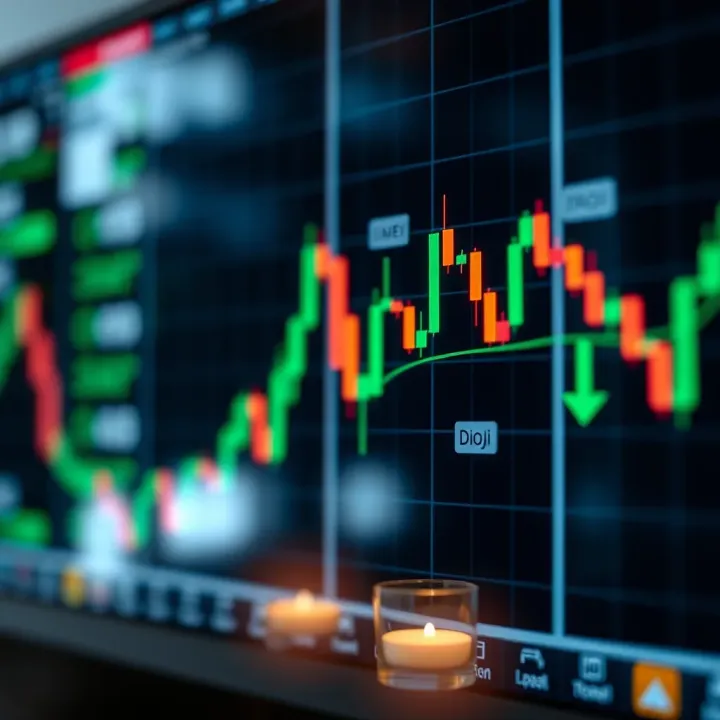
A Hammer typically signals a potential bullish reversal because it shows that despite early selling pressure, buyers regained control by close. Conversely, a Hanging Man suggests caution—it indicates that sellers pushed the price down significantly during the session but buyers could only partially defend it, hinting at a possible bearish reversal.
Imagine the Nifty 50 index falling for several sessions, then forming a Hammer candlestick. This might encourage traders to enter long positions, anticipating a bounce. On the other hand, after a strong rally in HDFC Bank shares, spotting a Hanging Man could prompt sellers to take profits or place stop-loss orders.
Both have small bodies near the bottom, but their upper shadows are notably long—at least twice the size of the body. The Shooting Star forms after an uptrend, while the Inverted Hammer appears after a downtrend.
A Shooting Star points to a bearish reversal. It shows that despite buyers pushing prices higher during the session, sellers overwhelmed and closed prices near the open. The Inverted Hammer, however, signals a bullish reversal after a downtrend, highlighting buying interest despite initial selling.
Suppose Infosys has been climbing steadily; spotting a Shooting Star may alert traders to short the stock or tighten their stop-loss. Conversely, if a commodity like crude oil futures fall consistently and form an Inverted Hammer, traders might consider long positions, expecting a recovery.
Single candlestick patterns are your first, quick check on market sentiment. Recognising them accurately can save you from entering at the wrong time or missing a crucial reversal in Indian markets.
Multiple candlestick patterns show how two or more candles interact to signal potential trend changes or continuations. These patterns help traders move beyond single-day data, offering a clearer view of market sentiment across sessions. By analysing combinations like engulfing patterns, stars, and haramis, you can make better-informed decisions about entry and exit points.
Focusing on multiple candlestick patterns improves your ability to identify trend reversals or confirmations. This works well with Indian markets, where sudden volatility can create misleading signals from individual candles. For example, seeing a bullish engulfing pattern after several down days indicates strong buying interest, not just a one-off price move. Understanding these patterns sharpens timing and reduces false alarms.
Pattern formation rules
Bullish engulfing occurs when a small bearish candle is immediately followed by a larger bullish candle that completely covers the previous one’s body. Conversely, a bearish engulfing has a small bullish candle followed by a larger bearish candle engulfing it. This visual cue signals a shift in momentum between buyers and sellers.
These patterns hold practical relevance as they clearly mark changing control in the market. Traders watch for a bullish engulfing at the end of downtrends as a signal to consider buying. The bearish engulfing often warns of a sell-off after an uptrend.
Interpreting trend reversals
The engulfing pattern points to a potential reversal in trend strength. For instance, after a string of falling candles, a bullish engulfing shows that buyers are not just stepping in — they are overpowering sellers. This could push prices higher in the short term.
The reverse applies to bearish engulfing. When it appears after rising prices, it signals sellers gaining upper hand. However, confirmation from volume or other indicators is advisable to avoid false signals.
Real market examples
A practical example is Reliance Industries’ stock showing a bullish engulfing in June 2023 after a dip. This led to a rally over several sessions. Similarly, Infosys experienced a bearish engulfing in early 2024, which preceded a short correction.
Watching these patterns along with support-resistance levels worked well to make timely decisions in these cases.
Three-candle pattern structure
These are three-day patterns where the first candle is a strong move in the prevailing trend direction, followed by a small-bodied candle (the star) which gaps away from the first. The third candle reverses the trend by closing well into the first candle’s territory.
This structure reflects indecision between buyers and sellers on the star day, setting the stage for reversal in the third day.
Significance in market sentiment
Morning Star forms at a downtrend’s end, signalling buyers gaining confidence after a pause. Evening Star appears at an uptrend’s peak, showing sellers taking control after hesitation.
This reflects real shifts in trader sentiment. India’s equity or commodity markets often exhibit such shifts during earnings seasons or policy updates.
Application with examples
For example, HDFC Bank displayed a morning star pattern in October 2023, which marked the start of an upward move. Conversely, Tata Steel’s evening star in December 2023 indicated a short-term decline.
These patterns complement volume spikes and RSI changes, providing stronger trading signals.
How to spot the Harami pattern
A Harami forms when a large candle is followed by a smaller candle whose real body lies entirely within the previous candle’s real body. The Harami cross is a variant where the smaller candle is a Doji, indicating even greater indecision.
Spotting Harami patterns helps traders identify pauses or potential reversals in an ongoing trend.
Indications of potential trend change
The Harami signals weakening momentum. In an uptrend, a bearish Harami warns of possible selling ahead. During a downtrend, a bullish Harami points to buying interest.
The Harami cross, with its Doji second candle, often shows stronger uncertainty making reversals more likely if the following candle confirms.
Example trades
ICICI Bank showed a bullish Harami in November 2023 after a fall, followed by a rally. Similarly, a bearish Harami cross in Axis Bank warned of a short-term dip in January 2024.
Using Harami patterns with other signals like moving averages helped confirm trade entries in these cases.
Understanding and applying multiple candlestick patterns helps you capture trends more reliably than relying on single candles. These patterns suit the Indian market’s ups and downs, giving you practical edge in timing trades and managing risk effectively.
Candlestick patterns provide valuable insights into price action, but their real power shows when combined with other tools and strategies relevant to the Indian markets. Traders in India often use these patterns alongside levels of support and resistance, volume data, and moving averages to better judge entry and exit points. Doing this helps filter out false signals and improves the chance of profitable trades, especially given the dynamic nature of Indian equities and commodities.
Support and resistance levels are price points where the market has previously reversed or paused. Identifying these levels helps you understand where a candlestick pattern might carry more weight. For example, spotting a bullish engulfing pattern near a strong support level in Nifty or Sensex stocks can strengthen the call for an upward move. On the other hand, a bearish pattern forming near a resistance zone might warn you of an upcoming decline.
Volume confirmation adds extra trustworthiness to candlestick signals. High volume during a reversal pattern indicates genuine interest and conviction among buyers or sellers. In Indian markets, spikes in volume often accompany significant moves during earnings announcements or RBI policy decisions. If a hammer candlestick pattern appears with above-average volumes on a stock like Tata Motors, it suggests the bullish reversal is supported by real buying pressure, not just random price action.
Moving averages smooth out price fluctuations and help confirm trends. Combining candlestick patterns with moving averages such as the 50-day or 200-day SMA (Simple Moving Average) helps identify the trend’s strength. For instance, a morning star pattern forming above the 50-day moving average on Reliance Industries stock suggests a stronger bullish trend than if it occurred below this average. Traders often wait for confirmation from moving averages before committing to trades signalled by candlesticks.
Importance of time frame selection cannot be overstated. Candlestick patterns on a daily chart carry different significance than those on a 5-minute or weekly chart. Shorter time frames suit intraday traders looking for quick moves, while longer time frames are better for investors aiming to catch broader trends. Beginners should pick a time frame that matches their trading style and avoid mixing signals from wildly different frames, which can cause confusion.
Risk management strategies play a key role in successful trading using candlestick patterns. Always use stop-loss orders based on recent swing highs or lows indicated by candle wicks. For example, after spotting a bullish engulfing pattern, placing a stop-loss just below the pattern’s lowest wick helps contain losses if the market turns against you. Position sizing should also reflect your overall risk tolerance to avoid sizeable damage from one bad trade.
Common mistakes to avoid include over-relying on candlestick patterns alone and ignoring the broader market context. Many beginners jump into trades solely because a pattern appears without checking volume, trend, or macroeconomic cues like inflation or RBI announcements. Chasing patterns without confirmation often leads to losses. Also, impatience can cause premature exits; it’s better to give trades time to develop fully unless clear signs indicate otherwise.
Using candlestick patterns together with support/resistance, volume, and moving averages gives you a well-rounded approach. This reduces guesswork and increases your edge in India’s stock and commodity markets.
With these pointers, you can integrate candlestick analysis into your practical trading routine that suits the nuances of Indian markets and improve your decision-making confidence.
Candlestick patterns, while useful, are not flawless indicators and can sometimes lead traders astray if used in isolation. Recognising their limitations helps investors avoid costly mistakes and improves overall decision-making. Candlesticks must be viewed in context, alongside other market data, to paint a realistic picture of price action.
Candlestick patterns can occasionally produce false signals—instances where the anticipated price move doesn't materialise or moves in the opposite direction. This often happens because markets are influenced by many factors beyond price action, such as economic announcements, geopolitical events, or sudden shifts in investor sentiment. For example, a bullish engulfing pattern on Reliance Industries might signal a rally, but if a global crude oil price shock occurs immediately after, the expected upward move may fail.
These false signals cause confusion and can test a trader's patience. Recognising when patterns fail is essential to avoid heavy losses or getting trapped in unfavourable trades. Patterns work best when combined with a market context, not as standalone entry or exit cues.
To reduce the impact of false signals, traders should incorporate confirmation tools like volume analysis, support and resistance levels, and trend indicators. High trading volumes during a candlestick pattern formation often strengthen its validity. For instance, a morning star pattern on the Nifty index supported by increased volume and a bounce from a strong support level is more trustworthy.
Moving averages are handy to filter out market noise. If a candlestick reversal appears but the price remains below a key moving average like the 50-day SMA (simple moving average), the signal might be weak. Confirming patterns with indicators like the Relative Strength Index (RSI) or MACD (Moving Average Convergence Divergence) also adds confidence, helping distinguish meaningful patterns from random price fluctuations.
Candlestick patterns primarily look at price behaviour without considering broader economic or company-specific factors. Integrating fundamental analysis brings balance, especially in markets prone to rapid shifts. For example, if Infosys shows a bullish pattern but quarterly results disappoint or the sector faces tough regulation, relying only on patterns may misguide traders.
Understanding earnings reports, policy changes by the Reserve Bank of India (RBI), or industry trends can prevent premature trades based on technical patterns alone. Fundamental insights act as a reality check, ensuring trades have a solid back-up beyond the charts.
No single tool offers a perfect forecast. Successful traders diversify their methods by blending candlestick analysis with other strategies like trend following, momentum trading, and setting stop-loss safeguards. Spreading risk across these methods reduces the impact of any one approach failing.
For instance, a trader may place partial trades on candlestick signals but simultaneously monitor sectoral indices or macroeconomic indicators. This diversified outlook helps manage volatility typical in Indian markets, allowing for steadier returns without chasing every candle movement blindly.
Relying solely on candlestick patterns can lead to false confidence. Combining them with volume, moving averages, and fundamental factors provides a more robust framework to navigate market uncertainty.
By acknowledging these limitations and adopting confirmation tools, Indian traders gain a practical edge in reading price charts. Candlesticks guide the eye, but the mind must consider the wider market environment to trade effectively.
📈 Explore multi-candlestick patterns to spot trends and potential moves in trading. Get insights and tips for the Indian stock market and beyond.
📈 Learn to spot the strongest candlestick patterns, avoid common trading errors, and boost your strategy with charts and PDF guides for quick reference.
Learn to master candlestick patterns 📈 with easy-to-follow examples and practical tips. Includes handy PDF resources 📄 for traders looking to boost their technical skills.

Discover the most powerful candlestick and chart patterns 📊 for trading success in stocks & forex. Learn to spot shifts and trends before others do!
Based on 15 reviews