

Top Trading Apps in India: Features & Reviews
Explore the top trading apps in India! 📱 Learn about key features, security, user experience, fees, and expert tips to choose the best platform for you.
Edited By
Amelia Walker
Paper trading apps give investors a risk-free way to practise stock market trading using virtual money. For many beginners and even experienced traders in India, these platforms provide a safe space to test out new strategies without the stress of real financial loss.
Unlike live trading, paper trading simulates market conditions, letting you buy and sell shares, see how your portfolio performs, and understand market dynamics more clearly. This helps build confidence before putting actual money in the market.

Many Indian apps have started offering this feature to cater to the growing interest in stock markets, especially among young investors and finance students. They often mimic the NSE and BSE environments, with real-time prices and order types just like in live markets.
If you’re not ready to dive straight into investing your hard-earned money, practising on a paper trading app is a great idea. It sharpens your skills and reduces costly mistakes in actual trading.
Key features to look for in a good paper trading app in India include:
Realistic market data: Prices and volumes should update in real time or with minimal delay.
User-friendly interface: Easy navigation helps you focus on strategy rather than figuring out how to use the app.
Wide range of instruments: Support for stocks, ETFs, and sometimes derivatives like futures and options.
Customisable settings: Ability to set initial virtual balance, trading fees, and margin rules similar to real brokerage accounts.
For example, apps like Upstox’s paper trading platform or Zerodha Varsity simulation offer solid practice tools with features tailored for Indian market conditions.
Using these apps regularly helps you grasp concepts like order types (limit, market, stop-loss), portfolio management, and risk control techniques — essentials for trading success.
Starting with a paper trading app could be the difference between stumbling through your first trades and navigating the market with a clear plan and steady hand.
Paper trading lets investors practise buying and selling stocks without putting real money on the line. Think of it as a stock market flight simulator — you get to test strategies and understand market moves without worrying about losing cash. This approach is especially valuable for new traders and even seasoned investors looking to experiment.
Paper trading involves making virtual trades that mirror real market conditions. Instead of actual funds, you use simulated money, allowing you to track performance as if you were investing for real. For example, an investor might start with ₹5 lakh in virtual capital and trade shares of companies listed on the National Stock Exchange (NSE). Although no actual shares or money change hands, the experience reflects real-time price movements and market events.
The stock market can be chaotic, and jumping in without practice often leads to costly mistakes. Indian investors benefit from paper trading since it helps them understand how equities, derivatives, and commodity markets operate locally. Given the regulatory landscape guided by SEBI and the influence of market hours, practising first-hand on virtual platforms builds confidence. Additionally, with growing participation from Tier-2 and Tier-3 cities, where access to financial education might be limited, paper trading provides a safe environment to learn without pressure.
Using paper trading apps speeds up the learning curve. Some clear advantages include:
Risk-Free Learning: You can explore strategies like intraday trading or options without risking actual money.
Strategy Testing: Validate trading ideas based on technical analysis or market news before applying them live.
Understanding Market Dynamics: Watch how factors such as earnings announcements or RBI policy changes affect stock prices.
Improving Decision Making: Practise discipline by following your rules without the stress of real loss.
Paper trading helps bridge the gap between theory and real investment, offering hands-on experience without financial consequences.
For example, a Bengaluru-based trader using the Moneycontrol Moneybhai platform found that practising on paper alerted them to pitfalls during volatile sessions, allowing them to fine-tune entry and exit timings before risking their capital in the Sensex.
In short, paper trading is an invaluable tool for Indian traders aiming to sharpen skills and build good trading habits before stepping into the actual market.
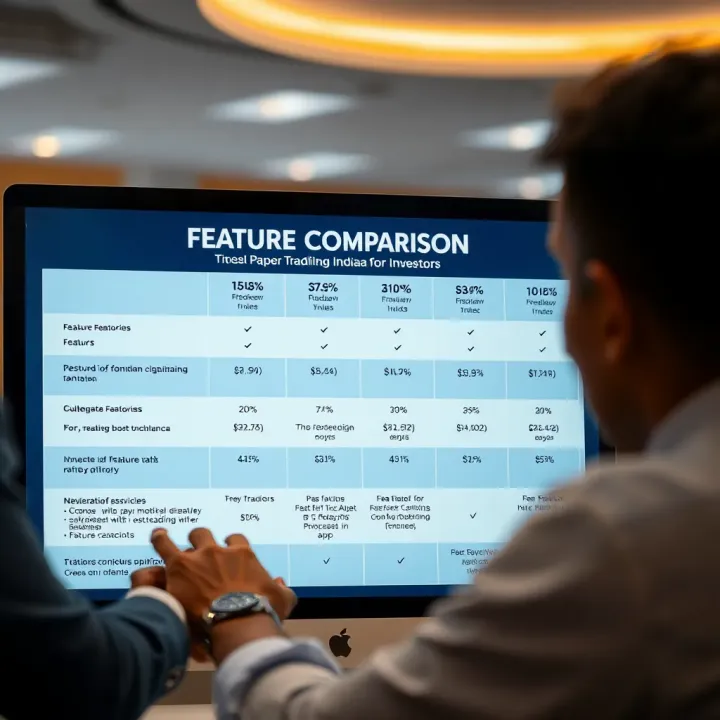
Choosing the right paper trading app is fundamental for Indian investors to gain practical experience without risking real money. The criteria you use to select an app impact how effectively you can simulate actual trading conditions, learn market behaviour, and test strategies. It's not just about trying out any free app; key factors such as usability, access to Indian markets, available tools, and mobile performance define how well the app will meet your learning needs.
A clear, simple user interface (UI) is critical, especially if you are new to trading. An app cluttered with complex charts and jargon may leave you overwhelmed rather than enlightened. For instance, Zerodha’s Kite app offers an intuitive layout that can be navigated easily by beginners, yet remains powerful for advanced users. The goal is to find an interface that presents data clearly, lets you place orders effortlessly, and provides quick access to important features. Ease of use shortens the learning curve, thus helping you focus on strategy rather than struggling with navigation.
Paper trading apps must provide access to Indian stock exchanges like NSE (National Stock Exchange) and BSE (Bombay Stock Exchange) with real-time or near real-time data. Without this, the entire simulation loses value. For example, Moneycontrol’s Moneybhai offers timely updates mimicking live price movements, ensuring your trades reflect actual market conditions. This matters because lagging or outdated prices can lead to the wrong conclusions about strategy effectiveness.
Beyond basic buy and sell options, valuable apps offer charting tools, technical indicators, and risk analysis features. Some apps also support options and futures trading simulations, which are crucial for understanding derivatives markets popular in India. NSE Paathshaala’s virtual trading platform stands out for its educational modules and real-time contest features, combining learning with competition. The availability of such tools enhances your ability to develop comprehensive trading strategies.
Given how many Indians use their mobile phones for finance, the mobile app’s stability and speed play a big role. An app might have great features on desktop but be clunky or slow on mobile, leading to a frustrating experience. Upstox Pro’s demo account, for instance, offers a well-optimised mobile version that loads quickly and handles transactions smoothly. Responsive apps help you to practise on the go, a must for traders who want to stay updated throughout the day.
Picking a paper trading app that scores well on these criteria can save you time and frustration. It can help you make smarter moves when you step into live trading with actual money.
In summary, focus on apps that combine user-friendly design with reliable market data, strong features, and smooth mobile functionality. This balance improves your practice experience and better prepares you for real-market challenges.
In India, choosing the right paper trading app is more than just picking any platform; it’s about selecting one that closely mimics live market conditions, offers reliable data, and fits well with your learning style. These apps provide a safe space for traders and investors to practice without risking real money, especially beneficial in volatile Indian markets where understanding price movements in sectors like IT, banking, and FMCG can be challenging.
Zerodha, one of India’s largest brokers, offers the Kite platform coupled with Varsity’s educational materials and a paper trading feature. This combo is quite popular because it doesn’t just stop at virtual trading; it equips users with deep knowledge about market concepts, technical analysis, and trading strategies. Kite’s paper trading emulates NSE and BSE market conditions closely, giving access to real-time data. It’s perfect for investors wanting to try complex orders like bracket orders or cover orders without risking capital.
Upstox Pro’s demo account offers a realistic trading environment where users can experiment with their strategies on NSE, BSE, and MCX without any real money at stake. What appeals most is its clean interface and quick execution simulation, which helps traders work on timing and order placements. For example, if you are testing intraday scalping, Upstox Pro allows you to analyse slippage and brokerage impact in your virtual trades, something every Indian trader deeply cares about.
Moneybhai is a virtual trading platform from Moneycontrol, widely used by Indian investors for stock market simulations. It offers a set virtual fund to buy and sell stocks listed on NSE and BSE. Where it stands out is its integration with Moneycontrol’s rich research reports and news updates. This app helps investors not only test trading ideas but also gauge the impact of corporate announcements, government policies, or RBI repo rate changes on their portfolio.
Offered by the National Stock Exchange (NSE) itself, Paathshaala’s platform serves as an educational tool aimed at freshers and students wanting to get hands-on experience with Indian equity and derivatives trading. This platform lays emphasis on learning and practising basics like order types, market depth, and margin requirements. It’s especially useful for those preparing for exams like the NCFM (NSE’s certification) or beginners looking to sharpen their skills in a risk-free way.
These platforms illustrate the range of options Indian traders have—from beginner-friendly educational tools to advanced demo accounts mimicking live trading. While each app has its unique feature set, the best choice depends on your trading style, experience level, and learning goals.
Choosing an app that supports Indian exchanges and delivers accurate data is key, as it helps build realistic expectations and refine strategies before stepping into real stock markets such as the NSE and BSE.
Starting with paper trading allows new investors and traders in India to explore the stock market without putting their money at risk. It gives you a safe environment to hone your skills, understand market behaviour, and test strategies, especially useful before committing real capital.
The first step is to create a demo account on a reliable paper trading app. These accounts mimic real-market conditions with live or slightly delayed data, but you trade with virtual money. For instance, platforms like Zerodha Kite and Upstox Pro offer demo accounts that require just a quick signup using your email or mobile number. It's important to pick an app that provides real-time price updates for Indian markets (NSE, BSE), so your practice matches actual market movements.
Before you start simulated trades, set clear and achievable goals. Avoid going in with vague ideas like "make profits"; instead, focus on learning objectives such as understanding order types, mastering stop-loss placement, or practising intraday trading within a week. For example, aim to improve your decision-making speed or test how different sectors respond to news events. Realistic goals help keep your paper trading purposeful rather than just random buying and selling.
Use the demo account to create and test trading strategies without pressure. Whether you want to try swing trading or options strategies, paper trading lets you adjust your approach based on what works. Many Indian traders explore sector rotation or momentum-based strategies in their practice sessions. Keep experimenting with entry and exit points, position sizing, and risk management techniques. It's beneficial to note down your strategies and outcomes separately for analysis.
Regularly monitor your trades and analyse your performance. Look at which trades were successful and which weren’t, considering factors like timing, market conditions, and psychological bias. Most apps offer performance reports or trade history, helping you identify patterns. Importantly, learn from mistakes instead of disregarding them. For example, if you consistently exit too early, reflect on why and adjust your strategy. Tracking progress sharpens your skills and builds discipline essential for real trading.
Paper trading works well when combined with disciplined goal-setting and reflective practice. It’s not just about simulating trades but building a strong foundation to navigate live markets confidently.
Taking these steps helps Indian investors transition smoothly from theory to practical trading, minimising costly errors in real investments.
Paper trading offers a valuable platform to hone trading skills without risking real money, but it comes with clear limitations that investors in India must acknowledge. Recognising these limits helps manage expectations and prepares you better for live market challenges.
The biggest difference between paper trading and real trading lies in the consequences of decisions. With demo accounts, gains or losses don't impact your actual wealth, which changes how risks are perceived. For example, during the recent volatility in the Nifty 50, a trader practicing on a paper trading app may not feel the pressure to exit a losing position quickly. In real markets, however, the fear of real financial loss often forces quicker decisions. Additionally, real markets involve nuances like slippage — where the trade executes at a slightly different price than expected — which paper trading simulations often fail to replicate accurately.
Emotions like fear, greed, and anxiety heavily influence trading behaviour, but these are notably absent or dulled in paper trading. When using a live trading account, an investor might hesitate to pull out of a position as losses mount, or get overly excited during a winning streak, leading to irrational choices. Paper trading does not replicate the psychological stress that comes with risking your own money. As a result, practices like holding onto bad trades or overtrading may not appear during simulation but are common pitfalls in real trading.
Understanding the emotional gap between paper and real trading is essential. It’s where many freshly minted traders face steep learning curves when transitioning to real markets.
Demo success can sometimes mislead traders into overestimating their readiness for live trading. Winning trades in paper trading are risk-free and may encourage excessive confidence, leading to larger stakes or riskier strategies once real money is involved. For instance, a trader might follow aggressive intraday strategies on a demo app that seem profitable but crumble under real conditions due to transaction costs, slippage, or emotional stress. To prevent this, keep your paper trading goals grounded. Use the demo phase to understand the mechanics of the market and your emotional reactions rather than chasing perfect returns.
In summary, while paper trading apps are excellent for beginners and even experienced traders to test strategies, approaching them with awareness of their limitations ensures smarter preparation. You can better manage your expectations and develop habits that are more likely to succeed once you cross into live trading territory.
Explore the top trading apps in India! 📱 Learn about key features, security, user experience, fees, and expert tips to choose the best platform for you.
Explore the best paper trading apps in India 📱 to practise with virtual money risk-free. Find apps suited for beginners & pros with top features to sharpen trading skills.
Explore key features, costs, and reliability of option trading apps for Indian investors 📱. Find user-friendly, secure platforms to trade options with confidence.

Discover the best paper trading platforms in India to practise stock trading risk-free. Compare features, costs, user experience, and market access 📈💡
Based on 9 reviews