
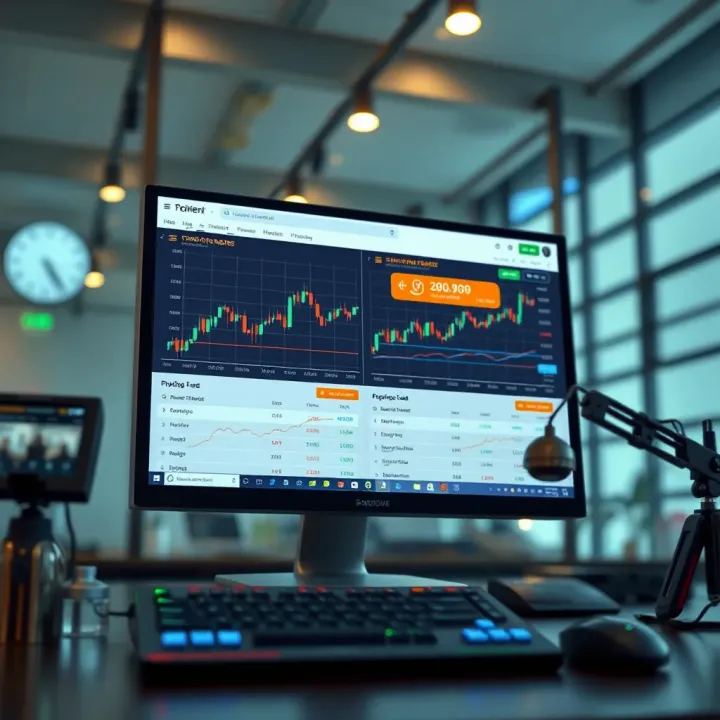
Free Online Paper Trading Platforms in India
📈 Discover free online paper trading platforms in India! Practice stock trading risk-free, explore top features & boost your skills without real money 💡
Edited By
Sophia Turner
Paper trading mimics real stock market trading without risking your own money. It’s a smart way for traders and investors in India to fine-tune their strategies and build confidence before diving into live markets. Whether you're a fresher learning the ropes or an analyst testing complex models, paper trading offers a safe environment to experiment without financial pressure.
Choosing the right paper trading platform can make all the difference. With many options available, Indian traders need to weigh factors like user interface ease, access to Indian markets such as NSE and BSE, available tools, and any costs involved. For example, a platform offering live market data for Nifty 50 or Sensex indices lets you simulate actual price movements closely.

Consider platforms that support various asset classes if you plan to diversify. Some platforms offer equities and commodities, while others include derivatives or mutual funds. The ability to customise your watchlist and receive alerts can also help sharpen decision-making.
Practicing on a paper trading platform that closely resembles real markets reduces the learning curve and prepares you to manage risk better when you start live trading.
Security and reliability matter too. Look for platforms backed by known Indian brokers or fintech firms with proper regulatory oversight by SEBI (Securities and Exchange Board of India). Free platforms are great for beginners, but if you want advanced charting or analytics, some paid options might be worth investing in.
In short, the best paper trading platform for you depends on your goals, trading style, and how much realism and functionality you need. The next sections will help you navigate these choices to pick the platform that suits your trading journey in India.
Paper trading serves as a practice ground for investors who want to understand the markets better without putting real money at risk. It mimics actual trading by using virtual funds to buy and sell stocks, commodities, or other securities. For instance, you might simulate buying shares of Reliance Industries or Tata Motors to test your approach before going live.
The key purpose of paper trading is to provide hands-on experience and refine trading strategies. While it copies the market environment, the absence of real risk makes it a great starting point for beginners. It helps one grasp order types, market reactions, and the timing of trades without worrying about financial losses.
The main difference between paper trading and live trading lies in the emotional and financial stakes involved. In live trading, real money is at play, exposing investors to actual gains or losses. This often triggers emotional responses that can affect decision-making. Paper trading, meanwhile, eliminates financial risk but doesn't fully recreate the pressure that comes with real-money transactions.
For example, in a live situation, an unexpected price drop might make a trader panic and sell at a loss. In paper trading, the same scenario might be treated more rationally, as no money is lost. Hence, while paper trading sharpens skills, transitioning to real trading requires mental readiness to handle the psychology of risk.
One of the biggest benefits of paper trading for Indian investors is the risk-free environment it offers. Since markets like NSE (National Stock Exchange) and BSE (Bombay Stock Exchange) can be volatile, beginners can avoid financial damage by practising virtually. Say you want to try day trading in SBI shares but are unsure; paper trading allows testing this strategy without burning cash.
Strategy testing in Indian markets is especially useful because of specific market conditions like regulatory changes, taxation, and unique trading hours. For instance, testing derivatives trading or currency futures strategies on a paper platform helps understand margin requirements and settlement cycles unique to India. This practical exposure often cannot be gained from theory alone.
Moreover, paper trading helps build confidence before real investing. Many Indian investors hesitate to enter markets fearing loss, especially those new to equities. Practising on platforms that simulate real-time price movements, order execution, and commission charges can instil trust in one's trading capabilities. Once comfortable, shifting to actual investment becomes smoother.
Paper trading is like a flight simulator for pilots; while it doesn't fly the plane, it prepares you to handle real challenges confidently.
In summary, understanding paper trading and its benefits gives Indian investors a strong foundation. It combines educational value, practical experience, and psychological readiness, making it an essential step before risking real money in markets.
Choosing the right features in a paper trading platform can significantly affect how effectively you learn and test your strategies. Not all paper trading platforms offer the same tools or accuracy, which means you could be practising on data that doesn't resemble real market conditions. To avoid this, it's important to evaluate platforms based on specific features that will give a practical and realistic trading experience.
Accurate price data and timing are foundational for effective paper trading. A platform must use real-time or near real-time market data from Indian exchanges like NSE (National Stock Exchange) and BSE (Bombay Stock Exchange) to mirror actual market conditions accurately. Delays or outdated prices can mislead you about the feasibility of your trades. For example, a sudden price swing captured on a live trading platform should also reflect in the paper trading tool to help you gauge your reaction and strategy.
Including brokerage fees and taxes in simulations makes the experience closer to reality. In India, brokerage charges can significantly affect your net profits, especially for intra-day trading. Likewise, Securities Transaction Tax (STT) and Goods and Services Tax (GST) on brokerage add to the cost. A platform ignoring these will give an unrealistic picture of returns, encouraging risky moves you wouldn’t afford in real life.
The ease with which you can execute orders impacts how naturally you can test trades under live-like pressure. Platforms that allow quick order placement, modification, and cancellation without navigating through multiple screens promote a seamless experience. This is especially beneficial for day traders who rely on speedy decisions during market volatility.
Having customisable watchlists and charts lets traders focus on their preferred stocks and sectors. You should be able to create watchlists of NSE and BSE stocks, track price movements, and use different chart types (candlestick, line) just like actual trading apps. These tools help you spot trends and make informed decisions, training you for real market scenarios.
Access to securities listed on NSE and BSE is non-negotiable for Indian traders using paper trading platforms. These two exchanges dominate India's equity market, so practising with their securities ensures familiarity with the instruments you are likely to trade. Some platforms may offer only international stocks, which might not be as relevant for most Indian investors.
Support for derivatives, mutual funds, and currency trading broadens the arsenal of strategies you can test. Indian investors who trade futures and options gain by practising on these specific products available on Indian exchanges. Similarly, mutual funds and currency pairs linked to India’s forex market add more depth to your portfolio analysis and risk assessment.

Portfolio analysis features help you review how your paper trading portfolio is performing. This includes seeing your gains and losses across different asset classes and sectors, which instruments are your best performers, and identifying risk exposure. Tracking this regularly enhances your understanding of portfolio management.
Detailed trade history and analytics provide insight into your trading patterns. Features like win/loss ratios, average profits, and drawdown analyses can guide you to refine your strategies. For instance, you might discover you face losses in volatile stocks but do better with stable blue-chip companies. Such metrics enable objective assessment rather than relying on guesswork.
A good paper trading platform should make you think like a real trader, showing the costs, risks, and rewards as accurately as possible while letting you customise the experience to your trading style.
Selecting a platform with these key features ensures that you don’t just simulate trades but also develop the skills and mindset needed to thrive in India’s markets.
Paper trading platforms tailored for Indian traders play a vital role by offering realistic market conditions without risking actual money. These platforms help investors practise trading strategies, understand market behaviour, and build confidence specific to Indian exchanges like NSE and BSE. Choosing the right platform depends on factors like usability, market access, and integration with real accounts, which affect how effectively you can simulate live trading.
Zerodha's Kite paper trading offers an intuitive interface that mirrors its live trading platform in look and feel. This helps users quickly adapt without struggling to learn new software. With features such as limit orders, stop-loss, and real-time price updates, it allows traders to experience realistic execution mechanics. As Kite integrates advanced charting tools and technical indicators, traders can analyse market trends effectively while practising.
One of the strong points of Zerodha’s paper trading is its seamless integration with the brokerage account. If you hold a Zerodha account, your paper trading activities can easily transition into live trading. This continuity means you can track your practice trades alongside real portfolio data, making the learning curve smoother. It also helps in testing strategies within your existing watchlists and preferences, directly reflecting your trading environment.
Upstox's trading simulator prides itself on simplicity, making it a good choice especially for beginners. The platform offers a clean layout and straightforward order placement system that doesn’t complicate the trading process. Basic tutorials support first-time traders in familiarising themselves with market operations, so one can build confidence without feeling overwhelmed.
Upstox covers a broad spectrum of Indian market instruments, including equities, derivatives, and currency segments on NSE and BSE. It simulates realistic order types and market scenarios, including intraday and delivery trades. This wide coverage allows traders to practise diverse strategies applicable in real Indian market situations.
TradingView is well-known for its sophisticated yet accessible charting tools. Its paper trading module supports extensive technical indicators and custom scripts, enabling detailed market analysis. Traders can experiment with complex strategies involving multiple timeframes and asset classes, which is particularly helpful for analysts and technical-focused investors.
Unlike many Indian platforms, TradingView offers simulation for various global markets beyond India. This feature is useful for traders interested in diversified portfolios or learning how international market movements correlate with Indian stocks. Such access expands learning scope, though paper trading here requires familiarity with multiple exchanges and currency conversions.
Groww’s paper trading feature integrates with its mutual fund and direct equity services. It offers a user-friendly experience focused on long-term investing and SIP (Systematic Investment Plan) strategies. For investors more inclined towards wealth-building than frequent trades, Groww provides a convenient environment to practise and plan.
Moneycontrol's stock market simulator targets a broad audience, including beginners and experienced traders. It simulates real market orders with updated price feeds and allows users to create multiple portfolios. This flexibility helps investors test various strategies simultaneously and compare performance, enhancing learning through practice.
Selecting a paper trading platform that suits your style and goals is the first step towards smarter investing in Indian markets. Always consider how the platform mirrors live conditions and the ease with which you can move from practice to real trading.
Choosing the right paper trading platform can make all the difference in sharpening your skills and preparing for real trading. The platform should align with your specific goals, experience level, and trading style to offer maximum benefit. It’s not just about simulating trades but practising in an environment that matches your needs. For instance, a newbie learning the ropes might need more educational support and a user-friendly interface, while a seasoned trader might prioritise advanced analytics and diverse market access.
Beginners generally prefer platforms that simplify the trading process without overwhelming them. They benefit from straightforward interfaces and clear explanations about how market orders, limit orders, and stop losses work. Take Zerodha’s Kite paper trading for example — it offers simple navigation and links to educational content, making it easier for novices to grasp trading concepts. Experienced traders, on the other hand, tend to seek platforms with more in-depth features like advanced charting tools, fast order execution, and customisation options to test complex strategies.
Your trading style plays a big role in selecting the right paper trading platform. Those aiming for long-term investing might want a platform that tracks portfolio performance over months or years and supports mutual funds or dividend stocks. Conversely, day traders need real-time data, quick order entries, and features like real-time chart updates to mimic live market conditions closely. Platforms like TradingView appeal to active traders due to their advanced charting and real-time alerts, while Groww could suit investors planning steady growth through mutual funds and large-cap stocks.
Many paper trading platforms come with free basic features, which suffice for casual practice. However, if you require access to detailed market data, multiple watchlists, or priority customer support, paid versions might be necessary. For example, Upstox's simulator is free but upgrading unlocks enhanced features suitable for traders wanting a fuller experience. Always match what you pay with the actual value you get, especially if you’re just starting out.
Trading on the go is increasingly common in India, and a platform with a smooth mobile app can make a big difference. Apps need to be responsive, load charts quickly, and execute orders without lag. Moneycontrol’s trading simulator offers a mobile app that integrates news and updates, helping users stay informed and practise seamlessly. Look out for platforms that run well on both Android and iOS with regular updates to handle India’s variable internet speeds efficiently.
Platforms offering tutorials, webinars, or interactive guides add immense value, especially for first-time traders. They help you understand market concepts and platform features without leaving the app. Zerodha Varsity is a prime example where paper trading is combined with extensive learning material. Regular webinars by platforms can keep you updated with changing market scenarios and new tools.
Access to community forums or expert advice channels lets you clarify doubts and share experiences. A motivated discussion with peers, such as on TradingView’s community boards, can give fresh insights and critique your simulated strategies. Some platforms also offer expert mentoring or group chats, providing practical tips that textbooks often miss.
Remember, your choice should fit your unique trading journey. A platform rich in features but hard to navigate might discourage you, while a simple app without market depth may limit growth.
Selecting the right paper trading platform involves balancing your experience, trading goals, budget, and support needs. This ensures you practise under conditions that closely resemble real markets, giving you confidence to step into live trading.
Paper trading works best when you treat it with the seriousness of real investing. Its main purpose is to build your trading skills without risking real money, but if you treat it casually, you might miss out on the practical benefits. Sticking to certain principles while paper trading helps you develop good habits that transfer smoothly to live markets.
Stick to your plan
Having a clear trading plan means setting entry and exit points, risk levels, and stop-loss orders before you place any trade. Following this plan strictly during paper trading conditions you to act with discipline. For instance, if your plan states not to risk more than 1% of your capital on a single trade, stick to that even if it means missing out on some tempting opportunities. This habit helps avoid impulsive moves in real trading, where emotions run high.
Avoid emotional trades
Emotions like fear and greed lead traders to make poor decisions, such as holding losing positions too long or chasing quick profits recklessly. Paper trading lets you recognise these tendencies early. For example, if you notice yourself chasing a stock’s price surge just because of FOMO (fear of missing out), you get a chance to step back and evaluate logically. Practising emotional control through paper trading reduces the chance of costly mistakes when real money is on the line.
Learn from mistakes
Paper trading is an opportunity to review every trade without pressure. Keeping a trading journal helps here—note down why you entered, your strategy, outcome, and what went wrong or right. Suppose a particular technical indicator misled you repeatedly; recognising this pattern allows you to adjust or discard that indicator. Learning continuously this way sharpens your decision-making for actual investments.
Identify successful strategies
Alongside spotting errors, paper trading highlights approaches that deliver consistent returns. For example, you may find that combining moving averages with RSI (Relative Strength Index) gave reliable buy and sell signals in NSE stocks. Once identified, you can refine these strategies further and use them with confidence when real trading begins.
Timing the switch
Knowing when to move from simulation to real markets is tricky. It normally makes sense to switch only after demonstrating consistent profitability and discipline in paper trading for several months. Jumping prematurely might lead to losing confidence with initial setbacks because real money brings real pressure.
Managing psychological challenges
The transition can be mentally demanding as emotions become stronger. Many traders find that the risk hurts their decision-making, causing hesitation or rash moves. To manage this, start with small real trades alongside your paper portfolio, gradually increasing exposure as comfort grows. This gradual exposure helps build resilience against stress and avoids surprises when market swings occur.
Practising these tips ensures paper trading is more than just a practice run; it becomes a foundation to becoming a smarter, more disciplined trader in India’s dynamic markets.
📈 Discover free online paper trading platforms in India! Practice stock trading risk-free, explore top features & boost your skills without real money 💡
Explore the best forex trading platforms in India 🇮🇳. Compare features, security, costs, and customer support to pick the ideal choice for your trading needs.
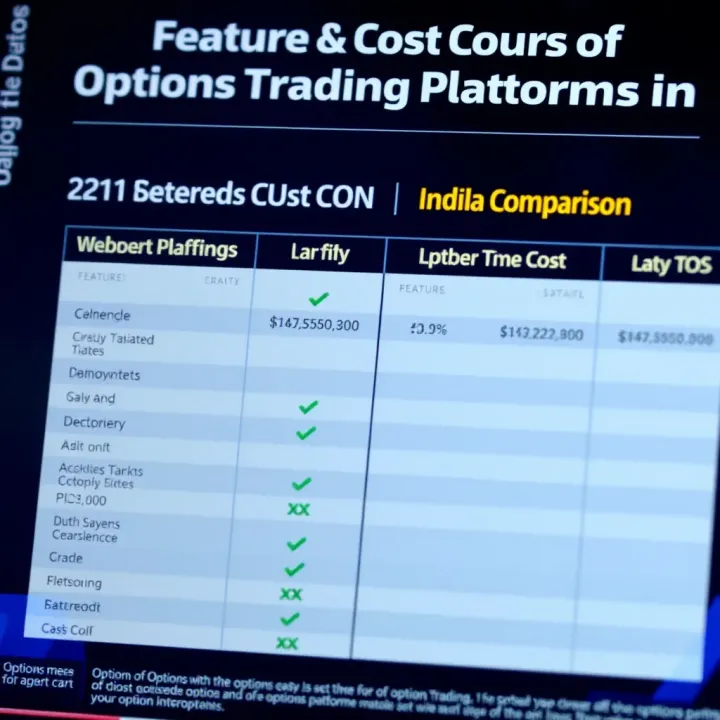
Explore the best options trading platforms in India 📈. Compare features, costs, and regulations to find the right fit for your trading style and goals with ease.
🔍 Explore detailed insights into online forex trading platforms popular in India—features, security, fees, and tips to choose one that fits your needs perfectly.
Based on 7 reviews