

Best Apps for Options Trading in India
Find the best app for options trading in India with a focus on key features, user-friendliness, security, and expert broker tips for equity and index options trading 📱💹
Edited By
Lucas Mitchell
Options trading offers a powerful way to diversify and manage risk in the Indian stock market. However, diving into live trading without practice can lead to significant losses, especially because options are complex and involve strategies beyond just buying and selling shares.
Paper trading apps provide a safe environment for traders to experiment with options trading without risking actual money. These platforms simulate real market conditions using virtual funds, letting you test your strategies, fine-tune your timing, and understand how options premiums, strike prices, and expiry dates interact.
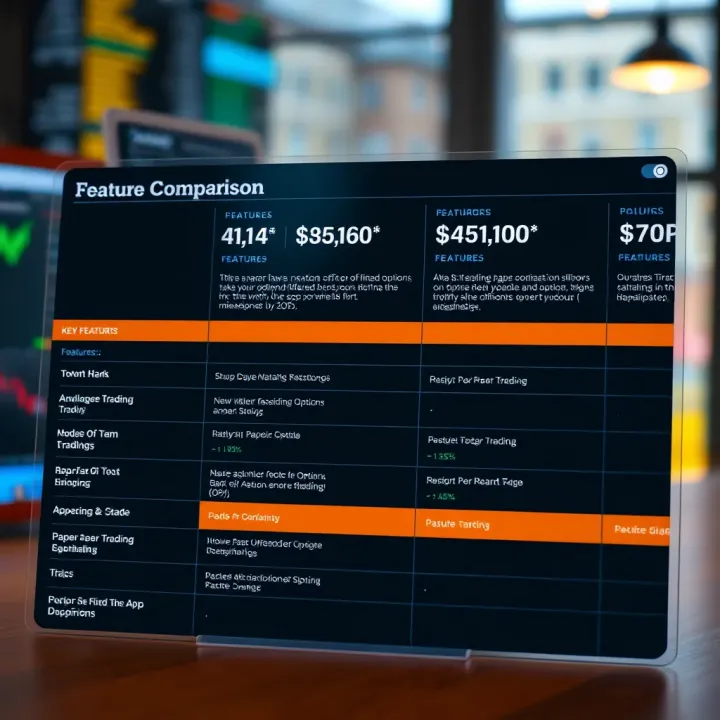
For Indian traders, choosing the right paper trading app means looking beyond a simple demo. You want an app that offers options trading tools similar to real platforms linked to Indian exchanges like NSE and BSE. An app should accurately reflect Indian market hours and regulatory frameworks, or else your practise might not carry over well to live markets.
When considering paper trading apps for options, focus on these key aspects:
Realistic Market Data – Ensure the app updates prices and volatility in near real-time, reflecting NSE and BSE fluctuations.
Comprehensive Options Strategies – Look for support not just for basic calls and puts, but also spreads, straddles, and iron condors.
Ease of Use – Intuitive interfaces help you focus on strategy rather than navigation. Mobile compatibility is a big plus for traders on the go.
Educational Features – Integrated tutorials and trade analysis tools sharpen your skills as you practise.
Performance Tracking – Detailed reports of your wins, losses, and risk exposure inform your progress.
Many popular Indian trading platforms like Zerodha’s Kite and Upstox offer paper trading features or integrate with third-party simulators. However, these vary in how well they mirror live options markets, so test a couple before settling.
Paper trading is your rehearsal. The better the app mimics the real stage, the more confident you’ll be when the curtain rises on live options trading.
In the sections that follow, we’ll compare top paper trading apps tailored for Indian options traders, unpack their features, and share tips to maximise their use before risking your capital.
Paper trading means practising options trades using virtual money instead of risking real capital. It acts like a dry run, letting you understand how the options market works without financial consequences. For example, if you simulate buying a call option on Nifty 50, you can watch how its value changes with market moves but without losing actual money. This hands-on approach is especially useful for beginners or those testing new strategies.
Paper trading helps build confidence before entering live markets. It allows you to familiarise yourself with concepts like strike price, premium, expiry, and the Greeks (delta, theta, etc.) in a risk-free setting. Also, you can experiment with strategies such as spreads, straddles, or iron condors to see how they might perform. This trial-and-error style learning prevents costly mistakes and sharpens decision-making. Traders can also track paper trading performance over weeks or months to identify strengths and weaknesses.
While paper trading offers valuable practice, it lacks the emotional element of real trading. The stress and psychological pressure of losing money aren't present, which can affect actual trading behaviour. Additionally, simulated trading apps might not capture slippage, order execution delays, or liquidity constraints common in live markets. For instance, an option spread that looks profitable on paper might face real-world challenges in execution or market impact. Traders should use paper trading as a preparation tool but remain cautious when transitioning to real trades.
Paper trading for options is a useful stepping stone, but remember it’s not a perfect replica of live conditions; learning to manage emotions and live market nuances is equally important.
In short, understanding paper trading forms the foundation of practising options trading safely. It lets you learn market mechanics, test strategies, and build skills. Knowing its limits ensures you are better prepared when you finally step into the real options market, especially in the Indian context where market behaviour can be quite dynamic.
Selecting the right paper trading app for options in India means focusing on features that closely mimic real market conditions while offering ease of use. These key features don't just make practice realistic but also ensure you are well-prepared when you move to live trading. Here’s a breakdown of what to prioritise.
A reliable app must simulate options markets with near precision. This means tracking underlying stock prices, implied volatility, time decay, and Greeks (delta, gamma, theta, vega) correctly. For instance, if you place an order to buy a Nifty call option, the app should reflect actual market slippage, bid-ask spreads, and expiry details just like the real market. Without this, you risk developing strategies that fail under live conditions. Apps better suited to Indian options trading factor in specific local rules such as strike price intervals and contract expiry schedules.

Paper trading works best when the user interface is intuitive and tools are straightforward. A clutter-free dashboard where you can easily view your portfolio, positions, and P&L helps maintain focus. Also, tools such as option chain displays, Greeks visualisation, and charting with indicators must be accessible without needing to navigate multiple screens. For busy traders, quick order entry and modification capabilities reduce the friction of simulated trades, making practice more aligned with real time demands.
Having timely market information is essential for practising options strategies effectively. An app that feeds live or nearly live price data lets you see how news events impact options premiums and volatility. This could include updates on Indian corporate earnings, Reserve Bank of India (RBI) policy decisions, or macroeconomic indicators—all crucial for options trading. Delays or stale data reduce the quality of simulation and limit your ability to react under authentic conditions.
Options trading thrives on varied strategies like spreads, straddles, or butterflies. The paper trading app should allow customisation of these strategies with ease. It should support diverse order types such as limit, market, stop-loss, and bracket orders to mirror real execution possibilities. Apps that enable multi-leg order placements at once save time and provide a more practical experience. For example, you could simultaneously buy a call and sell a put on the same underlying to simulate an iron condor.
Finally, a good app will offer educational support and analytical insights. Tutorials, webinars, or tooltips can help understand complex options concepts and strategy impacts. Meanwhile, analytical features like performance reports, risk assessment, and portfolio heat maps help you review trades critically. Seeing where you lost or gained in the simulation sharpens decision-making when trading live. Apps with detailed trade analytics give you feedback beyond simple profit/loss figures.
A paper trading app is more than a practice tool—it’s your training ground. Choosing one with accurate market simulation, clear interface, timely data, strategy flexibility, and solid analytics can give you the edge you need before putting real money at risk.
Reviewing popular paper trading apps is vital for traders aiming to sharpen their skills without risking real money. It helps identify which platform best matches Indian options trading needs, balancing accuracy, usability, and cost. For example, apps focused solely on global markets might lack crucial Indian market nuances like expiry cycles and strike price intervals. On the other hand, Indian-centric apps tend to reflect local market conditions more closely, aiding effective practice.
Apps designed for Indian options trading usually include features like NSE and BSE options data, real-time volatility indices such as India VIX, and strike price ladders matching Indian market conventions. These apps also factor in settlement procedures unique to Indian exchanges, which is crucial for realistic simulation. For instance, the expiry of equity options every Thursday or last trading day demands tailored tracking, not always found in global platforms.
Most Indian-focused paper trading apps offer free or low-cost versions, making them accessible to freshers and retail traders. However, some may charge for real-time data feeds due to exchange licensing costs. It's important to check if the app provides timely updates or delayed data, as outdated quotes can mislead strategy testing. Good apps integrate live feeds from NSE/Nifty indices without hefty subscription fees, which aids learning under true market conditions.
Indian traders often look for apps that are easy to use, responsive, and closely mimic actual market behaviour. Platforms like Sensibull and Upstox have garnered positive reviews for combining real-market features with paper trading. However, some users report issues like occasional data lags or limited options on expiry dates. Listening to user feedback helps highlight usability strengths and weak spots before committing to a platform.
Global apps such as Thinkorswim or Interactive Brokers offer strong options simulation with advanced modelling tools and risk profiles. While they support Indian market instruments, the challenge lies in local market integration. Strike prices, expiry dates, and margin requirements might differ, causing slight mismatch. Yet, these platforms excel in demonstrating complex strategies like condors and butterflies where Indian apps might fall short.
Global platforms often provide polished interfaces with extensive charting and risk management tools. Traders used to Western apps may appreciate these features, but newcomers from India may find the interface overwhelming or less tailored to local trading habits. Moreover, navigation speed and mobile app responsiveness sometimes vary, impacting day-to-day use.
Most global apps use subscription or commission-based models that can be pricey for Indian retail traders. These costs may include monthly platform fees or data charges. For beginners practising options trading, this could be a barrier unless they are serious about cross-border trading or investing in market research.
Apps with backtesting enable traders to assess how their options strategies would have performed historically in Indian markets. This is invaluable for understanding strategy viability without real exposure. For instance, Kite Connect API or Sensibull provide backtesting modules simulating past NSE option price movements, helping refine entry and exit points.
Tracking gains, losses, and risk metrics over time helps traders identify recurring mistakes or profitable patterns. Good apps generate detailed reports and visual dashboards, making it easier to adjust tactics. Continuous performance tracking also bridges the gap between paper and live trading by instilling discipline.
Platforms that link directly with brokerage accounts, such as Zerodha or Upstox, offer seamless transition from paper to real trading. Integration ensures portfolio sync, easier order placement, and consistency across practice and live sessions. This feature is especially useful for Indian traders ready to move beyond simulation and start trading with real money confidently.
Choosing the right paper trading app depends on your specific goals. If you want an Indian market feel, local apps shine. For depth in strategy, global platforms have the edge. When advancing toward live trading, integration with brokerages smoothens the path.
Selecting an app after considering these factors can improve your options trading practice and readiness significantly.
Using a paper trading app effectively requires more than just clicking around and placing trades. You need clear goals and a plan to track your progress. Otherwise, it’s easy to treat it like a game and miss out on learning valuable lessons that help in real markets.
Start by defining what you want to achieve through paper trading. Are you testing basic options strategies like buying calls and puts, or exploring complex spreads and combinations? Setting specific targets keeps you focused. For example, aim to understand how time decay impacts option premiums over a month or how volatility changes prices in practice.
Keep in mind that paper trading doesn’t capture every real-world factor such as slippage, order execution delays or emotional responses. So, don’t expect your results to perfectly mirror live trading. Instead, use it to develop confidence with the platforms and test your strategy mechanics.
Consistently monitoring your trades is key to improving. Maintain a trading journal within the app or externally, noting trade rationale, entry and exit prices, and outcomes. Over time, this helps you spot patterns in what works and what doesn’t.
Many popular paper trading apps offer analytics tools showing metrics like profit/loss, win ratio, and risk-reward ratios. Leverage these to get insight into your decision-making. For instance, if you notice a repeated loss when trading certain option strikes or expiry dates, reconsider those choices.
Tracking objectively helps remove emotion from trading decisions. When you treat your paper trades like real ones, you learn discipline and risk management.
Moving to live options trading is a big step. Ensure you’ve gained enough familiarity with order types, market timing, and strategy execution before risking actual money. Start small with a portion of your capital, maybe ₹10,000 or so, until confidence builds.
Remember that psychological stress and real financial risk change behaviour significantly. The adrenaline and fear can lead to impulsive decisions, which paper trading doesn’t mimic. It’s wise to keep reviewing your paper trade records even after you start live trading to continuously learn.
Effective paper trading is a stepping stone, not the destination. Smart use of these apps can sharpen your skills realistically and prepare you better for the live Indian options markets.
Find the best app for options trading in India with a focus on key features, user-friendliness, security, and expert broker tips for equity and index options trading 📱💹

📱 Find the best options trading app for Indian investors with insights on features, costs, security, and regulatory compliance. Trade smart, trade safe! ₹

Explore the top trading apps in India! 📱 Learn about key features, security, user experience, fees, and expert tips to choose the best platform for you.

Explore the best apps for options trading in India 📱 Understand their features, fees, usability, and regulatory safety to match your trading style and risk tolerance.
Based on 12 reviews