
Guide to Online Forex Trading in India
💹 Explore online Forex trading in India! Learn legal tips, top platforms, key strategies, broker selection, risks, and tax rules for smart trading.
Edited By
Thomas Bennett
Forex trading has grabbed a lot of attention worldwide, including in India, where more people are keen to dip their toes into this financial pool. It’s not just about making a quick buck; understanding the forex market can become a solid part of your investment strategy. The beauty of learning forex online is that access to knowledge and tools is just a click away, no matter where you are.
This guide aims to break down forex trading in a way that’s easy to grasp, especially if you’re a beginner finding your feet in the trading world. We will cover everything from the basics of forex markets to practical strategies, risk management, and the common pitfalls to watch out for, all adjusted to the Indian market context. Forex trading online is a skill, yes, but like any skill, you need guidance, practice, and patience.
Whether you’re a student of finance, a trader looking to diversify, or a financial analyst seeking fresh insights, this article will offer clear, actionable information to get you started or sharpen your forex knowledge. No fluff, no jargon-heavy speech—just straightforward advice that you can put to use immediately.
Forex trading isn’t a get-rich-quick scheme—it’s a methodical way to engage with global markets, but it demands discipline and savvy.
Let's explore what forex trading entails, why it's gaining momentum in India, and how you can safely step into this arena with confidence.
Before you dive into the nitty-gritty of forex trading, it’s essential to understand why getting the basics right matters so much. Forex trading isn’t just about flipping currency pairs like you’re swapping cards; it’s a complex market influenced by numerous factors like global economics, politics, and trader psychology. If you start off with a shaky foundation, jumping into trades without understanding what’s at play is a bit like setting sail without a compass — you might get somewhere, but it probably won’t be where you want to be.
Knowing the basics equips you to analyze market moves, anticipate shifts, and manage risks better. For example, suppose the Indian Rupee suddenly dips against the US Dollar following a policy change. If you understand what drives these moves, you’ll be in a stronger position to decide your next step, instead of being caught flat-footed.
Simply put, forex (foreign exchange) trading is the buying and selling of currencies with the goal to make a profit. Unlike stocks, you’re dealing with currency pairs—where one currency is exchanged for another. Say you believe the Euro will strengthen against the US Dollar; you’d buy EUR/USD. If your prediction is right, and the Euro gains value, you can sell it later to pocket the difference.
The purpose here stretches beyond mere speculation. Forex markets facilitate international trade and investments by providing a mechanism to exchange currencies worldwide. For the everyday trader, however, the focus is often on capitalizing on price movements while keeping an eye on global events that influence these currencies.
Not all currencies are created equal in trading. The most actively traded currencies are the US Dollar (USD), Euro (EUR), Japanese Yen (JPY), British Pound (GBP), Australian Dollar (AUD), Canadian Dollar (CAD), and the Swiss Franc (CHF). These make up what’s called the 'major pairs,' including EUR/USD, USD/JPY, GBP/USD, and others.
For example, EUR/USD represents how many US Dollars you need to buy one Euro. It’s the most liquid and widely traded pair, meaning narrower spreads and often more predictable price action. Knowing these pairs is practical because they influence the market mood and often set the trend for more exotic pairs involving emerging market currencies like the Indian Rupee (INR).
Forex is a decentralized market, meaning there’s no central exchange like the Bombay Stock Exchange (BSE) or National Stock Exchange (NSE). Instead, it’s a global network of banks, brokers, financial institutions, and individual traders connected electronically. This OTC (over-the-counter) setup allows continuous trading 24 hours a day but also means price feeds and execution speeds can differ slightly between platforms.
This structure means you’re dealing mainly with market makers and liquidity providers who set the bid and ask prices. Understanding who you’re trading with and how your broker operates is key to ensuring you’re getting a fair shot rather than facing hidden slippages or unfair spreads.
Forex trading runs 24 hours across major centers like London, New York, Tokyo, and Sydney. But not all hours are created equal. Liquidity and volatility tend to peak when two markets overlap—for example, when both London and New York markets are open.
Why does this matter? Trading during these overlap times usually means tighter spreads and better price movement. Conversely, attempting trades during the quieter Asian or Pacific sessions can lead to larger spreads and erratic price jumps. Imagine trying to sell mangoes in the middle of the night at a wet market—fewer buyers, less competition, and you might have to cut prices.
Tip: Keeping tabs on when major markets open and close can help you time your trades better and avoid getting stuck in illiquid periods where exits are tougher.
In short, understanding these basics doesn’t just prep you for trading but gives you the upper hand to navigate the forex world wisely and with confidence.
Stepping into the world of online forex trading can feel like standing at the edge of a vast ocean—there's opportunity and potential, but also risk. Getting started right can make all the difference between a bumpy ride and smooth sailing. This section aims to clear the fog by breaking down what you need to kick things off effectively, from finding a trustworthy broker to setting up your trading account.
When you’re starting out, picking the right forex broker isn’t just a checkbox on your to-do list—it’s a foundation for your trading journey. A reliable broker ensures your money is safe and that you have access to fair trading conditions.
First things first: regulation. In India, brokers should be regulated by authorities like the Securities and Exchange Board of India (SEBI) or recognized international regulators such as the Financial Conduct Authority (FCA) in the UK or the Australian Securities and Investments Commission (ASIC). This oversight prevents fraudulent practices and ensures brokers follow strict rules about how they operate and handle client funds.
For example, if a broker is FCA-regulated, they must keep client funds in separate accounts and participate in compensation schemes if something goes wrong. This gives traders a safety net, especially important for beginners who may not be familiar with all the pitfalls.
Nobody likes surprises when it comes to fees. Brokers generally make money through spreads—the difference between the buying and selling price—or by charging commissions. It’s important to compare these costs because they directly impact your profitability.
For instance, if ICICI Direct charges a 2-pip spread on EUR/USD and another broker offers 1 pip, that's a noticeable difference over time. Also, some brokers offer fixed spreads, which are stable regardless of market volatility, while others offer variable spreads, which can widen unexpectedly during news events. Choose what fits your trading style; scalpers may prefer variable spreads for their low base, while beginners might lean towards fixed spreads to avoid surprises.
The trading platform is your cockpit. A good platform should be user-friendly but also come packed with tools—charting capabilities, technical indicators, real-time news feeds, and risk management features like stop-loss orders.
MetaTrader 4 (MT4) and MetaTrader 5 (MT5) are favourites globally and widely supported by Indian brokers. Platforms like Zerodha’s Kite or Upstox Pro bring added ease if you’re familiar with Indian stock trading interfaces. Check if the broker’s platform supports demo accounts too—that’s your sandbox to practice without risking real money.
Once you’ve settled on a broker, the next big step is opening your trading account. It sounds straightforward, but understanding the kinds of accounts and what’s required can save time and hassle.
Most brokers offer several account types: standard, mini, and sometimes micro accounts. A standard account typically requires a higher deposit and has bigger lot sizes, meaning you need more capital but can trade more volume.
For beginners, mini or micro accounts—like those offered by FXTM or OctaFX—are a smart start. They allow you to trade smaller amounts, reducing risk while you get the hang of live markets. Some brokers also offer demo accounts where the money isn’t real but the experience is close to it.
Don't get caught off guard by the verification steps. To comply with laws preventing money laundering, brokers require proof of identity (like your Aadhaar card or passport) and proof of address (utility bill or bank statement). Indian brokers like Angel Broking or 5paisa have streamlined digital KYC processes that often only take a day or two.
Completing this step quickly means you’ll be ready to trade without waiting around, so have your documents handy when signing up.
Finally, funding your trading account needs to be straightforward and secure. Many brokers accept bank transfers, UPI, credit or debit cards, and even electronic wallets like Paytm or Skrill.
Be aware of transaction fees and processing times. For example, if you fund through UPI with Zerodha, the money appears almost instantly, so you won’t miss trading opportunities. Also, check the minimum deposit—ICICI Direct might require ₹10,000, while some brokers allow as little as ₹500.
Starting with the right broker and account type, along with efficient funding and verification, sets you up for a smoother, less stressful trading experience. It’s worth spending the time on these early steps rather than rushing and facing issues down the road.
Navigating through these points carefully increases your chance of a successful trading experience. You’ll not only understand where your money is but also how to best use the trading tools and services offered.
Next, we’ll dive into the essential concepts you’ll need as you progress. For now, putting effort into these basics pays off in spades.
Understanding the key elements like pips, lots, leverage, quotes, and charts is essential for anyone serious about trading forex. These concepts form the backbone of how you interpret market movements and make decisions. Without grasping these fundamentals, even the best strategies might end up like shooting in the dark.
A "pip" stands for "percentage in point" and represents the smallest price movement in a currency pair. Most currency pairs move in increments of 0.0001, which is usually one pip. For example, if EUR/USD moves from 1.1200 to 1.1205, that’s a 5-pip move.
Why does this matter? Because pips are the unit traders use to measure profits and losses. If you don’t understand pips, it’s tough to know if you gained ₹500 or lost ₹250 on a trade. Think of pips as the ruler measuring how far prices have moved.
Forex trades are done in "lots," which are standardized quantities. The basic types include:
Standard lot: 100,000 units
Mini lot: 10,000 units
Micro lot: 1,000 units
Nano lot: 100 units (less common)
Imagine you buy 1 micro lot of USD/INR. This means you're effectively trading 1,000 US dollars. Using smaller lots is great for beginners to manage risk without tying up too much capital.
Leverage allows you to control a larger position with a smaller amount of money. For example, a 1:100 leverage means for every ₹1,000 you have, you can trade ₹1,00,000 worth of currency.
While leverage can boost profits, it also amplifies losses. If you’re using high leverage without proper risk management, it’s like driving fast without brakes—dangerous and likely to end badly. Start low and gradually understand how leverage fits your style.
Every forex pair has two prices: the bid (price to sell) and the ask (price to buy). The difference between these—the spread—is essentially the broker’s fee.
If USD/INR has a bid of 73.20 and an ask of 73.22, buying at 73.22 and instantly selling would yield a small loss. Traders need to keep the spread in mind, especially when scalping or trading frequently.
Charts visualize the movement of currency prices over time. The main types are:
Line charts: Simple, showing closing prices over time.
Bar charts: Display high, low, open, and close prices.
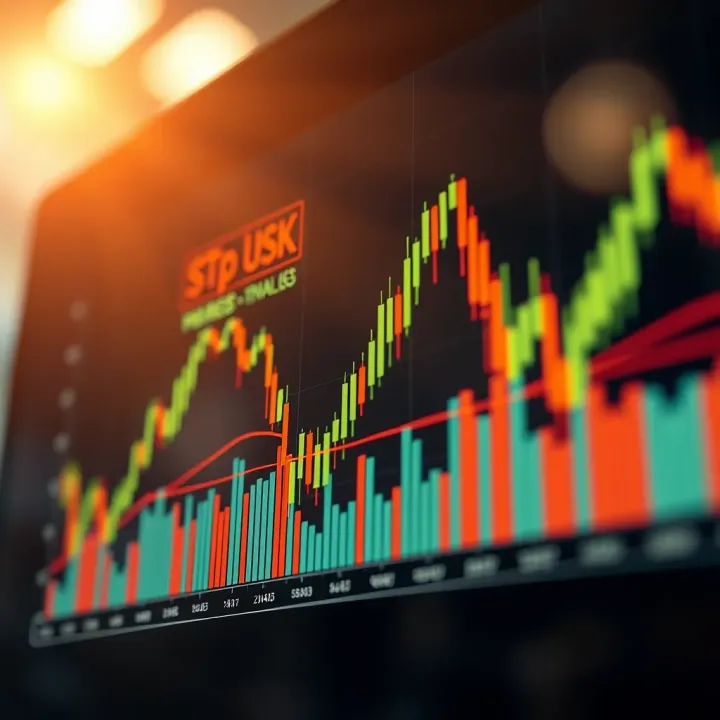
Candlestick charts: Similar to bar charts but with colors, making it easier to spot patterns.
For example, beginners might start with line charts for simplicity, then move to candlestick charts to identify entry and exit points more clearly.
Candlestick patterns are popular because they reveal market psychology at a glance. Patterns like “doji,” “hammer,” or “engulfing” provide clues about potential reversals or continuations.
Take the “hammer” candle, which has a small body and a long lower wick. It often signals that sellers pushed prices down, but buyers regained control, hinting that prices might bounce back. Spotting such clues can give you an edge.
Remember, forex trading isn’t just numbers and charts. It’s about interpreting what the market’s telling you and making informed moves. Mastering these basic concepts avoids many rookie mistakes and sets the path for smarter trading decisions.
When you first get your feet wet in forex trading, having clear strategies is like having a map in unfamiliar territory. Popular trading methods help beginners structure their decisions rather than acting on gut emotions. These strategies aren't just theoretical—they provide practical templates to understand market moves and control risk.
By focusing on tried-and-true approaches, beginners can learn to spot patterns and manage their trades confidently. This section breaks down three common strategies that suit newbies well: trend following, range trading, and breakout trading. Each comes with its own set of rules and applications.
Trend following is about catching the wave while it’s building and riding it until it loses momentum. This strategy revolves around spotting the overall direction of a currency pair—whether prices are generally moving up, down, or sideways. To identify trends, keep an eye on moving averages like the 50-day and 200-day lines. If the price stays consistently above these averages, that's a strong sign of an uptrend. Conversely, prices below suggest a downtrend.
A practical way to confirm trends is to look for higher highs and higher lows during an uptrend, or lower highs and lower lows in a downtrend. This helps filter out noise from minor price fluctuations.
Once you spot a trend, timing your trades becomes crucial. Beginners often use pullbacks, which are brief reversals in the price within the main trend, as entry points. For example, in an uptrend, when the price dips slightly but holds above a moving average, it can be a good moment to buy.
Exit points usually come at signs of trend weakening, such as failure to make new highs or a reversal pattern on the chart. Setting stop-loss orders just below recent swing lows in an uptrend (or above swing highs in a downtrend) helps limit losses if the trend suddenly reverses.
Think of trend following like surfing — you want to catch the wave early and stay balanced until it’s time to get off.
Range trading thrives when currency prices move sideways between well-defined support and resistance levels. Support is the price floor where buyers tend to step in, while resistance is the ceiling where sellers dominate. Identifying these levels involves looking at previous highs and lows where price repeatedly stops or reverses.
Technical indicators like the Relative Strength Index (RSI) can also help confirm overbought or oversold conditions near these levels, strengthening your conviction.
When prices oscillate within a range, the strategy is to buy near support and sell near resistance. It’s about playing the bounces rather than trying to predict breakouts. This method suits markets without clear trends or during consolidation phases.
For example, if the EUR/USD pair is bouncing between 1.1000 (support) and 1.1100 (resistance), a range trader would consider entering a buy position near 1.1000 and exiting near 1.1100, placing stop-loss orders just outside the range.
Range trading reduces exposure to big price swings, but it requires patience to wait for prices to hit the edges of the range.
Breakout trading is all about catching explosive moves when prices break through key support, resistance, or chart patterns like triangles or channels. These events often trigger a surge in volume and momentum.
A reliable breakout shows a strong spike beyond established levels, often confirmed with increased trade volume. For instance, if USD/JPY breaks above a resistance level of 135.00 with a sudden price jump and heavy trading activity, it could signal the start of a new upward move.
Not all breakouts lead to sustained moves; some fall back inside the previous range, trapping traders. These false breakouts can drain your account if you're not careful.
To manage this, look for confirmation before jumping in. This might mean waiting for a candle to close above resistance or checking if volume supports the breakout. Setting tight stop-loss orders just below the breakout level minimizes losses if the move fizzles out.
Remember, breakout trading demands quick decisions but also discipline not to chase every price spike.
Picking a strategy that fits your personality and market conditions is half the battle. Mastering these approaches can build a solid foundation on your forex trading adventure.
The key is to practice these strategies in a demo account to understand their feel and risks before putting real money on the line.
Online resources and trading tools are like your trade buddies that help you make sense of the Forex market puzzle. They bridge the gap between theory and practice, making it easier to build skills without stepping into a real trade pitfall. Whether you're fresh off the block or have a few trades under your belt, leveraging these tools can sharpen your decision-making and boost your confidence.
Starting with free courses can feel like getting a taste of the market without spending a dime. Platforms like BabyPips or Investopedia offer solid foundational content that lets beginners grasp the basics without paying upfront. But remember, while free courses provide a good intro, they might skip over more nuanced strategies or the latest market updates.
Paid courses, on the other hand, often come with deeper insights, structured learning paths, and sometimes even one-on-one mentoring. Reputed providers like Udemy, Coursera, or dedicated Forex educators offer paid options that tend to focus on advanced tactics or specialized trading styles. These usually fit better when you want to level up or get personalized feedback.
Not all learning materials are cut from the same cloth. Quality content is clear, updated, and backed by real-world examples. Look for courses featuring practical exercises, interactive quizzes, and clear explanations instead of just jargon-heavy lectures.
It's helpful if the content aligns with your learning style—videos, articles, or webinars—and suits your trading goals. For instance, if you want to focus on technical analysis, pick tutorials that go beyond definitions and show you how to apply indicators using charts.
Always vet the source of the course by reading reviews or trying free previews. A solid reputation and positive user feedback usually signal trustworthy content.
Demo accounts let you dip your toes into the Forex sea without worrying about losing real money. It’s like having a flight simulator for traders, where you can test strategies and familiarize yourself with market mechanics.
This safety net encourages experimentation—you can try trading pairs you’re less familiar with, practice placing orders, or test different lot sizes without financial pressure. Plus, it reduces the stomach-churning stress that often clouds judgment when real stakes are involved.
Modern demo accounts aren't just playgrounds; they closely mimic real market conditions, including live price feeds and trading hours specific to your brokers. This realism helps you understand market volatility and liquidity, preparing you for live sessions.
For example, if the EUR/USD pair is unusually volatile due to a news event, your demo platform will reflect those price swings. It helps you experience timing trades right or managing slippage without risking a rupee.
When it comes to choosing where to trade, platforms like MetaTrader 4 (MT4), MetaTrader 5 (MT5), and cTrader are favorites among beginners. They offer user-friendly interfaces, tons of tutorials, and built-in support for automated trading, known as Expert Advisors (EAs).
Many brokers also provide proprietary platforms optimized for mobile and desktop, such as IG’s trading platform or Forex.com’s app. Selecting a platform that matches your comfort and offers essential tools can make the trading experience smoother.
Indicators like Moving Averages, Relative Strength Index (RSI), and Bollinger Bands help decode price action and signal possible trade opportunities. Beginners should start with a handful of these to avoid information overload.
Charting tools in platforms let you draw support and resistance lines, identify candlestick patterns, and visualize trends. Playing around with these tools on demo accounts or during practice can teach you how real-time market data flows and what to watch for.
Remember, indicators are tools, not crystal balls. Use them to support your trading plan, not replace it.
By using these resources and tools, traders in India can get a leg up on the competition and steadily climb the learning curve. It’s about turning information into action, with enough hands-on practice and smart learning to avoid common rookie slips.
When you're stepping into the bustling world of forex trading, it’s easy to get swept up by the excitement of quick gains. But the truth is, managing risk isn't just some fancy phrase traders toss around—it's the backbone of staying afloat in this game. Without a solid risk management plan, even the best strategy can crumble like a house of cards.
By focusing on managing risk and steering clear of common mistakes, traders protect their capital and improve their chances for long-term success. For example, envision a new trader who jumps into EUR/USD trades without clear exit points—they might see their account drain fast during market swings. But with risk measures in place, these pitfalls become manageable bumps rather than full-blown crashes.
A stop-loss order is like a safety net that gets your trade out before it drains your funds too far. Think of it as telling your broker, "If my trade goes this bad, just sell it off." Conversely, a take-profit point locks in your gains once the market reaches your target. Both tools help take the emotion out of trading decisions.
Setting these points isn't guesswork. For instance, if you enter a GBP/USD trade and set a stop-loss 50 pips below your entry price and a take-profit 100 pips above, you're defining how much you can lose versus how much you hope to gain. This 1:2 risk-reward ratio is a common rule of thumb ensuring your winners cover your losers.
Position sizing is about deciding how much money to risk on a single trade. Imagine it as the portion of your overall capital you put on the line—too big and a loss could be devastating; too small and you might barely make progress.
Beginner traders often risk about 1-2% of their trading capital per trade. So, if you have ₹100,000, risking ₹1,000 to ₹2,000 on a single trade keeps losses manageable and preserves your capital during rough patches. Tools like the Kelly Criterion or fixed fractional sizing can help figure out the optimal position size tailored to your account and risk tolerance.
Trading more frequently than necessary—overtrading—commonly happens when emotions take the wheel. Picture a newbie who, after a minor loss, compulsively places several trades in quick succession to "win it back." This often leads to reckless decisions and bigger losses.
Sticking to a well-thought-out trading plan and taking breaks when emotions spike can prevent this trap. Remember, quality over quantity; patience pays off.
Chasing losses is the habit of trying to recover money lost by making riskier trades. It’s like running after a bus that’s getting farther away—you end up tired, frustrated, and possibly in worse shape.
To avoid this, it’s crucial to accept losses as part of trading. Stop-losses should be respected, and after a losing streak, it’s wise to pause and reassess rather than dive back in headfirst.
Walking into trades without a clear plan is like setting out on a road trip with no destination or map. A trading plan outlines your strategy, risk limits, and goals.
Consider a trader who forgets to use stop losses or ignores market conditions—they’re essentially gambling rather than trading. Developing and following a solid trading plan helps maintain discipline and makes your trading more consistent and less stressful.
Good risk management and staying clear of common errors turn trading from a gamble into a skill. It gives you control over your money, so you're not left at the mercy of the market’s twists and turns.
By adopting these risk management techniques and avoiding rookie mistakes, beginners set themselves on a path to trade smarter, not harder. Remember, forex isn’t about hitting jackpots overnight but about steady, informed steps toward growth.
Understanding the legal framework behind forex trading in India is as important as grasping the technical concepts of trading itself. Without a solid grasp of the rules and regulations, traders might unknowingly make moves that land them in hot water. This section unwraps what you need to know about the legal landscape, ensuring your forex activities stay compliant while you focus on your trading game.
The Reserve Bank of India (RBI) acts as the watchdog for forex trading within the country. It regulates the foreign exchange market to maintain the currency's stability and ensure financial security. Practically, this means the RBI has put specific restrictions on what kinds of forex transactions Indian residents can legally participate in. For example, trading in currencies other than those approved by the RBI can lead to legal issues.
The RBI’s framework mandates that Indian traders must conduct forex trading only through authorized dealers—typically banks or registered brokers. This helps prevent unauthorized or speculative trading that could weaken the rupee or disrupt the financial system. Understanding the RBI’s regulations helps traders pick legitimate brokers, thus avoiding scams and ensuring their investments are safe.
Not every currency pair under the sun is open for trading by Indian residents. The RBI has approved a select list of currency pairs that can be legally traded. Typically, these pairs include INR/USD, INR/EUR, INR/GBP, and INR/JPY. Trading outside this set is considered illegal unless done through fully authorized channels.
For instance, trading in exotic currency pairs like INR/MXN or INR/ZAR is not permitted for retail investors in India. Sticking to approved pairs minimizes legal risks and aligns with RBI guidelines. This focus also helps new traders channel their efforts on pairs with better liquidity and fewer risks of regulatory penalties.
Remember: Always confirm with your broker that the currency pairs you intend to trade comply with RBI guidelines to avoid any surprise legal troubles.
Profits earned through forex trading in India are treated as income from business or speculative activities, depending on the nature of trading and the holding period. Most retail forex traders are classified under speculative income, which means their profits are taxed as per the applicable income tax slabs.
If you trade frequently and treat it as a business, you may need to declare it as business income, which opens the door for claiming various business expenses which might lower your taxable income. However, the exact classification can be tricky; hence, consulting a tax professional is often worth the peace of mind.
The Income Tax Department requires traders to report their forex earnings clearly in their annual tax returns. This includes maintaining detailed transaction records, profit and loss statements, and backing documentation for each trade. Failing to report or misreporting can lead to penalties or legal action.
Using accounting software or maintaining a trading journal is advisable. This not only helps with taxes but also gives valuable insight into your trading performance over time. Proper documentation aligns with RBI’s emphasis on transparent financial activities and helps traders build a compliant trading profile.
Navigating the legal and tax landscape may seem like a maze initially, but mastering these basics ensures your forex journey in India is smooth and secure. Keeping an eye on regulation updates and consulting professionals for tax matters is a smart move for anyone serious about long-term trading success.
Gaining confidence in forex trading doesn’t happen overnight — it’s a process that grows as you learn, practice, and reflect on your trades. For beginners, this stage can be intimidating. But developing confidence is essential because it directly influences your decision-making and discipline in the market. Without confidence, traders tend to second-guess their moves or get swayed by emotions, which often leads to mistakes.
A solid way to build this confidence is by focusing on consistent learning and gradual experience. For instance, practicing with a demo account before diving into live trading helps reduce anxiety. Also, setting small, achievable goals rather than chasing big wins can create steady progress. Over time, these steps help transform trading from a guessing game into a skillful pursuit.
Keeping a trading journal is more than just jotting down numbers; it’s about documenting your decisions and the reasons behind them. By recording each trade’s entry and exit points, trade size, and outcomes, you get a clear map of what’s working in your strategy and what isn’t. Imagine you noticed that trades based on news releases bring unpredictable results — your journal will reveal that pattern.
A practical tip: note down market conditions and your feelings during the trade. Were you nervous or overly confident? This context can shine a light on emotional influences impacting your trading.
A journal isn’t complete without regular review sessions. Look back over weeks or months to spot trends in your trading behavior. Are you consistently profitable with certain currency pairs? Do you lose more during specific times of the day? Such insights help tweak your approach.
For example, if you find that your stop-loss settings are too tight, cutting your wins short, adjusting them might improve results. Treat your trading journal as a feedback loop — it’s a personal tutor that points out strengths and highlights weaknesses.
Trading can feel like a lonely road, especially at the start. Joining forex trading communities—either online forums, social media groups, or local meetups—connects you with others who share your interests and challenges. Peer support helps keep morale high, offers encouragement during losing streaks, and helps you stay accountable to your trading plan.
Furthermore, hearing stories from more experienced traders can provide reassurance that every trader faces rough patches. This support network often leads to practical advice and shared resources that might be hard to find alone.
Communities aren’t just for moral support. They’re a treasure trove for learning new tactics and refining your existing ones. Sharing your own trading insights encourages interaction and debate, which sharpens your understanding.
For example, if you discovered a way to spot early breakout signals on the EUR/USD, sharing that with your group can lead to feedback that either validates or challenges your approach. Through this exchange, you gain valuable perspectives and can adapt your strategy to real-world market conditions more efficiently.
Keeping an open mind to community input while evaluating it critically enriches your trading mindset and builds resilience.
In summary, building confidence as a forex trader means combining disciplined self-review through a trading journal with the dynamic learning environment offered by trading communities. Together, these practices lay a strong foundation for long-term growth and success in the forex market.
Planning your forex trading routine plays a vital role in shaping your success as a trader. It’s not just about picking trades willy-nilly; it involves setting a well-thought-out schedule and clear goals that allow you to stay disciplined and focused. In the fast-moving forex market, having a consistent routine helps you avoid impulsive decisions and keeps your emotions in check. It also makes balancing trading with other life responsibilities easier, especially if you have a full-time job or studies.
A trading routine includes practical steps like deciding the best times to trade, fitting your analysis and review periods into your day, and setting realistic goals to track your progress. For example, a trader working regular office hours might focus on trading the London or New York sessions when volatility and volume tend to be higher, rather than trying to chase moves in less active times.
By sticking to a routine, traders develop habits that improve decision making and reduce stress, ultimately leading to better risk management and consistent performance.
Balancing trading with other commitments is crucial, especially for beginners balancing forex trading alongside a full-time job, studies, or family duties. The forex market runs 24/5, but that doesn’t mean you have to. Start by assessing your daily schedule and identifying blocks of time when you can dedicate focus without distractions. It’s better to trade during shorter, high-quality sessions rather than long periods of distracted, less effective work.
Take the example of Rajesh, who works a 9-to-5 job. Instead of trying to catch every market move, he analyzes charts early in the morning and executes trades near the market open for the London session, then checks his positions briefly after work. This balance reduces burnout and keeps his trading purposeful.
Choosing optimal trading times means selecting the hours when the market is most active for your currency pairs. For Indian traders, the London and New York sessions (roughly 1:30 PM to 10:30 PM IST) often provide better liquidity and more trading opportunities. This timeframe overlaps with major financial centers, so price movements tend to be more predictable and spreads tighter.
Avoid trading during low liquidity periods like weekends or the quiet hours of the Asian session if you're trading pairs like EUR/USD or GBP/USD. Also, keep in mind economic news releases, which can cause sudden volatility. Planning your routine to focus around these times gives you the chance to seize good setups with manageable risk.
A disciplined schedule that matches your lifestyle with the market’s rhythm can be a trader’s secret weapon.
Short-term versus long-term trading objectives should both be part of your planning. Short-term goals might include mastering a particular strategy, maintaining a certain win-rate, or consistently managing risk on every trade. Long-term goals could range from growing your account steadily over a year to reaching a financial independence milestone through trading.
For instance, setting a goal to increase your trading capital by 5% a month is more attainable and less stressful than expecting to double it overnight. Separating these goals helps you stay grounded and adjust your tactics without losing sight of the bigger picture.
Measuring progress isn’t just about dollar amounts. Keep a trading journal that records your trades, your reasoning behind each one, emotions during the trade, and the outcomes. Over time, this journal becomes a vital tool for spotting recurring mistakes or successful patterns.
Tracking metrics like average return per trade, maximum drawdown, and risk-to-reward ratio gives you objective insight into your development. This approach ensures you’re improving step-by-step rather than chasing quick wins that might set you back.
By putting a thoughtful trading routine into practice, you pay attention not just to the how but also the when and why of forex trading. This planning strengthens your overall approach, making the learning curve smoother and your trading journey steadier.
💹 Explore online Forex trading in India! Learn legal tips, top platforms, key strategies, broker selection, risks, and tax rules for smart trading.

🔍 Explore detailed insights into online forex trading platforms popular in India—features, security, fees, and tips to choose one that fits your needs perfectly.

📈 Learn practical forex trading tips, strategies, and risk management to boost your chances of making money in India's forex market. Start trading smart today!
Find the ideal online trading app for Indian investors 📈! Explore key features, costs, security, & user experience to trade smartly in India 🇮🇳.
Based on 9 reviews