

Understanding Maximum Height of a Binary Tree
🌳 Explore the maximum height of a binary tree: its meaning, calculation methods, and impact in computer science, from traversals to key applications.
Edited By
Lucas Mitchell
When you dive into data structures, especially binary trees, understanding their height is critical. The maximum height of a binary tree tells you the longest path from the root node down to the furthest leaf. This measure isn’t just academic—it's fundamental in evaluating how efficient your algorithms can be when they rely on tree structures.
For traders and analysts dealing with complex, hierarchical data, grasping this concept helps in optimizing searches, storing information, and predicting system performance. Whether you're coding a new algorithm or analyzing financial data structures, knowing the max height gives clarity on the time and space complexity involved.

The height of a binary tree directly influences the speed of search, insert, and delete operations, making it a key factor in performance tuning.
This article breaks down what maximum height means, how it’s calculated, its significance in computer science, and practical approaches for finding it efficiently. By the end, you’ll not only get why it matters but also how to apply this knowledge in real-world scenarios like developing faster data retrieval systems or understanding performance bottlenecks in your coding projects.
Understanding the height of a binary tree is like getting the maximum ‘reach’ of a structure, which has huge implications in how we work with data. Whether you are optimizing a search or balancing an investment portfolio algorithm, knowing the height gives you a clue about performance bottlenecks and resource usage. Without a clear idea of height, you might misjudge the efficiency of an operation or fail to predict how it scales as data grows.
A binary tree isn’t just a random layout of nodes. It’s an organized structure where the height directly impacts traversal speed, search efficiency, and balancing decisions. Take for instance the way decision trees in stock analysis filter down market conditions. If the tree is too tall (too many layers from root to leaf), each lookup slows, which can be costly when timing is crucial.
Defining height accurately also avoids confusion in more complex data operations. If algorithms don’t know the tree height, they might not properly balance the tree, leading to skewed data retrieval times. This makes grasping the fundamental concept essential before diving into deeper algorithmic strategies or practical coding solutions.
A binary tree is a data structure where each node holds a value and has up to two child nodes, often called the left and right child. Unlike a family tree, it’s strictly organized: no node can have more than two children. This simplicity keeps it fast and flexible for things like searching stocks, managing portfolios, or indexing financial records.
Think of it like a game of 20 questions that you play when analyzing stocks. Each question (node) splits your path into two possible answers, narrowing down to precise outcomes (leaf nodes). This branching makes complex decisions manageable and quick.
People often mix up height and depth, but they're not the same. Height is about how far the tree stretches downward from a node; depth measures how far a node is from the root. For example, if you’re analyzing a decision tree, the root’s height tells you how many levels of decisions can happen, while depth tells you how many steps particular data took to get to a certain answer.
This distinction matters. When optimizing queries or balancing your algorithm, focusing on height shows you the worst-case scenario—how deep the longest path might get. Traders or analysts want to minimize this to speed up decision-making.
Height is calculated by counting the number of edges on the longest path from the root node down to the farthest leaf node. So if a tree has a longest branch passing through 5 edges, the height is 5. Note that height doesn't count the root as zero length but rather counts the edges connecting nodes.
A quick example: if a portfolio selection tree has your root node deciding the market sector, and the longest path goes down through tech -> software -> cloud -> security stocks, that path’s length dictates the tree height. Knowing this helps decide if you need to rebalance or optimize the structure to avoid unnecessary delays in your algorithm.
Keeping track of tree height is like knowing the depth of a well before drawing water — it guides how much work is needed and where you might face resistance.
By defining these basics clearly, you set the stage for smarter, more efficient data operations downstream—an essential for anyone dealing with complex financial datasets or algorithm-driven decision-making.
For finance professionals such as traders, investors, and analysts, efficient data retrieval is paramount. A taller tree often means longer search times, which can delay decisions that rely heavily on timely data processing. For example, a trading algorithm accessing stock price data stored in a binary tree with a high maximum height could experience slower execution compared to a more balanced tree.
In essence, the maximum height governs the worst-case scenario for how deep one might have to traverse to reach a leaf node. This is why understanding and managing tree height becomes relevant to optimizing system performance and ultimately affects outcomes in financial operations relying on these structures.
The maximum height directly influences several performance aspects of binary trees. A key factor is the time complexity for operations like search, insertion, and deletion, which depend on tree height. Generally, a balanced binary tree with minimal height ensures these operations happen in roughly O(log n) time, where n is the number of nodes. However, if the tree is skewed and tall, the time complexity can degrade to O(n), akin to a linked list.
Consider an investor who maintains a dynamic portfolio using a binary tree to store and quickly access stock transactions. If this tree grows unbalanced and its height skyrockets, retrieving transaction histories or updating holdings might slow down significantly, hurting decision speed.
Another practical example: In algorithmic trading platforms using order books structured as binary trees, maintaining low maximum height helps keep the latency low. Even milliseconds can matter here—if the tree height grows too large, execution delays may cost substantial money in volatile markets.
"In data structures, the height isn’t just a number—it’s a measure of efficiency and speed under the hood."
The maximum height also plays a big role in the balance of a binary tree. Balanced trees ensure operations happen smoothly. For instance, AVL trees and Red-Black trees use balancing rules to keep height in check, preventing performance bottlenecks.
Financial analysts often work with vast datasets that continuously update—trades get added, removed, or altered. Balanced trees help keep these updates efficient. When balance is lost, and height grows unnecessarily, each operation takes longer, potentially causing hiccups in systems that expect near-instant results.
Take stock market tickers feeding data into databases structured as binary trees. If these trees become unbalanced over time, the process of updating prices or fetching data can slow down. This imbalance also affects algorithms needing to traverse to the deepest nodes, leading to unpredictable performance.
In short, the connection between maximum height and balance is fundamental. Keeping this height minimal through balancing mechanisms guards against degraded operations, ensuring systems remain nimble and reliable.
By grasping why maximum height matters—especially its impact on tree performance and balance—finance professionals can better appreciate the underlying structures that support their data-driven strategies and tools.
Knowing the right way to calculate the maximum height of a binary tree is more than just a technical detail—it affects how quickly you can work with data structures in real-world scenarios. Traders and analysts often rely on efficient algorithms, even when exploring tree-based data models, to ensure operations run without a hitch. In this section, we'll focus on clear methods for calculating tree height, pointing out their strengths and when they're best suited.
Recursion feels like a natural fit for tree problems because trees are, by design, hierarchical. The recursive method calculates the height by breaking down the problem into smaller parts: the height of the left subtree, the height of the right subtree, and then taking the larger one plus one (for the current node).

Here's a straightforward way to picture it: imagine you want to find the tallest branch in a tree—first you measure every branch on the left and right side separately, then compare them.
Example in code (Python):
python class Node: def init(self, value): self.value = value self.left = None self.right = None
def max_height(node): if not node: return 0# Base case: empty tree height is zero left_height = max_height(node.left)# Recursively find left height right_height = max_height(node.right)# Recursively find right height return max(left_height, right_height) + 1# Add one for current node
This approach is clean and intuitive. It's well-suited when you want concise code and the binary tree isn’t too large, as large trees could cause stack overflow issues due to too many recursive calls.

### Iterative Solutions

On the other hand, iterative methods avoid recursion and instead use loops with data structures like queues or stacks. These methods can be more efficient for very large trees, where deep recursion might fail.

A common iterative method involves level-order traversal (breadth-first search). You'll process each level of the tree one by one, counting how many levels you've gone through until all nodes are covered.

For example, using a queue:

1. Start by adding the root node to the queue.
2. While the queue isn't empty, process nodes level-wise.
3. For each level, dequeue nodes and enqueue their children.
4. Increase the height count every time you finish processing a whole level.

Example in Python:

```python
from collections import deque

def max_height_iterative(root):
    if not root:
        return 0
    queue = deque([root])
    height = 0
    while queue:
level_size = len(queue)# Number of nodes at current level
        for _ in range(level_size):
            node = queue.popleft()
            if node.left:
                queue.append(node.left)
            if node.right:
                queue.append(node.right)
height += 1# Finished one level
    return height
This method is helpful when stack overflow is a concern, making it especially practical in environments with limited recursion depth.
Both methods have their place. Recursive approach offers neatness and ease of understanding, while iterative method can be a safer bet for large datasets or environments like trading platforms that demand reliability without unexpected crashes.
Understanding the height of a binary tree becomes much clearer when we dive into real examples. This section helps cement the theory by showing how to calculate the height in various cases, from straightforward trees to those that are more complex or unbalanced. For anyone working with data structures or aiming to optimize algorithms, getting hands-on with such examples is a great way to grasp how height influences tree behavior and performance.
Let's look at a simple binary tree: imagine a tree with just a root node and two children. The height here is easy to spot because you just count the levels from the root down to the furthest leaf. In this case, we have the root at level 0, its children at level 1, so the height is 1.
Consider a tree like this:
Node A (root)
Node B (left child)
Node C (right child)
The maximum height is 1 since the longest path from the root to a leaf is just one edge. This kind of example is a perfect starting point for beginners to confidently understand tree height measurement before moving on to trickier structures.
Things get trickier when the tree is unbalanced. Picture a tree where the root has a left child, which itself has a left child, and so on, forming a kind of "linked list" shape on one side, but the right child might be missing or have fewer descendants.
For example:
Node A (root)
Node B (left child)
Node D (left child of B)
Node E (left child of D)
Node C (right child)
Here, the longest path from the root to a leaf is from A to E, counting 3 edges, making the height 3. Notice how the right subtree is quite shallow compared to the left. This uneven structure often causes performance issues since operations depending on height, like searching or balancing, may take longer on one side.
"In unbalanced trees, the height reflects the worst-case depth, impacting the efficiency of many tree operations."
Using such examples highlights why calculating height isn't just academic — it guides practical decisions, like whether to rebalance a tree or anticipate its performance during traversals. Traders, investors, or analysts who dabble in algorithmic trading or data analysis might find that optimizing under-the-hood data structures leads to significantly faster processing and better use of computational resources.
In summary, both simple and complex examples give a stronger intuition about tree height. Recognizing these differences can help when designing algorithms or debugging unexpected slowdowns related to tree operations.
When working with binary trees, it's easy to get tangled up in different measurements like height, depth, and diameter. Each serves its own purpose and gives insight into a tree’s structure and behavior. For traders and financial analysts working with data structures in algorithmic models or trading software, understanding these distinctions isn’t just theoretical – it can impact the efficiency of data retrieval or decision-making speed.
People often mix up height and depth because they both relate to how far nodes are from each other. Here’s a simple way to remember: height measures the distance from a node down to the furthest leaf, whereas depth measures the distance from a node up to the root.
For example, in a trade monitoring system, if you consider each node a decision point, the height tells you how many steps remain before reaching the bottom decision level—in other words, the longest possible path down. Depth would instead tell you how far a decision is from the original entry point of the tree (the root).
This distinction matters when optimizing trade strategies that simulate scenarios using binary trees. Knowing a node’s depth can help quickly access how far removed it is from the initial conditions, while the height can hint at how many potential outcomes remain beneath it.
Unlike height and depth, the diameter of a tree is about the longest path between any two nodes, not necessarily including the root or leaves alone. Think of the diameter as the widest stretch across the tree, whereas height focuses on just one side from root to leaf.
In financial algorithms, imagine a scenario where one wants to find the longest chain of conditions that impact a trade decision. The diameter would identify this longest chain, crossing multiple nodes, possibly spanning different branches. For instance, if your tree represents different indicators influencing a decision, the diameter highlights the maximum stretch of influence.
Use height to understand the maximum depth to the leaves, which helps measure worst-case scenarios in search operations.
Check depth for how far a specific node is from the start point – useful in backtracking or understanding node positions.
Look at diameter to gauge the overall spread of a tree, identifying the longest path that may affect comprehensive evaluation or risk assessment.
Understanding these measurements deepens your command over tree-based algorithms, which can enhance the performance of your trading software or analytical models dramatically, especially when dealing with large, complex datasets.
In short, each measure tells a different story about your binary tree, and using the right one at the right time is key for sharper insights and smoother operations.
The height of a binary tree plays a crucial role in many algorithms used in computing. It directly impacts how efficient these algorithms run, especially when they involve searching, inserting, or balancing operations in trees. Knowing the tree's height helps programmers anticipate performance bottlenecks and make optimization decisions.
When height is well managed, operations like search and insert remain fast because fewer nodes have to be traversed. Conversely, poor height management can lead to degenerate cases where the tree behaves like a linked list, causing slow performance.
Balancing a binary tree relies heavily on its height to ensure that the tree remains efficient for operations. For example, self-balancing trees such as AVL trees and Red-Black trees use the height of subtrees to decide when and how to perform rotations. These rotations minimize the tree's height differrence between subtrees, keeping operations close to O(log n) time.
In an AVL tree, the balance factor is calculated as the difference between the heights of the left and right subtrees. If this balance factor exceeds 1 or drops below -1, rotations are triggered to restore balance. This constant attention to height helps maintain speed for search and insert tasks even as data grows.
Similarly, Red-Black trees keep height roughly balanced by using color properties and rules to guarantee no path is more than twice as long as any other. Again, it all revolves around keeping height predictable to avoid worst-case slowdowns.
Height directly affects how deep the traversal or search might go in a tree. In the worst case, a tree’s height determines the maximum steps needed to find a value or insert a new node. For example, a balanced binary search tree with height h will have search, insert, and delete operations running roughly in O(h).
If you think about a stock market database where data points are stored in a binary tree, a tall unbalanced tree could force your search for a stock price or historical data to take unnecessarily long. But a balanced tree with controlled height keeps these operations nippy.
Traversal algorithms like Depth-First Search (DFS) or Breadth-First Search (BFS) also depend on height. DFS can go as deep as the tree height, making the stack size proportional to height, and BFS typically uses a queue that temporarily holds nodes from a tree level, roughly related to the tree’s height and overall shape.
Managing tree height is essential to avoid performance pitfalls in search-heavy applications. Keeping height low means fewer steps, faster returns, and more efficient code.
In summary, height isn't just a static property—it’s a tool programmers use to fine tune tree algorithms and guarantee swift data handling. Whether balancing the tree or conducting searches, understanding and applying height concepts lead to better software performance and reliability.
Understanding the height of a binary tree plays a significant role in managing data efficiently and optimizing operations, especially when working with large datasets or real-time systems. Knowing the height helps in estimating the resources you'll need and in tweaking algorithms for faster execution. This is not just theoretical—it impacts how software behaves in everyday tasks.
The height of a binary tree directly influences the memory footprint of certain operations, particularly recursive ones. For example, recursive calls often consume stack space proportional to the height of the tree. If the tree is very tall (meaning it's unbalanced), you might risk a stack overflow, which can crash a program or slow it down significantly.
Take a financial data processing system that organizes trades or transactions in a binary tree. If the tree gets too tall, it demands more memory for each function call during traversal. Developers managing such systems might impose height limits or rebalance the tree to prevent excessive memory use, ensuring smoother resource management.
The height of a binary tree is directly tied to the speed of search and insert operations. In a balanced tree, height stays low, so finding or adding an element can often be done in logarithmic time relative to node count. Conversely, an unbalanced tree with large height might degrade these operations to linear time, removing the advantage of tree-based storage altogether.
Imagine a stock trading platform where rapid insertion of new orders and fast lookups are vital. Maintaining a balanced binary tree keeps response times snappy, ensuring that queries don't bottleneck due to deep traversal paths. Algorithms like AVL or Red-Black Trees adjust the tree's height on the fly to maintain this efficiency.
In short, keeping an eye on tree height isn't just about neat code—it's about managing how much memory your app uses and how responsive it feels when handling data.
Knowing these practical impacts helps programmers and analysts make informed decisions about data structures when working with evolving financial or transactional data.
Calculating the maximum height of a binary tree isn’t always a walk in the park, especially as trees grow larger or become unbalanced. As traders or finance professionals working with data structures or algorithm-based software, it's crucial to recognize the bottlenecks this task can present. Efficient height computation affects performance directly, influencing search times, memory allocation, and overall system responsiveness.
When binary trees expand to handle extensive datasets—as often seen in complex financial modeling or market simulation tools—the straightforward recursive approach to computing height can turn into a serious performance drag. Large trees mean deep recursion, which can eat up stack memory quickly, sometimes even causing stack overflows. For instance, imagine trying to compute the height of a tree representing millions of stock transactions; recursion might not cut it without optimizations.
To tackle this, iterative methods using explicit stacks or queue-based level order traversals help keep memory usage in check while avoiding the pitfalls of deep recursive calls. This shift ensures your application remains responsive, even when handling massive data. Also, tail recursion optimization, available in some programming languages, can mitigate issues but isn’t universally reliable.
Unbalanced binary trees, which occur frequently in real-world scenarios when data isn't evenly distributed, present another thorny problem. A tree skewed heavily to one side can have a height close to the number of nodes, turning typical operations into linear-time tasks rather than logarithmic ones.
For example, a binary tree resembling a linked list (all nodes on one side) creates an unusable worst-case scenario for height calculation and other operations. This imbalance complicates height calculation because the algorithm must process long chains of nodes, and naive methods might repeatedly traverse the same paths.
To handle this, algorithms must account for potential imbalances, often by incorporating balancing operations like those used in AVL or Red-Black Trees. These keep the tree height in check automatically. From a computational perspective, memoization or caching intermediate height results can reduce redundant calculations in unbalanced trees, improving computation time significantly.
Efficient height calculation goes hand-in-hand with maintaining balanced structures and managing resource load, making it a foundational concern in algorithm optimization, especially in finance-oriented applications relying on tree data structures.
Understanding these challenges helps you better design software that’s robust and performs well under real-world conditions, where data doesn’t always play by the book.
Getting the maximum height of a binary tree right in your code isn’t just about writing something that works; it's about writing something efficient, clear, and maintainable. This section highlights practical advice that developers, whether newbies or seasoned pros, can follow to nail this task. By focusing on code clarity and avoiding common errors, you end up with solutions that run well and are easier to debug or build upon later.
Recursive functions are often the go-to method for calculating a tree's height because they naturally fit the tree's structure. When writing these functions, clarity is king. Start by ensuring your base case is crystal clear: if the current node is null or empty, return 0—meaning no height beyond this point. Then, make two simple recursive calls for the left and right children, and return the maximum of these two heights plus one (representing the current node).
For example:
python class Node: def init(self, val): self.val = val self.left = None self.right = None
def tree_height(node): if node is None: return 0 left_height = tree_height(node.left) right_height = tree_height(node.right) return max(left_height, right_height) + 1
This short snippet is straightforward and easy to follow, which makes maintenance easier down the line. When writing similar recursive functions, be sure to clearly comment your code, explaining what each section does without overdoing it. Think of someone who might take over your code years later trying to make sense of it.

### Avoiding Common Pitfalls

Even with a simple concept, it's easy to stumble over some typical traps. One common mistake is neglecting to handle the case when the tree is empty from the start—this can lead to exceptions or incorrect results. Always check for `null` nodes before proceeding.

Another trap is getting caught up in off-by-one errors. For instance, mistakenly returning just `max(left_height, right_height)` without adding one means missing out on the current node's contribution to height.

Also, watch out for excessive recursive calls that can eventually cause stack overflow on deep trees. For very large or unbalanced trees, consider iterative methods or tail recursion (if your language supports it) to mitigate this.

Finally, avoid duplicating calculations by storing results when possible. Memoization can save time if you need to repeatedly calculate heights in complex algorithms.

> Clear, concise code with proper base cases and edge condition handling is your friend when working with binary tree height calculations. A small flaw here can lead to big headaches later.

By keeping these tips in mind, you can implement height calculations that not only run well but are also easier to understand and extend—qualities that every good program should have.

## Summary and Final Thoughts on Binary Tree Height


When you've worked through this article, you should have a solid grasp of why height matters and how to measure and calculate it effectively. Whether you're implementing your own recursive approach or debugging iterative code, understanding common pitfalls like incorrect base cases or failing to handle empty subtrees is key. Also, realizing the differences between height, depth, and diameter sharpens your overall grasp on tree characteristics—so you're not mixing these terms in your work.

> Remember, the height influences memory usage, speed, and balance of your tree. Keeping the height in check often means fewer CPU cycles and less delay in response times, especially when handling vast datasets common to financial systems and market analysis tools.

### Key Takeaways

- The *maximum height* of a binary tree is measured from the root down to the farthest leaf node. This literally sets the "tallest" point of the tree.
- An unbalanced tree with a large height can slow down operations significantly, turning quick lookups into a slog.
- Recursive methods are usually the simplest way to calculate height but watch out for stack overflow with very deep trees.
- Iterative approaches can be safer on memory but might be trickier to implement correctly.
- Distinguishing height from related metrics like depth or diameter ensures more precise code and analysis.
- Practical applications include optimizing search algorithms, managing memory consumption, and balancing the tree to maintain performance.

### Further Reading and Resources

For those eager to dig deeper, books like "Introduction to Algorithms" by Cormen et al. offer excellent explanations on tree structures and height calculations. Websites such as GeeksforGeeks and HackerRank present practical coding challenges to hone your algorithmic skills related to trees.

Additionally, exploring open-source libraries like Apache Commons Collections or the Java Collections Framework can provide real-world examples of trees in action, showing how professionals handle height and balance behind the scenes. Reviewing online courses on platforms like Coursera or Udemy focusing on data structures can also reinforce your understanding with interactive exercises.

Together, these resources will help you not just understand binary tree height but apply this knowledge confidently in your financial data analysis or software projects involving complex tree structures.🌳 Explore the maximum height of a binary tree: its meaning, calculation methods, and impact in computer science, from traversals to key applications.

Explore what maximum depth means in binary trees 🌳, learn recursive & iterative ways to find it, plus insights on balanced trees & algorithm complexity.
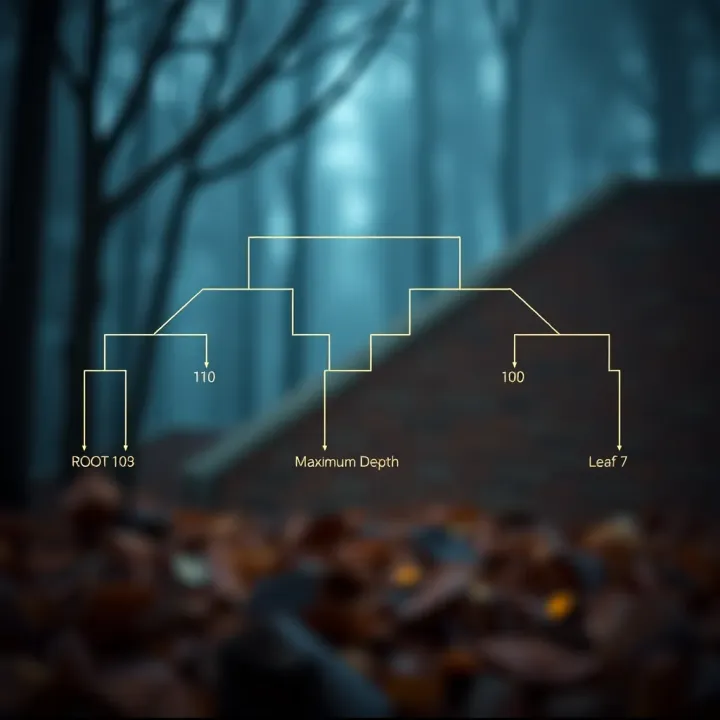
Learn how to find the maximum depth of a binary tree 🌳 using clear methods like recursion and iteration. Perfect for programmers and CS enthusiasts! 💻📚

Explore how to find the maximum height of a binary tree 🌳, understand its impact on data structures, and learn key calculation methods and algorithms 📊.
Based on 10 reviews