

Best Forex Trading in India: Top Brokers & Tips
Explore the best forex trading practices in India 🇮🇳 covering reliable brokers, legal rules, top platforms, strategies & risks to trade confidently in the forex market.
Edited By
James Harper
Forex trading, or foreign exchange trading, involves buying and selling currencies to profit from changes in their values. Unlike stock markets, the forex market operates 24 hours a day, five days a week, making it one of the largest and most liquid financial markets globally. For someone in India looking to start forex trading, understanding its basics is essential before diving in.
At its core, forex trading revolves around currency pairs, such as USD/INR or EUR/USD, where one currency is exchanged for another. The price of a pair reflects how much one unit of the base currency costs in terms of the quote currency. For example, if USD/INR is trading at ₹83, it means one US dollar costs ₹83.

Since forex prices fluctuate due to economic events, geopolitical factors, and market sentiment, traders aim to predict these movements to buy low and sell high, or vice versa. However, forex trading carries significant risks, including high volatility and leverage effects. Using leverage—borrowing money to trade larger positions—can multiply gains but also magnifies losses.
Indian traders should be aware of the regulatory framework around forex trading. The Reserve Bank of India (RBI) allows trading only in currency pairs that involve the Indian Rupee, such as USD/INR, EUR/INR, GBP/INR, and JPY/INR. Trading pairs without INR, like EUR/USD, is not permitted for Indian residents. Also, using authorised brokers registered with the Securities and Exchange Board of India (SEBI) ensures compliance and security.
To get started, one needs a trading account with a broker, where you can place buy or sell orders. Common trading methods include spot trading (instant settlement), forward contracts, and futures. Spot trading is the most popular, with settlement usually within two business days.
Remember, success in forex requires thorough understanding, disciplined risk management, and staying updated with global economic indicators.
Here are some quick tips for beginners:
Start small: Use minimal capital initially to understand market behaviour.
Choose regulated brokers: Avoid scams by verifying broker credentials.
Practice with demos: Build skills on virtual platforms before risking real money.
Track news: Economic releases like RBI policy announcements, US jobs data, or geopolitical developments impact currency prices.
In the following sections, we will explain key forex terminology, common trading strategies, and risks involved, all tailored to help Indian traders make informed decisions.
Grasping the basics of the forex market is critical for anyone wanting to trade currencies effectively. This section explains how the forex market operates, who takes part, and the nuances of currency pairs. Knowing these fundamentals helps traders make informed decisions and reduces the chance of costly mistakes.
Forex trading involves buying one currency while simultaneously selling another. The goal is to profit from changes in exchange rates between two currencies. Imagine exchanging Indian rupees (₹) for US dollars ($) before a trip abroad; forex trading is similar, but it aims to capitalise on currency price movements rather than travel needs.
Several types of participants make up the forex market. Major players include central banks, commercial banks, financial institutions, hedge funds, corporations, and retail traders. For example, India’s Reserve Bank might intervene in the currency market to stabilise the rupee, while exporters and importers use forex to manage currency risks.
Regarding size, the forex market is the largest financial market worldwide, with daily trading volumes exceeding $6 trillion. This vast liquidity means it is possible to enter or exit positions quickly without significant price changes, making it attractive compared to less liquid markets.
Currencies are always quoted in pairs, such as EUR/USD or USD/JPY. Major pairs involve the most traded currencies globally, like the US dollar, euro, British pound, and Japanese yen. Minor pairs, like EUR/AUD or GBP/NZD, involve less liquid currencies but still offer trading opportunities.
Each currency pair has a base currency and a quote currency. The base currency is the first in the pair (e.g., EUR in EUR/USD), while the quote currency represents how much of it is needed to purchase one unit of the base. So, if EUR/USD is 1.10, it means 1 euro costs 1.10 US dollars.
Understanding exchange rates means knowing what the quoted price indicates. A rise in EUR/USD from 1.10 to 1.15 signifies the euro has strengthened against the dollar, or conversely, the dollar has weakened. For Indian traders, such knowledge helps in anticipating how global currency moves affect the rupee and their trades.
Remember: Forex trading is about exchange rate differences, so grasping how pairs work is vital to spot good entry and exit points and manage risks effectively.
This foundation sets the stage for more advanced topics like analysing market trends and managing trades, which will be covered in later sections.
Understanding key terms in forex trading is essential to navigate the market confidently. These concepts form the backbone of trading and help in making informed decisions, whether you are placing your first trade or analysing market movements.
Pips, lots, and leverage are the basic units every trader needs to know. A pip is the smallest price movement in a currency pair, usually the fourth decimal place. For example, if USD/INR moves from 74.3500 to 74.3600, that’s a 1 pip change. Lots indicate trade size – a standard lot equals 100,000 units of the base currency. Smaller lot sizes like mini (10,000 units) or micro (1,000 units) let beginners start small. Leverage allows traders to control larger positions with smaller capital, such as 1:100 leverage meaning you can trade ₹1 lakh worth of currency with just ₹1,000. While leverage can increase profits, it also magnifies losses, so using it carefully is vital.
Next, bid, ask, and spread determine trade pricing. The bid price is what buyers offer; the ask is what sellers want. The difference between these two is the spread, which is essentially the broker’s fee. For instance, if EUR/USD bid is 1.1050 and ask is 1.1053, the spread is 3 pips. Lower spreads reduce trading costs, especially if you trade frequently or with smaller amounts.
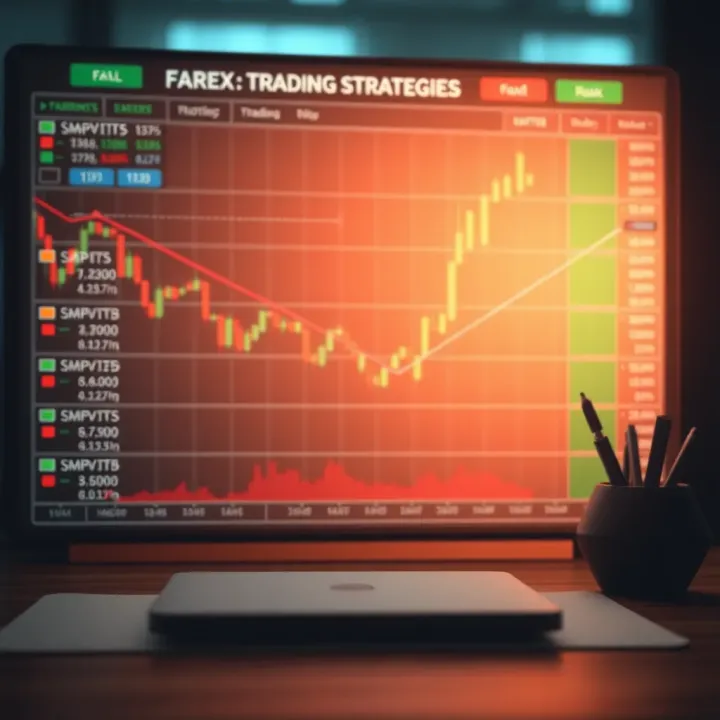
Finally, every trader must grasp margin and margin call. Margin is the deposit you need to maintain a leveraged position. Say you open a ₹50,000 position with ₹5,000 margin at 1:10 leverage. If your losses approach this margin, the broker may issue a margin call, asking you to add funds or close positions. Ignoring margin calls can result in forced closure of your trades, so keeping an eye on margin levels is a must.
Market orders are straightforward: you buy or sell immediately at the current market price. This ensures instant execution but can sometimes lead to slight price slippage during high volatility. For example, if INR/USD is 0.0135, your market order buys at whatever price is available at that moment.
Limit and stop orders give traders more control. A limit order sets a price to buy below the current market or sell above it. For instance, if USD/INR trades at 74.50, you might set a limit buy order at 74.30, waiting for a dip to enter. A stop order triggers a trade once a set price is reached, often used to cut losses or enter trends. A stop-loss order at 74.70 would sell USD/INR to prevent further losses if the price rises.
Trailing stops adjust automatically with favourable price movement, locking in profits. Suppose you buy a currency at 74.00 and set a trailing stop of 50 pips. If the price climbs to 74.50, your stop moves up to 74.00. If the price falls afterwards, the stop triggers a sell at 74.00, securing gains without constant monitoring.
Knowing these terms and order types helps you trade smarter, manage risks well, and adapt to ever-changing market conditions effectively.
Choosing the right approach to forex trading shapes how you enter and exit trades and manage risk. Different methods suit various trading goals, time availability, and risk appetite. Understanding these options enables you to match your style with realistic expectations.
Day trading involves opening and closing positions within one trading day. This style suits traders with quick decision-making skills who monitor markets constantly. For example, a trader might exploit volatility around Reserve Bank of India (RBI) announcements by entering and exiting positions multiple times daily. Day trading avoids overnight risk but demands a lot of focus and fast reactions.
Swing trading looks to capture currency price moves over several days to weeks. Traders using this style track trends and economic news to hold positions longer than day traders but shorter than position traders. Swing trading fits those who cannot watch markets all day but want to benefit from medium-term moves. Suppose a trader spots a weakening rupee over a week due to trade deficit worries; they might go short and close the trade as momentum shifts.
Position trading means holding trades for weeks or months to benefit from long-term trends. Position traders rely heavily on fundamental analysis and tolerate short-term volatility. An example is buying the Indian rupee against the US dollar anticipating economic reforms in India over months. It suits traders with patience and smaller time availability for market monitoring.
Economic indicators significantly affect currency values. Reports like inflation data, interest rate decisions, GDP growth, and trade balances influence forex markets. For instance, higher inflation in India might weaken the rupee, while rate hikes by the RBI can strengthen it. Keeping an eye on such data helps traders anticipate currency moves beyond price charts.
Charts and technical indicators analyse past price data to forecast trends. Traders use tools like moving averages, RSI, and Fibonacci retracements to identify entry and exit points. Technical analysis works especially well in liquid currency pairs and complements news-based trading. A trader noticing consistent support levels on the USD/INR chart may plan buy orders accordingly.
Combining fundamental and technical methods offers a more balanced view. For example, before a major economic report, a trader might use fundamental analysis to assess potential impact and technical analysis to time the trade. This blend helps manage risk better and avoid rash decisions based purely on price fluctuations or news.
Successful forex traders adapt their trading style and analysis approach to suit their goals and realities, rather than relying on a single fixed method.
By understanding and applying these approaches correctly, you increase your chances of navigating the forex market confidently and effectively.
Understanding risks and challenges is critical for anyone stepping into forex trading. The volatile nature of this market means that while opportunities for profit are plenty, so are chances for loss. A clear grasp of these risks helps traders avoid common mistakes and manage their investments more effectively.
Volatility and price swings drive the forex market’s rapid movements. Currency values can change drastically within minutes, influenced by factors like economic data releases, central bank decisions, or unexpected news. For example, the Indian Rupee may drop suddenly against the US Dollar after RBI signals a rate cut, catching unprepared traders off guard. Such swings can lead to significant gains but also devastating losses if positions aren’t managed carefully.
Impact of geopolitical events adds another layer of unpredictability. Political instability, trade tensions between nations, or conflicts can cause sharp shifts in currency values. Consider how the ongoing tensions between the US and China have affected the USD/CNY pair. Traders in India need to watch global headlines closely since even disruptions far away impact domestic currency pairs, requiring prompt decisions to avoid sudden crashes.
Overleverage and margin calls are frequent traps. Many beginners are tempted to trade large positions using high leverage to amplify profits. However, this also magnifies losses, sometimes wiping out the entire account quickly. For instance, using 100:1 leverage means a small adverse move of 1% wipes out your capital. When losses cross a broker’s margin requirement, you get a margin call demanding extra funds or forced closure of positions, often at a loss.
Emotional trading and discipline regularly lead to poor choices. Forex markets are fast; reacting impulsively to losses or greed-driven overtrading often worsens situations. A trader may chase a losing position hoping for a turnaround or panic-sell during normal market noise. Sticking to a predefined strategy and managing emotions is essential to avoid such costly errors.
Regulation in India plays a vital role in safeguarding traders. The forex market here is tightly regulated by the Reserve Bank of India (RBI) and Securities and Exchange Board of India (SEBI), with restrictions on currency pairs that can be legally traded. Trading on unregulated platforms or offshore brokers violates these rules and exposes traders to legal and financial risk.
Identifying fraudulent brokers remains a pressing concern. Unscrupulous operators may promise unrealistic returns, offer dubious trading platforms, or delay withdrawals. Red flags include unsolicited calls, lack of proper registration, or pressure tactics to deposit more funds. Verification of brokers’ licences and user reviews helps traders steer clear of scams, ensuring their money stays safe.
Staying informed about these risks and challenges makes forex trading less like gambling and more like a calculated investment. Traders who understand volatility, avoid common mistakes, and choose regulated brokers stand a better chance of succeeding in the complex world of forex.
Starting forex trading in India requires careful preparation since the market operates differently from equity or commodity trading. It’s not just about buying and selling currencies; you need to pick the right broker, understand the account requirements, and develop solid trading habits. These steps help Indian traders protect their capital and build confidence before committing real money.
Choosing a broker with proper licensing is essential to ensure your money is safe. In India, brokers must comply with rules set by the Securities and Exchange Board of India (SEBI) or operate through authorised offshore entities following Reserve Bank of India (RBI) guidelines. Verified brokers usually publish their licence details and have transparent operations, making it easier to avoid scams that have popped up in forex.
A user-friendly and reliable trading platform matters a lot. Good brokers offer platforms like MetaTrader 4 or 5, which come with technical indicators, charting tools, and automated trading options. For beginners, these features allow practising analysis and order placements confidently before risking real funds. Mobile compatibility is also important, especially for traders who prefer managing positions on the go.
Forex trading costs include spreads—the difference between bid and ask prices—and sometimes commissions or overnight fees. Lower spreads mean cheaper trades, which helps beginners minimise costs when experimenting with small amounts. For example, a broker charging a 1-pip spread on EUR/USD pair will be more economical than one charging 3 pips, especially when trading frequently.
Brokers offer various account types depending on initial deposit, leverage, and features. Typical accounts include standard, mini, and micro accounts, allowing traders with different budgets to participate. For instance, micro accounts let beginners start with ₹10,000–₹20,000, managing smaller lots and limiting risk.
Regulatory compliance means brokers require KYC verification, including PAN card, Aadhaar, and proof of address, to open accounts. This step safeguards against money laundering and fraud. Though it might take a few days, completing verification early ensures smooth fund transfers and withdrawal processes.
Check the broker’s deposit and withdrawal methods before opening an account. Popular options include net banking, UPI, and bank transfers, often with low or no fees. Timely withdrawal process reflects the broker’s reliability—if you deposit ₹50,000, you should be able to withdraw your money without unnecessary delays or hidden charges.
A demo account allows practising forex trading without risking real money. It offers virtual funds and real-time market data, helping beginners understand order execution, test strategies, and get comfortable with the platform. Starting on demo accounts is wise — it saves beginners from costly early mistakes.
Risk management is key in forex. Beginners should set stop-loss orders to limit losses and avoid over-leveraging, as leverage magnifies both profits and risks. For example, using a leverage of 1:30 instead of 1:100 can protect your capital from sudden market moves.
The forex market is dynamic, and continuous learning matters. Indian traders should use webinars, tutorials, and market news to stay updated. Platforms like NSE India and SEBI offer educational content too. Keeping up with economic events, RBI statements, and global factors sharpens trading decisions.
Careful preparation and disciplined practice form the foundation for successful forex trading in India. Starting right with the broker, account setup, and risk management paves way for steady growth.
Explore the best forex trading practices in India 🇮🇳 covering reliable brokers, legal rules, top platforms, strategies & risks to trade confidently in the forex market.

Explore all about forex trading 📈: learn how currency markets work, start trading steps, manage risks ₹, and apply proven strategies for success in India.
💹 Explore online Forex trading in India! Learn legal tips, top platforms, key strategies, broker selection, risks, and tax rules for smart trading.

Explore practical tips for money forex trading in India 💹 Learn key strategies, risk management, regulations, and tools to trade currencies confidently.
Based on 5 reviews